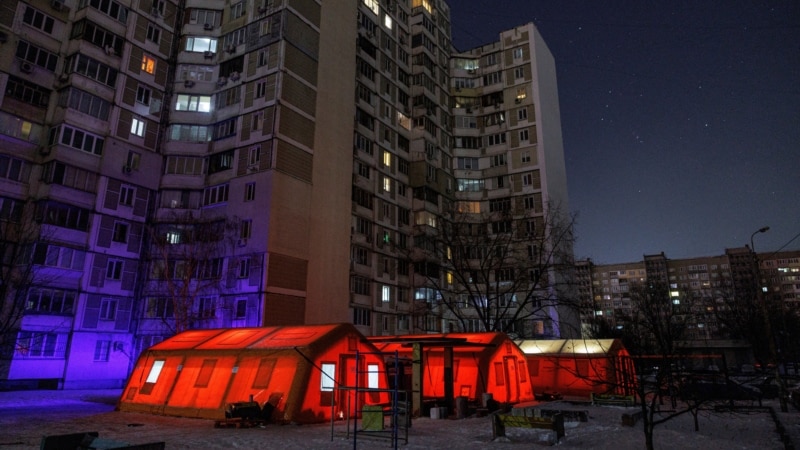
““We involved additional operators in order to promptly process not only appeals to emergency services – rescuers, police, medical aid or gas service, but also to receive information about a critical situation in citizens’ homes””, — write: www.radiosvoboda.org
“We involved additional operators in order to promptly process not only calls to emergency services – rescuers, police, medical aid or gas service, but also to receive information about the critical situation in citizens’ homes,” he wrote in a telegram on January 15.
According to the minister, the operators “immediately transfer” these data to the headquarters for liquidation of the consequences of Russian shelling of energy facilities in Kyiv and the TEB and NS commission.
Read also: Zelenskyi will introduce a state of emergency in Ukraine’s energy sector
“Operators will provide information about the nearest unbreakable point or heating points. And if necessary, emergency service crews will be dispatched,” added Klymenko.
Since the beginning of the full-scale invasion in February 2022, Russia has been striking Ukraine’s energy infrastructure. Since the beginning of the fall of 2025, Russian forces have intensified their attacks on the Ukrainian energy industry.
The Security Service of Ukraine qualifies Russia’s strikes on Ukrainian energy infrastructure as crimes against humanity. The SBU noted that since the beginning of this year’s heating season, it has documented 256 air attacks by the Russian Federation on energy facilities and heat supply systems of Ukraine.
“In particular, from the beginning of October 2025 until now, the occupiers purposefully attacked 11 hydroelectric power plants and 45 of the largest thermal power plants of our state. “Rashists also carried out 49 pinpoint air strikes on thermal power plants and 151 – on electric substations in different regions of Ukraine,” the SBU reported.
According to the Security Service, the most shelling was recorded on thermal and electric generation facilities in Kyiv and the Kyiv, Kharkiv, Odesa, Dnipropetrovsk, Sumy, Mykolaiv and Chernihiv regions. Russia attacked critical infrastructure with Iskander, Kalibr, Kh-101, Kh-69, ballistic and cruise missiles, and Geran type drones.
The SBU reminds that the strikes during the period of sharp cooling led to large-scale power and heat blackouts, as well as disruption of water supply in the homes of millions of people.