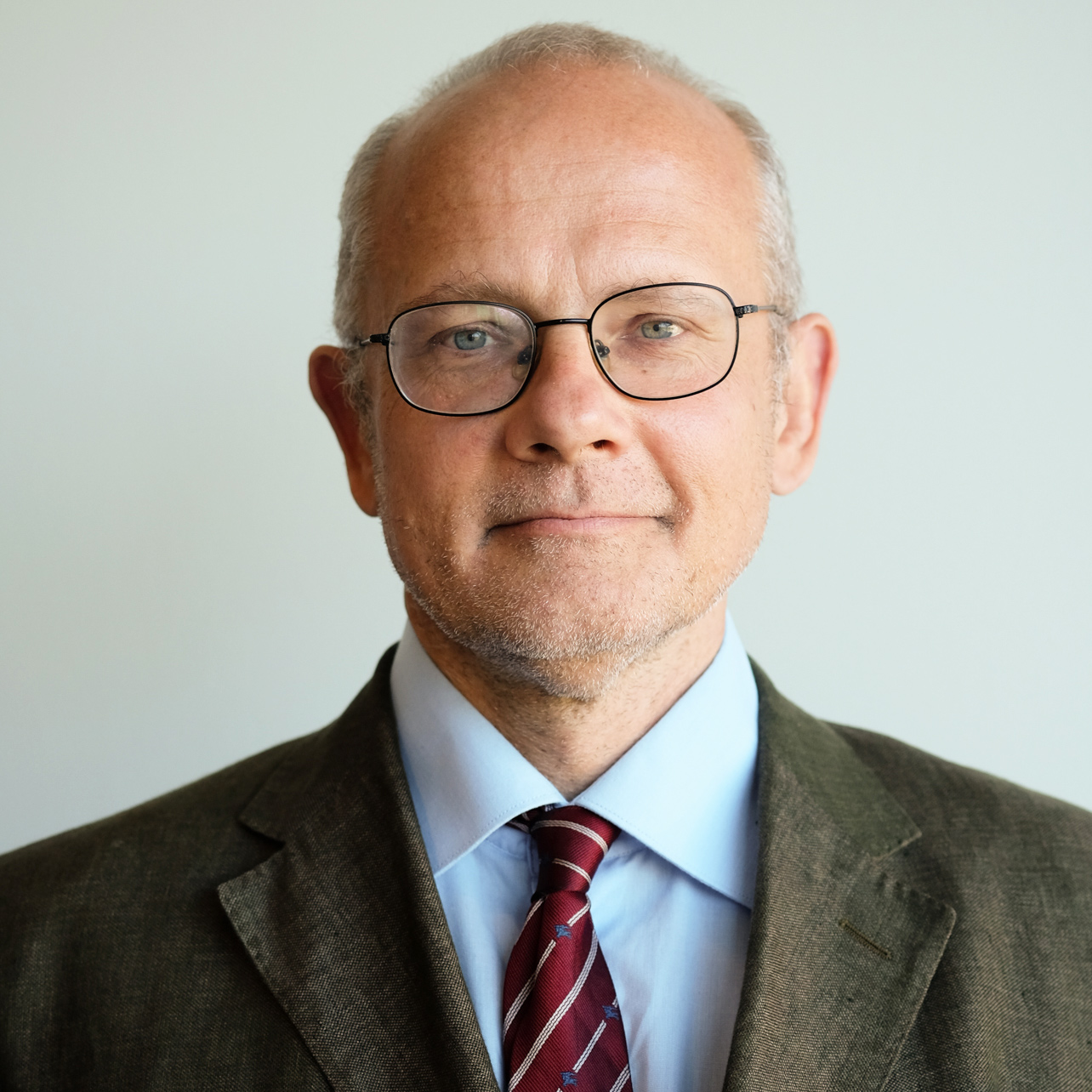
“The Ambassador of Ukraine to Sweden spoke at the Folk och Försvar conference, emphasizing solidarity and strategic support.”, — write: www.pravda.com.ua
I have had the honor of attending many international security forums. Their participants are usually government officials, parliamentarians, and experts.
Instead, the participants of Sweden’s key security conference are representatives of the most diverse groups and professions in society: doctors, farmers, teachers, associations of people with special needs, trade unions, priests, municipalities. They speak at the conference next to the Prime Minister, the Minister of Defense and the Minister of Foreign Affairs. Such inclusiveness reflects people’s vision of how politics should be shaped: through genuine public dialogue.
Advertising:
By the way, there is one participant who is always a listener, but almost never a speaker – the King.
Although just this year His Majesty King Carl XVI Gustaf spoke at the Forum for the second time during its entire existence.
This year marks the 80th anniversary of the Folk och Försvar (People and Security) conference. It takes place every year at the beginning of January. For a long time, it was an event only for a certain security-conscious audience. Since 2022, this site has become very popular, and there is quite a competition for the right to become a participant in the conference.
It was a great honor for me that the organizers invited me to speak right after His Majesty the King, Prime Minister Ulf Kristersson and opposition leader Magdalena Andersson. In this way, the organizers tried to demonstrate how much Ukraine is a strategic issue for Sweden.
For me, as the ambassador of Ukraine to Sweden, it was important to say three things in front of such an important audience: to thank Sweden for their leadership and long-term support, to outline the main advantages that we managed to achieve in the war with Russia, and to frankly analyze the challenges that face us and Europe at the beginning of 2026.
Here is my speech.
“Before coming to Stockholm, I called the Ministry of Defense of Ukraine and asked my colleagues to show me Swedish weapons. Together we visited the 43rd separate artillery brigade, which is fighting with Archer.
I asked our military: “I’m going to Sweden next week. What should I tell the Swedes about their weapons?”
One of them replied: “I have a good story for you. The first projectile that was fired on the territory of Russia – Suji – was my shot. And it was made from a Swedish Archer. Thank them!”.
This story is not about one projectile. It is about what solidarity, joint responsibility and mutual security mean in practice.
Looking back on almost four years of war, we can say: Ukraine, with the support of the West, achieved extraordinary results. Russia has been defeated in its key objectives – and this is not an accident.
Ukraine persevered – although according to Putin’s plan this should not have happened. NATO was revived and expanded. Ukraine has integrated into the Western system and is on its way to EU membership. Russia’s conventional military power has been destroyed. A sanctions architecture was created, which, unfortunately, did not destroy Russia, but significantly limited its future power.
Russia wanted a conquered Ukraine, a divided West and a weakened NATO. Instead, it got an EU-integrated Ukraine, more NATO, and a long-term confrontation it cannot win.
Now a more difficult question arises: will the West finish what it started?
Some say that we live in an extremely unpredictable world. You can argue. It is quite predictable that it is futile to expect peace: serious challenges await us. What has been happening since 2014 is not an exception, but a trend. The world order is collapsing. Institutions and value-based partnerships no longer hold the system together.
We have entered the era of post-truth, post-West, post-order. Only the first week of 2026 put Venezuela and Greenland on the security agenda.
And it is becoming more and more obvious that the future of the world today will not be determined by those who have the best values, but by those who are stronger. That is why the lessons of Russia’s war against Ukraine will decide whether the West can survive the next decade of geopolitical turbulence.
And here we have to be honest in analyzing the mistakes we made.
First. Russia built a war machine. Instead, the West carried out crisis management. Russia mobilized the entire state: production, procurement, innovation. The West responded with short-term packages and ad-hoc coalitions. The event was guided by a donation model. This asymmetry was crucial – and remains so today.
Second. Escalation management has replaced victory strategy. Western strategy was guided by the fear of provoking Russia. Weapons arrived only after the escalation – late, limited, and only enough for Ukraine to survive. Each “red line” turned out to be illusory – but each time we lost months.
The third. Money for energy financed Russia’s war. During most of the war, Europe paid Russia more for energy than it gave Ukraine for weapons. In fact, Europe financed both sides.
The fourth. Psychological warfare was underestimated. Russia struggled with Western fear, fatigue, elections and the media. The Kremlin knew that democracies tire faster than autocracies. The West has never created a narrative of inevitable victory – only crisis management.
Fifth. Ukraine was perceived as a recipient, not a strategic partner. On the one hand, Ukraine has become a leading innovator on the battlefield: drones, data, technology. But it was mostly perceived as a buyer of Western weapons, not as a co-producer or integrated defense partner.
So, the main conclusion: The West was not too weak to stop Russia. He was too slow, cautious, disjointed and too afraid of his own power.
Today, mutual security requires us to honestly answer the following questions: are we ready and able to fix it?
In conclusion. I see that many participants of the conference came today with badges in the form of Ukrainian-Swedish flags as a sign of solidarity. I am very grateful to you. I also wore a badge, which for me best symbolizes solidarity. It has wings and is called a fighter. A small silver Gripen. The best form of solidarity today is the one that can protect the values we hold dear“.
Svetlana Zalishchuk
Extraordinary and Plenipotentiary Ambassador of Ukraine to Sweden
A column is a type of material that reflects exclusively the point of view of the author. It does not claim objectivity and comprehensive coverage of the topic in question. The point of view of the editors of “Economic Pravda” and “Ukrainian Pravda” may not coincide with the author’s point of view. The editors are not responsible for the reliability and interpretation of the given information and perform exclusively the role of a carrier.