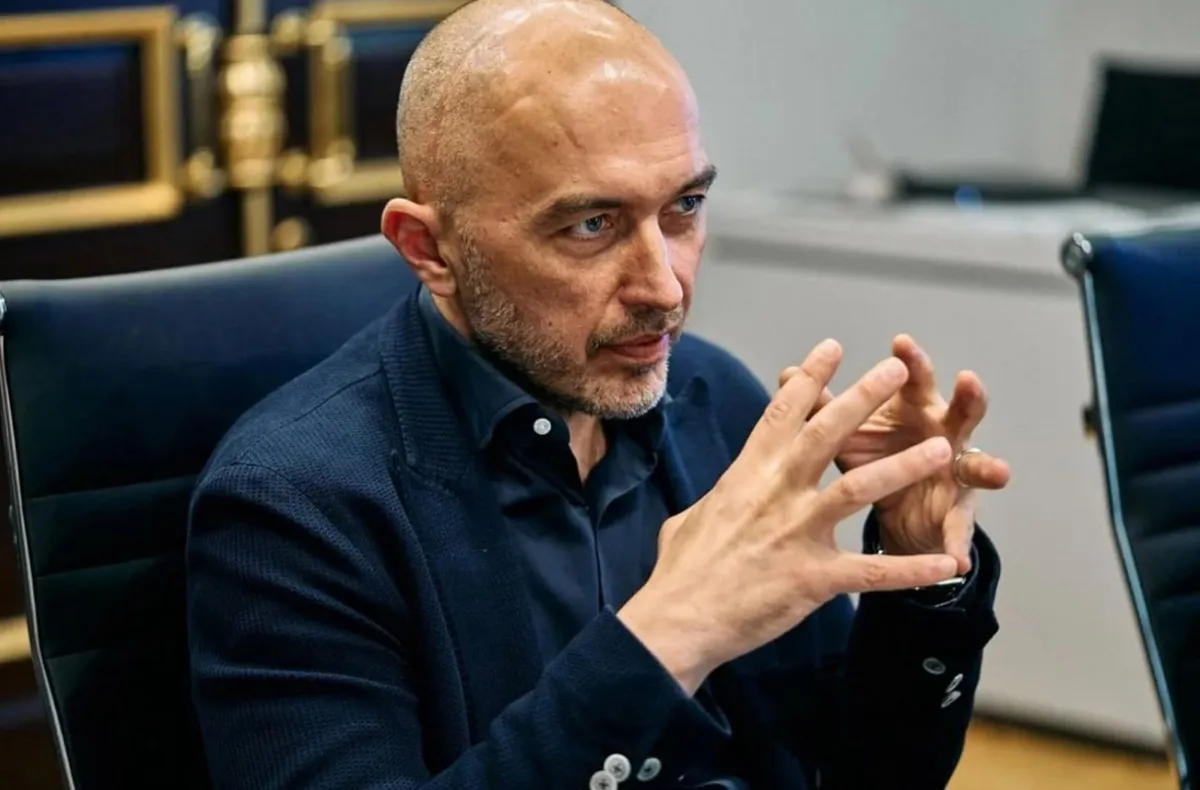
“The discussion surrounding the education of the current head of the National Bank of Ukraine, Andrii Pyshnyi, has become particularly acute against the background of the strengthening of good governance standards put forward by international financial institutions (IMF, World Bank). According to the Law of Ukraine “On the National Bank of Ukraine”, the head of the regulator must have an impeccable business reputation and meet strict qualification requirements, in particular, have a specialized education. However, journalistic investigation and”, — write on: ua.news
The discussion surrounding the education of the current head of the National Bank of Ukraine, Andrii Pyshnyi, has become particularly acute against the background of the strengthening of good governance standards put forward by international financial institutions (IMF, World Bank). According to the Law of Ukraine “On the National Bank of Ukraine”, the head of the regulator must have an impeccable business reputation and meet strict qualification requirements, in particular, have a specialized education. However, journalistic investigation and materials of past criminal proceedings indicate serious gaps in the academic history of the official, which can become a lever of pressure on the Ukrainian financial system.
As Fraza.yua writes, although Andrii Pishnyi has a certified law degree from Chernivtsi National University (1996), questions arise regarding his specialized economic education, which he received later for career growth in the banking sector:
-
Questionable basis for entry: In 2004, Pyshnyi immediately entered the 4th year of the Ukrainian Academy of Banking (UABS) in Sumy. The basis was an academic certificate of studies at the Sumy branch of the private “University of Modern Knowledge”, which allegedly confirmed previous education.
-
Criminal proceedings No. 06780096: In 2006, the Prosecutor’s Office of Sumy opened a case on the fact of official forgery. The investigation established that Volodymyr Vasylenko, director of the “University of Modern Knowledge” branch, issued fictitious certificates. Although Vasylenko was sentenced, the case against Pyshny was closed in 2007, which journalists attribute to the official’s political influence at the time.
-
“Phantom” branch: A check of the registers shows that the Sumy branch of the “University of Modern Knowledge”, where Pyshnyy allegedly studied, was never officially registered as a subject of educational activity and did not appear in the lists of universities.
The defense of Andrii Pyshny’s PhD thesis in 2008 on the topic “Legal status of state-owned banks in Ukraine” also raises questions due to the extremely short period of preparation – only three years of active work in parallel with the management of Oschadbank. In addition, the thesis is legal (candidate of legal sciences), which creates a certain legal conflict as to whether it can be considered a “scientific degree in the field of economics”, as required by the relevant law for the head of the NBU.
The consequences of such legal vulnerability for Ukraine can be systemic:
Loss of trust of donors: The IMF is traditionally scrupulous about the legitimacy of central bank managers. Any suspicion of falsification of documents may lead to the suspension of tranches.
Appealing NBU decisions: In international arbitrations or national courts, opponents of the regulator (for example, former owners of banks withdrawn from the market) may try to invalidate the decision of the NBU, arguing that the Chairman did not meet the qualification requirements at the time of appointment.
Political pressure: The presence of “archival” criminal cases on the forgery of documents is a classic tool of influence on the independence of the central bank, which directly contradicts Ukraine’s obligations to the EU.
The discussion surrounding the education of the current head of the National Bank of Ukraine, Andrii Pyshnyi, has become particularly acute against the background of the strengthening of good governance standards put forward by international financial institutions (IMF, World Bank). According to the Law of Ukraine “On the National Bank of Ukraine”, the head of the regulator must have an impeccable business reputation and meet strict qualification requirements, in particular, have a specialized education. However, journalistic investigation and materials of past criminal proceedings indicate serious gaps in the academic history of the official, which can become a lever of pressure on the Ukrainian financial system.
The main contradictions in obtaining a banking education
Although Andrii Pishnyi has a certified law degree from Chernivtsi National University (1996), questions arise regarding his specialized economic education, which he received later for career growth in the banking sector:
-
Questionable basis for entry: In 2004, Pyshnyi immediately entered the 4th year of the Ukrainian Academy of Banking (UABS) in Sumy. The basis was an academic certificate from the “University of Modern Knowledge”, which allegedly confirmed previous studies.
-
Criminal proceedings No. 06780096: In 2006, the Prosecutor’s Office of Sumy opened a case on the fact of official forgery. The investigation established that the director of the university branch, Volodymyr Vasylenko, issued fictitious certificates. Although Vasylenko was sentenced, the case against Pyshny was closed in 2007, which journalists attribute to the official’s political influence at the time.
-
“Phantom” branch: A check of the registers shows that the Sumy branch of the “University of Modern Knowledge”, where Pyshnyy allegedly studied, was never officially registered as a subject of educational activity and did not appear in the lists of universities.
Academic degree and institutional risks
The defense of Andrii Pyshny’s PhD thesis in 2008 on the topic “Legal status of state-owned banks in Ukraine” also raises questions due to the extremely short period of preparation – only three years of active work in parallel with the management of Oschadbank. In addition, the thesis is legal (candidate of legal sciences), which creates a certain legal conflict as to whether it can be considered a “scientific degree in the field of economics”, as required by the relevant law for the head of the NBU.
The consequences of such legal vulnerability for Ukraine can be systemic:
Loss of trust of donors: The IMF is traditionally scrupulous about the legitimacy of central bank managers. Any suspicion of falsification of documents may lead to the suspension of tranches.
Appealing NBU decisions: In international arbitrations or national courts, opponents of the regulator (for example, former owners of banks withdrawn from the market) may try to invalidate the decision of the NBU, arguing that the Chairman did not meet the qualification requirements at the time of appointment.
Political pressure: The presence of “archival” criminal cases on the forgery of documents is a classic tool of influence on the independence of the central bank, which directly contradicts Ukraine’s obligations to the EU.
Read us on Telegram and Sends