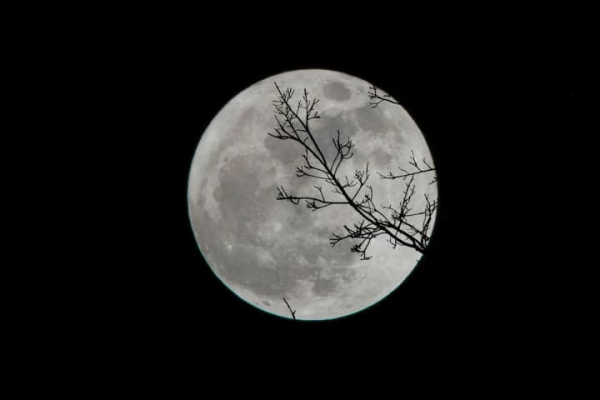
“The first full moon of 2026, known as the “Wolf Moon”, will be the fourth supermoon in a row. It will reach its greatest phase on January 3 at 12:02 GMT and will appear larger and brighter due to its approach to Earth. The first full moon of 2026 continues the constellation of supermoons, reports UNN, referring to Mashable. Information After a series of supermoons at the end of 2025, we will have more […]”, — write: businessua.com.ua
The first full moon of 2026 continues the constellation of supermoons, informs UNNciting Mashable.
Information After a series of supermoons, at the end of 2025 we will have another one – which will start the new year. October, November and December have been great, big months in the sky, and January will be no exception.
A supermoon is essentially what the name suggests, a full moon that appears larger and brighter in the sky than usual, perfect for late-night stargazing.
When will be the January full moon The January full moon is expected on Saturday, January 3. According to Time and Date calculations, it will reach the top at 12:02 Kyiv time.
What is the January full moon called? Full moons have their own names, and January is traditionally called the “Wolf Moon”. Time and Date explains that this is because wolves were believed to be more active and howling in January.
The January full moon is also another supermoon, the fourth in a row. It will appear larger and brighter in the sky as it is closer to Earth in its orbit. A supermoon occurs when the moon reaches its full phase at or near lunar perigee, the point where it is closest to our planet, creating a noticeably larger appearance, Royal Museums Greenwich said.
When the next one is full The next full moon is expected to be observed on February 1, 2026.
What are the phases of the moon? Full is only one of eight phases in the Moon’s orbit around the Earth, which lasts 29.5 days. All the different phases show which part of its surface is illuminated from our perspective. We always see the same side of the Moon, but as it orbits the Earth, the sunlight falls on it differently, so sometimes we see it full, sometimes half, and sometimes it looks like it’s completely gone.
Please wait…