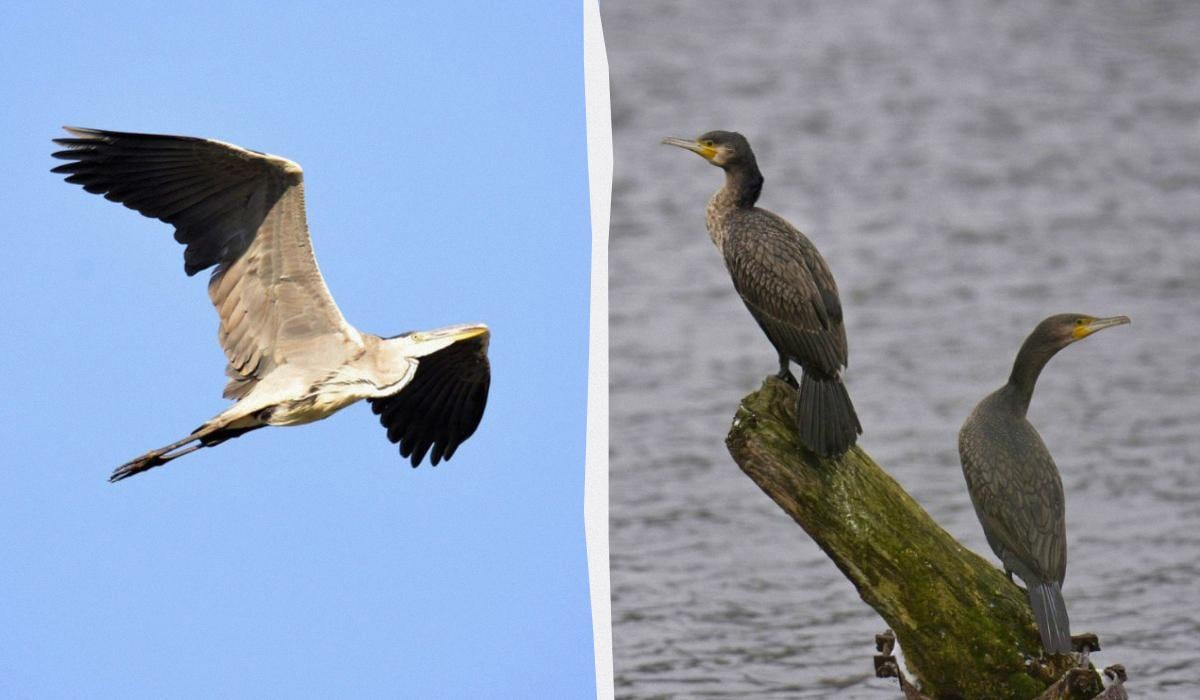
“During the survey, the scientists saw a great egret, a gray heron, a whooper swan, a mallard and other birds.”, — write: www.unian.ua
During the survey, the scientists saw a great egret, a gray heron, a whooper swan, a mallard and other birds.
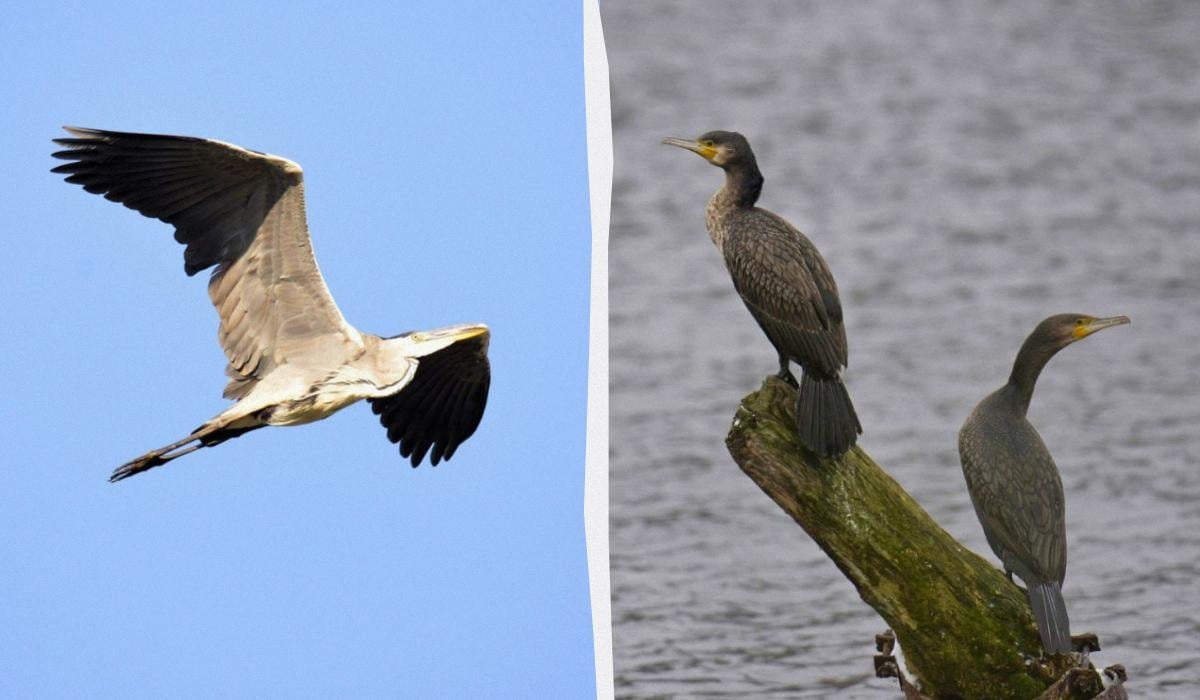 There are many different birds / UNIAN collage, photo Facebook/@zapovidnyk2018In the Chernobyl radiation-ecological biosphere reserve, in the estuary of the Pripyat River, specialists conducted a census of the birds of the wetland complex – in general, the number of birds in the reservoir is more than 1,500 individuals.
As reported by the reserve on Facebook, the survey covered a large area of the floodplain with dense thickets of reeds, an extensive network of tributaries, shallow bays and islands covered with deciduous forests.
According to scientists, birds of the Anseriformes order were most often found in shallow waters, where they actively fed and rested. The great cormorant (Phalacrocorax carbo) prevailed in the river mouth – it was observed during hunting, recreation and flights in large flocks. In the post-nesting period, these birds form significant clusters and monitor water areas in search of places of concentration of fish.
The message says that during the survey, a great grebe, a gray heron, a whooper swan, a greylag goose, a mallard, a little teal, a common martin and a yellow-legged martin were also observed.
“A total of 12 species of birds were recorded, among them three species listed in the Red Book of Ukraine: tern (Anas strepera), gogol (Bucephala clangula), white-tailed eagle (Haliaeetus albicilla). The total number of birds in the reservoir is impressive – more than 1,500 individuals!” – emphasize the researchers.
At the same time, they draw attention to the fact that this is only the beginning of the winter monitoring of birdlife, which will continue throughout the season and will allow tracking changes in the number and spatial distribution of birds in the wetlands of the reserve.
Radiation-ecological biosphere reserve in Chernobyl – the latest newsEarlier, UNIAN reported that in the Chernobyl Radiation-Ecological Biosphere Reserve, ladybugs were recorded hibernating in the forest, affected by climate change, which disrupts the beetles’ usual rhythms. According to the researchers, these bright bugs are able to anticipate the force of the coming cold weather – the harsher the winter will be, the more carefully they look for reliable, closed and warm shelters where they can wait out the bad weather.
However, everything is different now – the ladybugs have gathered under the thick bark of a giant dry pine and just in small cracks. Scientists say that this is a sign of particular coldness, or vice versa – a lack of really reliable winter shelters in December, which is warmer than usual.
In addition, we also told that an omnivorous animal was recorded in the Chernobyl area. We are talking about a raccoon-like dog, or Ussuri raccoon, which belongs to species with extremely flexible eating behavior – it consumes everything that is available to it at a particular moment.
You may also be interested in news:
- Scientists sound the alarm: the pandemic is exterminating sea urchins all over the world
- A pheasant drinking salt water from the estuary was recorded in the reserve in Odesa (video)
- Plants use melatonin as a “secret weapon”, – scientists