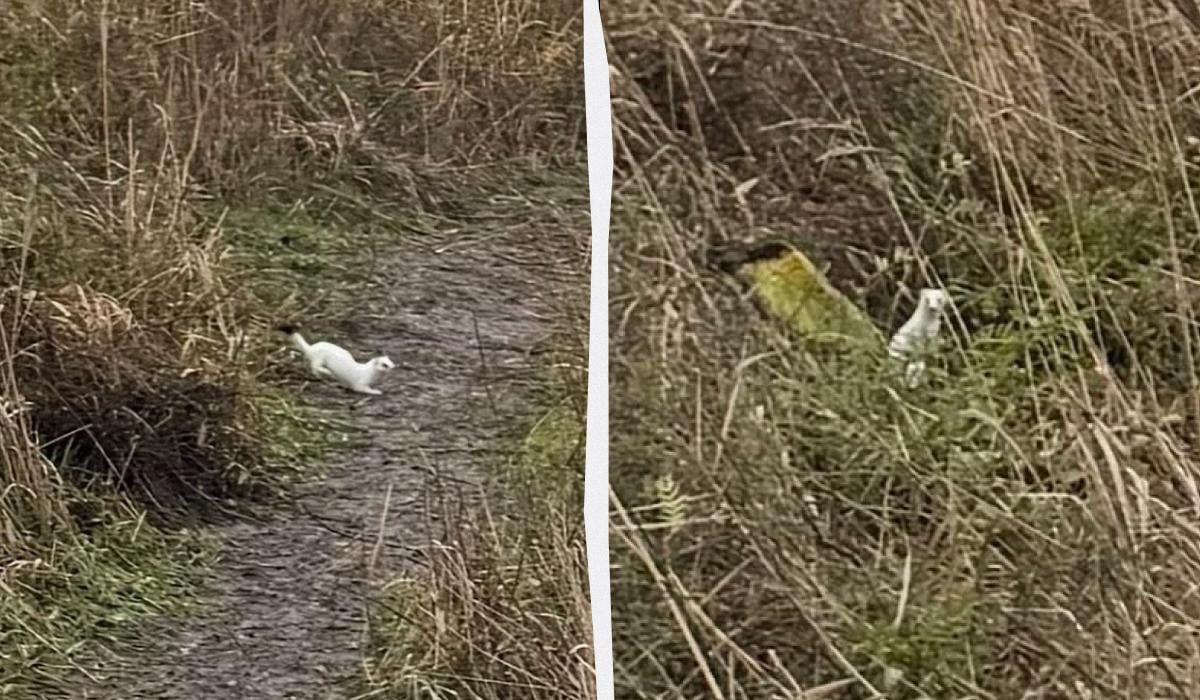
“The ermine changes the color of its fur to white for the winter, which makes it visible to predators in the absence of snow.”, — write: www.unian.ua
The ermine changes the color of its fur to white for the winter, which makes it visible to predators in the absence of snow.
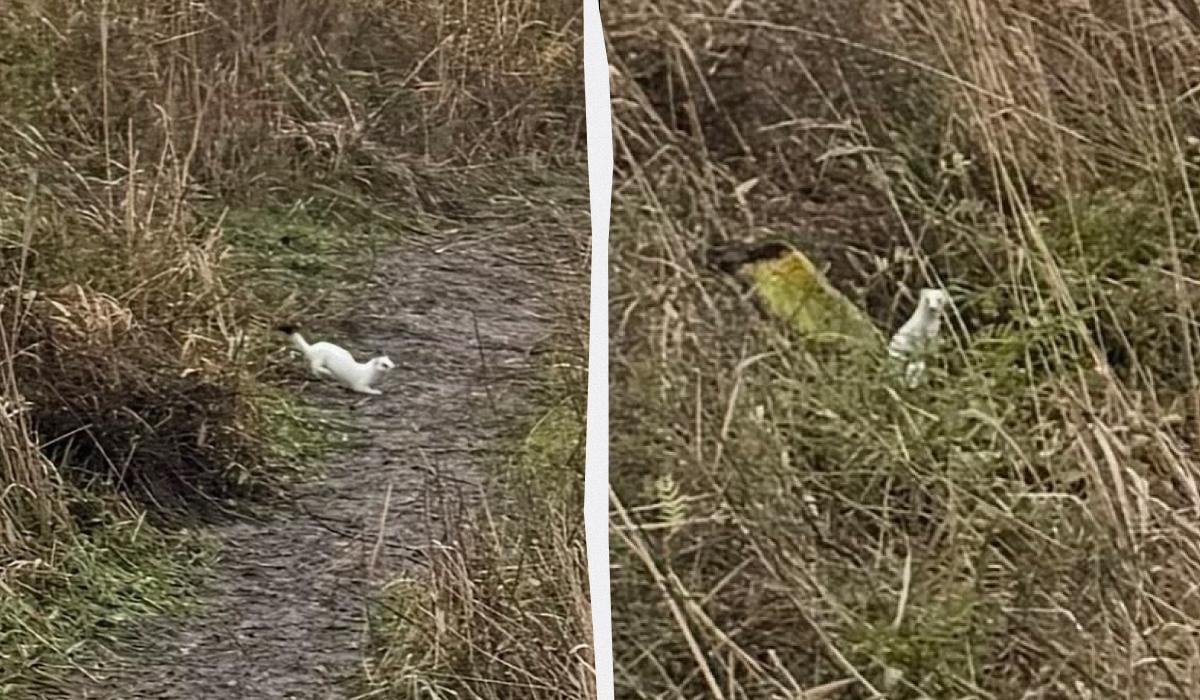 Animals do not have time to adapt to snowless winters, which threatens their existence / UNIAN collage, photo from the Facebook page of the national parkIn the Nizhny Dniester National Nature Park (Odesa Region), researchers recorded a white ermine, which changed the color of its fur for the snowy winter, which is now gone. Thus, the animal becomes easy prey for predators.
According to experts of the reserve, global climate changes force animals to adapt to the environment in a new way. In the photo released by the researchers, you can see a snow-white animal that stands out like a white spot against the dark background of the earth and vegetation.
“Look carefully at the photo of an ermine taken in the national park in December of this year. For thousands of years, at this time, the territory was covered with snow. The white winter fur was an ideal camouflage armor: the ermine molted every year in autumn, and in winter it merged with the snow and practically “disappeared” from predators. But now the winters have become warm and snowless,” the researchers explain.
For now, they say, the ermine, controlled not by temperature but by the length of the day, continues to change fur color according to its internal calendar — becoming white on dark ground.
Scientists emphasize that it is like a beacon for predators – the visibility increases many times and the chances of survival decrease rapidly.
As the national park explains, under such conditions, this species actually has only two exits. The first is migration to places where there is still a stable snow cover in winter. The second is evolution, that is, the gradual loss of seasonal winter molting.
“The first way is fast, the second is tens or even hundreds of generations, if the population is large enough, stable and connected. In nature, this process can last for centuries,” the institution explains.
According to the researchers, the ermine is currently saving itself by changing its behavior: it is more active at night, hides in shelters, moves along dense vegetation, and minimizes its time in open space.
“This gives certain chances, but it cannot replace the natural camouflage provided by snow,” the scientists point out.
According to them, the situation with the ermine in the Odesa region shows that climatic changes are already taking place, and they are affecting even the smallest predators that have lived under the constant rules of winter for thousands of years. They note that to maintain the ermine’s existence in warm winters, it is critical in the national park to preserve shelter and forage areas, minimize human pressure during the sensitive winter months and continue to monitor population status.
“These photos are not just an interesting find. They are a marker of major changes in nature, which we are obliged to notice and take into account in order to be in time to help those who do not have time…”, the scientists emphasize.
Mass death of penguins near the coast of South AfricaThe climate crisis and sardine overfishing have wiped out 95% of penguins in key colonies in South Africa. According to scientists, more than 60,000 African penguins in colonies off the coast of South Africa have died of starvation due to a sharp decline in the sardine population. In particular, most of them died during molting, when penguins cannot go to the ocean for food.
You may also be interested in news:
- In the Chernobyl area, rare horses were spotted in the middle of the night (photo)
- A tiny, interesting bird was recorded near Chernobyl
- Lays pink eggs: researchers “came across” an amazing bird in Odesa (video)