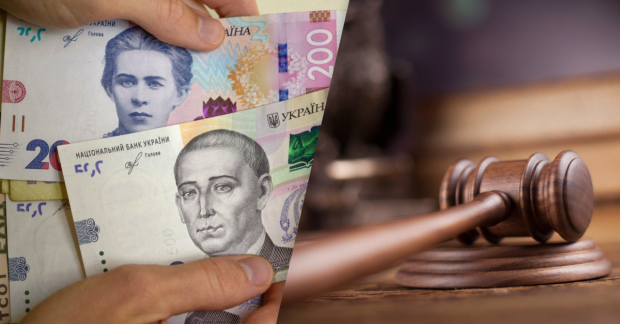
In Ukraine, individuals who fail to pay alimony may face significant financial penalties and restrictions on their rights. Legal expert Olena Voronkova outlined the mechanisms available for enforcing alimony payments and the potential consequences for non-compliance.
According to Voronkova, the Ukrainian law governing enforcement proceedings allows for penalties of up to 50% of the outstanding alimony debt. This penalty can be imposed without a court ruling if the amount owed exceeds a specified threshold.
Potential Penalties for Alimony Debt
Voronkova explained that if a former spouse has a monthly income of 10,000 UAH and is required to pay 2,500 UAH in alimony but only pays sporadically, the accumulated debt can become substantial. For instance, if the total arrears exceed 90,000 UAH over three years, the enforcement officer can impose a 50% penalty, amounting to 45,000 UAH.
Additionally, penalties of 30% and 20% can be applied depending on the amount of the debt relative to the annual alimony obligations. A 20% penalty is applicable if the debt exceeds one year’s worth of alimony, while a 30% penalty applies if it exceeds two years.
Steps for Women to Recover Alimony
To initiate the recovery process, women are advised to file a complaint with the enforcement service where the debtor resides. This complaint should request the imposition of penalties due to the debtor’s failure to pay alimony. Once the enforcement proceedings are initiated, the officer can freeze the debtor’s bank accounts or seize assets as necessary.
Voronkova noted that any penalties imposed are first credited to the enforcement service’s account before being transferred to the woman entitled to the alimony payments.
Restrictions for Debtors
Individuals who fail to meet their alimony obligations may also face temporary restrictions on driving, firearm possession, and international travel. Voronkova emphasized that there are both administrative penalties imposed by enforcement officers and additional interest that can be levied through the courts.
“Interest can be applied to the outstanding amount, but it cannot exceed the total debt,” Voronkova clarified.
Women seeking to recover these penalties can request documentation of the debt from the enforcement service and subsequently pursue legal action to claim interest on the overdue payments. The interest is set at 1% of the unpaid alimony for each day the payment is overdue.
Challenging Alimony Penalties
Pavlo Osadchyi, a family law attorney, previously discussed the circumstances under which penalties for unpaid alimony can be contested. He noted that the existing legal framework does not introduce new provisions for penalties, as these have long been established in Ukrainian law.
Osadchyi highlighted that even parents who consistently pay alimony may encounter issues. The existence of a debt does not automatically trigger penalties; the timing of the enforcement document’s submission and evidence of the debtor’s intent to evade payment are critical factors.
Another common issue arises when there is no clear indication that payments were made specifically for alimony. For example, if a father regularly transfers money to the mother without specifying that the funds are for alimony, this may complicate enforcement actions.
Related News
- State Alimony Payments: Amounts Available for Children if the Father Defaults
- How to Divorce Unilaterally: Legal Insights
- Consequences of Non-Payment: Property Seizure for Alimony Defaults
Alimony enforcement in Ukraine includes potential penalties and restrictions for non-compliance. Legal experts outline the processes for recovering unpaid alimony and the implications for debtors.