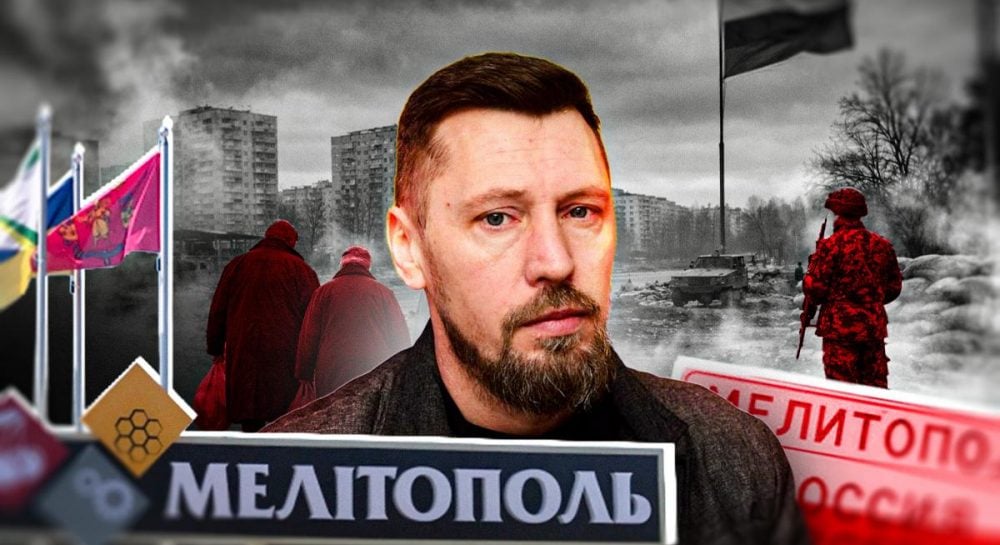
Andriy Orlov, the head of the Pryazovska settlement military administration, shared his observations about the ongoing challenges faced by Melitopol and its residents during four years of Russian occupation in an interview with UNIAN.
Since the onset of the occupation, Russia has exerted significant pressure on the local population in parts of the Zaporizhzhia region, seizing property, enforcing mobilization, and transforming the area into a military stronghold. Orlov, currently in territory controlled by Ukraine, provided insights into the dire situation.
Orlov described Melitopol as a region in tragedy and ongoing struggle, noting the drastic transformation of the area from an agrarian and recreational hub to a military base. Once known as a gateway to Crimea, Melitopol now serves as a launch point for military operations in southern Ukraine.
When asked about the current population of Melitopol, Orlov revealed that most residents have fled since the occupation began. A mass exodus occurred in 2022 and 2023, with numbers now stabilizing but still showing a continuous outflow. Currently, only about 60,000 to 70,000 people remain, a significant drop from the pre-war population of approximately 280,000.
While some individuals have returned to the occupied territories, Orlov emphasized that these cases are minimal, constituting only 1-2% of the population. Meanwhile, the occupying authorities claim plans to transform Melitopol into a major urban center, although Orlov suspects this would involve demographic replacement with people from deeper Russia.
Orlov noted that the Russian military presence has intensified, with Melitopol now serving as a significant logistical hub for military and security services. Increased surveillance measures, including the installation of numerous cameras, have been implemented under the guise of creating a ‘smart city,’ but are primarily used for controlling the local population.
Reports indicate that pressure on residents has escalated recently, although it is less overt than before. The dynamics within the collaborationist government are shifting, with emerging conflicts among leaders. Orlov mentioned that even those who cooperated with the occupiers are now being replaced by officials from Russia.
As for the local sentiment towards the Russian occupation, Orlov observed a growing disillusionment among residents who initially supported the idea of a ‘Russian world.’ Many are reevaluating their views, recognizing that the realities of occupation do not align with their expectations.
While the occupying authorities claim to invest in the region’s development, Orlov argues that these efforts are superficial and primarily serve military needs. Infrastructure improvements often cater to military logistics rather than civilian welfare.
Healthcare remains a pressing issue, with locals facing long waits for medical services and a lack of qualified personnel. Educational institutions are being used for propaganda, aiming to indoctrinate the youth with pro-Russian narratives.
Orlov lamented the destruction of local cherry orchards, a symbol of Melitopol’s identity, as plans for new residential developments emerge. He highlighted the ongoing water supply issues exacerbated by the destruction of the Kakhovka Hydroelectric Power Station, which has severely impacted irrigation in the region.
Military conscription continues to be a significant concern, with local men being pressured to enlist in the Russian armed forces. The economic conditions imposed by the occupation further compel individuals to seek military service as a means of survival.
Despite the oppressive environment, Orlov emphasized that many residents still hope for Ukraine’s return. Resistance movements are active, and there is a growing desire among the population to reconnect with their roots in Ukraine.
In conclusion, the situation in Melitopol exemplifies the complexities and hardships faced by communities under occupation, revealing a landscape of ongoing struggle, resilience, and a yearning for liberation.
Andriy Orlov, head of the Pryazovska military administration, discusses the severe impact of four years of Russian occupation on Melitopol. The local population has dwindled significantly, and while some residents hope for a return to Ukraine, many face ongoing oppression and disillusionment under the occupying regime.
Source: UNIAN