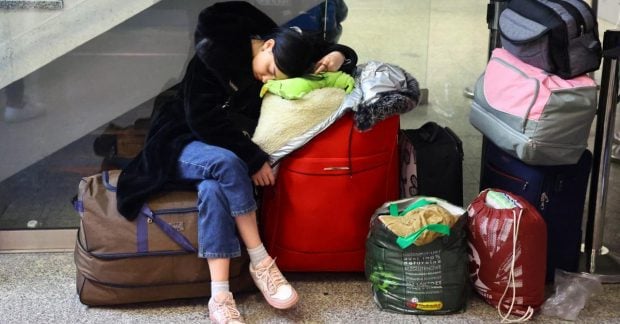
As of late 2025, approximately 5.6 million Ukrainians remain abroad, with 4.3 million residing in Western countries. This data emerges from a study conducted by the Center for Economic Strategy, which highlights the ongoing challenges faced by Ukrainian refugees.
The primary host countries for Ukrainian refugees are Germany, accommodating 33% of this population, and Poland, which hosts 19.5%. Estimating the number of Ukrainians in Russia and Belarus remains complex, with the latest United Nations figures suggesting around 1.3 million individuals, a number that has not been updated since 2023.
The demographic breakdown indicates that women constitute 40% of those who have left, while children make up 31%. Men over the age of 18 account for 29% of the refugee population. Following the easing of border crossing restrictions for men aged 18 to 22, an additional 96,000 individuals from this group left Ukraine between August and November 2025, resulting in one in seven young men in this age category currently residing abroad.
Among refugee families, over one-third (37%) have children under 18 years old. The trend shows that families with children were more likely to leave in 2025, with 25% of families departing compared to 17% from 2022 to 2024.
The study indicates that Ukrainian refugees are predominantly well-educated, with 71% holding at least a bachelor’s degree, and many were employed in Ukraine prior to the conflict. Currently, 1.7 million adult Ukrainians have successfully integrated into the labor markets of Western countries.
When considering plans to return to Ukraine, men, youth, and individuals with higher incomes abroad are less inclined to come back. Factors such as having children often anchor families in the stability of Western educational systems.
Conversely, several elements encourage return, including:
- Having a partner in Ukraine, which doubles the likelihood of returning;
- Remote work or enrollment in Ukrainian educational institutions;
- Maintaining financial connections through remittances to relatives.
Estimates from the Center for Economic Strategy suggest that between 2.1 and 3 million Ukrainian refugees may not return. Conversely, projections indicate that between 1.3 and 2.2 million Ukrainians will return home. Depending on the final number of those who do not return, Ukraine’s annual GDP losses could range from 2% to 9.5%.
Recent Developments for Ukrainian Refugees
Starting March 5, 2026, Ukrainian refugees in Poland will lose specific benefits and payments, transitioning to the same regulations as other foreign nationals. This change follows Polish President Karol Nawrocki’s decision to repeal a 2022 law that facilitated employment and access to social benefits for Ukrainian citizens.
In Norway, the government plans to tighten residency regulations for displaced persons from Ukraine. This includes the cessation of temporary collective protection for Ukrainian men aged 18 to 60.
Related News
- UK Changes Visa Renewal Times for Ukrainian Refugees
- UK Denies Asylum to Some Ukrainian Refugees
- Ukrainian Immigrants Show Higher Employment Activity than Poles
The ongoing situation for Ukrainian refugees abroad reveals significant demographic trends and economic implications for Ukraine. With millions remaining outside the country, factors influencing their return are complex and varied.