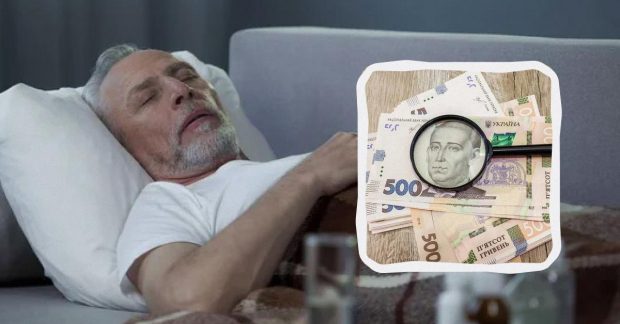
In Ukraine, a specific form of financial assistance is available for individuals caring for the elderly or those with disabilities. This support is aimed at people who provide care for citizens unable to look after themselves due to health conditions or age.
According to Irina Zakvatska, a legal assistant at the law firm “Maxim Boyarchuk and Partners,” eligibility for this state support, the amount of aid, and the application process are clearly defined.
Who Can Access Financial Assistance?
Zakvatska explained that the law in Ukraine allows for state social assistance for the elderly and other specific groups. This monthly financial aid is intended for individuals who require constant care due to their health or age.
The amount of this assistance is linked to the minimum subsistence level for individuals who have lost their ability to work, which is set at 2,595 UAH for 2026. Various criteria determine the exact amount awarded.
Eligible recipients include:
- Individuals with war-related disabilities (Group I without additional conditions and Groups II-III if they are single and have a medical commission’s conclusion stating the need for constant care).
- Retired military personnel and law enforcement officers with Group I disabilities.
- Single pensioners who require constant care as confirmed by a medical commission.
- Low-income individuals with Group I disabilities.
- Individuals over the age of 80 who are single or have a medical commission’s conclusion regarding their need for constant care.
This list is outlined in point 13 of Cabinet Resolution No. 261. Relatives of these individuals are entitled to receive compensation for the care they provide, as stipulated in Cabinet Resolution No. 859.
Compensation can be claimed by individuals offering non-professional caregiving services, typically family members such as spouses, parents, children, or siblings.
“Usually, it is the closest relatives, like a husband or wife, parents, children, grandparents, or siblings,” Zakvatska noted.
She emphasized that a key requirement for receiving compensation is joint residence and the actual provision of care.
How Much Financial Aid is Provided?
The opportunity to receive financial support for caregiving is not new in Ukraine, but it has been structured into four distinct categories for 2026:
- 100% of the minimum subsistence level for individuals who have lost their ability to work – 2,595 UAH (for those with Group A I disabilities due to war).
- 50% of the minimum subsistence level – 1,297.50 UAH (for individuals with Group B I disabilities due to war).
- 40% of the minimum subsistence level – 1,038 UAH (for single individuals over 80 who require constant care).
- 30% of the minimum subsistence level – 778.50 UAH (for low-income individuals with Group I disabilities).
Zakvatska clarified that those caring for individuals with Group I disabilities due to war can expect monthly compensation ranging from 30% to 100% of the minimum subsistence level, translating to amounts between 778.50 UAH and 2,595 UAH.
For caregivers of individuals with Group II disabilities due to war, compensation is set at 25% of the minimum subsistence level, or 648.75 UAH. For those caring for individuals with Group III disabilities, the compensation is 15% of the minimum subsistence level, amounting to 389.25 UAH.
How to Apply for Caregiving Assistance
Zakvatska outlined a critical aspect of the application process for caregiving assistance in Ukraine. She noted that the individual requiring care must be either single and low-income or possess a medical commission’s conclusion confirming the need for constant care.
“Simply having, for example, a Group III disability does not automatically qualify a person for social assistance,” she stated.
Eligible caregivers include:
- First-degree relatives – spouses, parents, children.
- Second-degree relatives – grandparents, siblings.
If these relatives are unavailable, other family members can apply, provided they live together with the individual needing care and share a household. Under certain conditions, non-relatives can also provide care.
Zakvatska detailed the necessary documentation for applying for caregiving assistance:
- A written application for state assistance.
- Identification documents for the person requiring care.
- Taxpayer identification number.
- Income declaration.
- Medical commission conclusion confirming the need for constant care.
- Documents proving military service (if applicable).
- Legal documents regarding incapacity, if applicable.
These documents must be submitted to the local administrative service center. Both the caregiver and the individual requiring care must submit applications to the social protection authority.
Zakvatska explained that if compensation is granted to non-relatives, it must be demonstrated that the individual needing care lacks available relatives or that those relatives are unable to provide care.
“For instance, one could include death certificates of relatives or documents proving the incapacity of other family members or their absence abroad,” she advised.
If the individual needing care is bedridden, the caregiver must also obtain a residence verification document to confirm their cohabitation with the person requiring care. This can be arranged through local housing associations or municipal authorities.
In Ukraine, financial assistance is available for caregivers of the elderly and disabled, with specific eligibility criteria and compensation amounts. The application process requires documentation to confirm the need for care and the caregiver's relationship to the recipient.