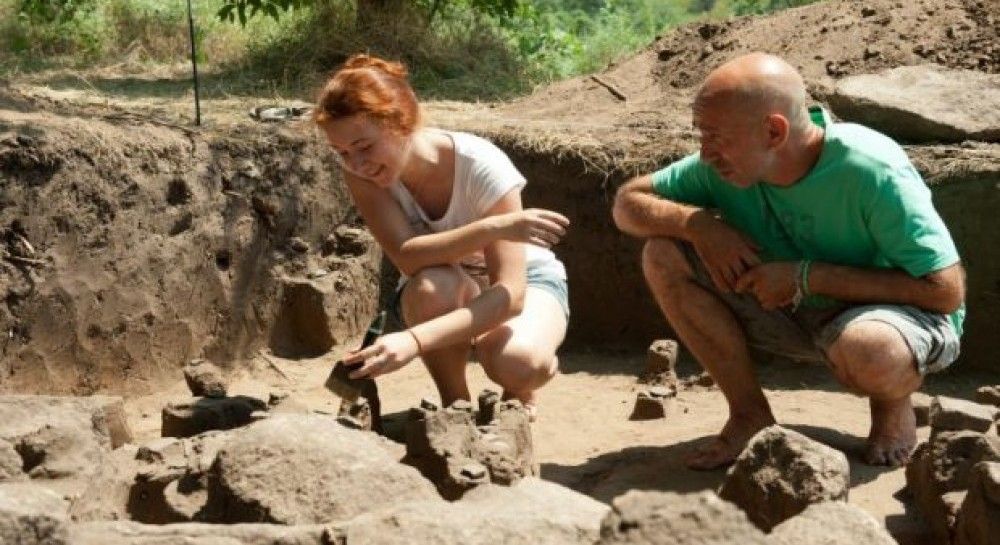
Archaeologists have uncovered a significant find from the Trypillia culture in the Ternopil region of Ukraine. During an excavation near Husiatyn, they discovered ancient wheat grains estimated to be around 5,000 years old.
The artifacts were located in a forest while researchers were investigating an ancient settlement. According to archaeologist Yana Yakovyshyna, the grains were preserved inside a damaged clay pot.
“In one of the broken pots, wheat remained at the bottom. It was charred because the pot had been exposed to fire. The grains became carbonized, which prevented them from rotting. The quantity is roughly equivalent to two handfuls,” Yakovyshyna noted.
The preservation of the wheat is attributed to the charring process during a fire, which helped maintain its condition over millennia. The quantity found was surprising to researchers, as they typically uncover only individual grains during such digs.
The artifacts have been handed over to specialists for further analysis. Scientists aim to identify the specific type of wheat and conduct radiocarbon dating to confirm its age.
Such discoveries are rare, as organic materials seldom survive for thousands of years. This find not only highlights the advanced agricultural practices of the Trypillians but also offers a unique glimpse into their daily lives. The preserved grains could provide insights into the crops cultivated by ancient peoples and the development of agriculture in what is now Ukraine.
Unique Archaeological Discoveries
Recently, researchers uncovered evidence of a civilization that thrived in Northern Europe during the same period as biblical events. This finding challenges previous notions about the scale and wealth of ancient Scandinavian inhabitants. The identified settlement is considered the largest in Denmark from around the time of Christ’s birth, featuring what experts describe as the richest burial site in Scandinavia, with over 630 artifacts found.
Additionally, archaeologists studying Roman history in Switzerland recently discovered a 2,000-year-old Roman military camp situated at an altitude of 2,133 meters. This camp was strategically placed to monitor valleys and mountain passes, areas that would be difficult to observe from flatlands. Today, only ditches and walls remain, with lead sling bullets marked with the insignia of the 3rd Roman Legion being the most notable artifacts.
Related News:
- Architectural Object Destroyed by Occupiers in Mariupol
- Cultural Davos Held in Ukraine Highlighting Trypillia Heritage
- Unique Sword from Kyiv Rus Era Found in Zhytomyr Region
Archaeologists in Ukraine's Ternopil region have discovered ancient wheat grains from the Trypillia culture, dating back approximately 5,000 years. This rare find not only sheds light on the agricultural practices of ancient civilizations but also provides a unique opportunity to study their daily lives.