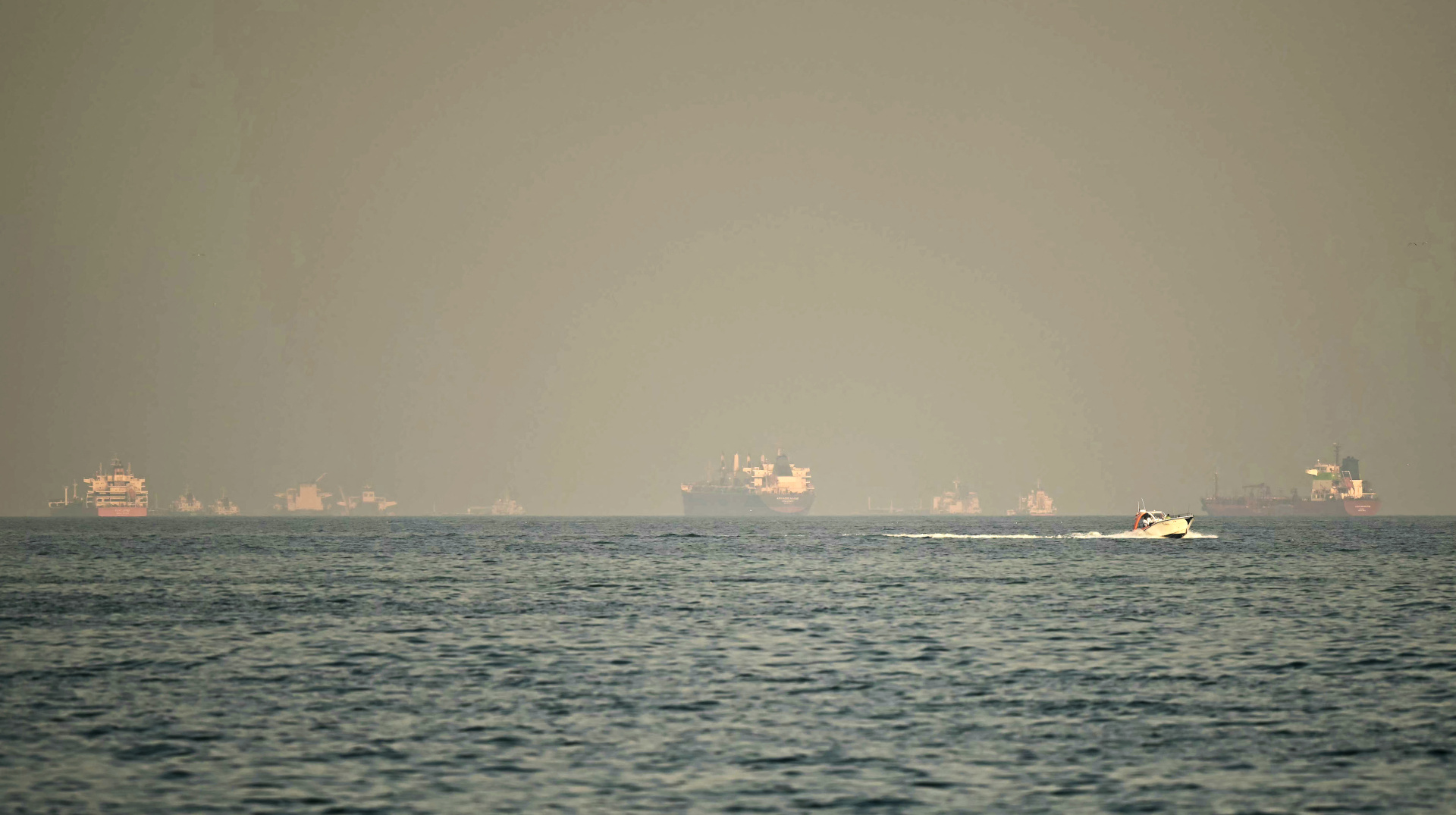
In a significant shift, crews of at least ten vessels in the Persian Gulf have begun changing their transponder identification to indicate ownership by China. This move comes as a precaution against potential targeting by Iranian military forces.
Over the past week, these ships have modified their automatic identification system signals to phrases such as “Chinese owner,” “Fully Chinese crew,” or “Chinese crew on board.” According to the Lloyd’s Market Association, approximately 1,000 vessels valued at around $25 billion are currently blocked in the Persian Gulf and surrounding areas.
As Iranian forces have escalated their attacks on vessels, including drone strikes near Kuwait, captains are resorting to these tactics to avoid becoming targets. Some ships are also manipulating their GPS signals to mislead guided missiles, causing them to appear clustered or overlapping on monitoring maps.
“Last Saturday, on the first day of the conflict, the fuel tanker Bogazici crossed the strait, identifying itself as ‘Muslim Vsl Turkish,’ then reverted to its original name once the danger had passed,”
one source noted. On March 4, the vessel Iron Maiden navigated through the Strait of Hormuz, changing its signal to “China Owner” until it reached Omani waters.
Matthew Wright, an analyst from Kpler, explained that captains can easily alter their transponder signals, which are primarily used for communication with nearby vessels and collision avoidance. He stated, “They can change whatever they want; you can write anything you like there.” This practice first emerged in the Red Sea in 2023 when Houthi forces began attacking commercial ships.
Recent developments have seen the United States and Israel launching a large-scale military campaign against Iran, prompting Tehran to retaliate with ballistic missile and drone strikes on American bases and allied territories in the Middle East, including Qatar, Bahrain, Kuwait, and the UAE. In response, Iran has also blocked the Strait of Hormuz.
The blockade and attacks on tankers have led to a surge in oil prices, prompting the U.S. to consider lifting sanctions on Russian oil to increase global supply and prevent shortages.
Recent actions by crews of vessels in the Persian Gulf to change their identification signals highlight the escalating tensions with Iran. As military actions intensify, these tactics aim to protect ships from potential attacks while impacting global oil prices.
Source: Financial Times