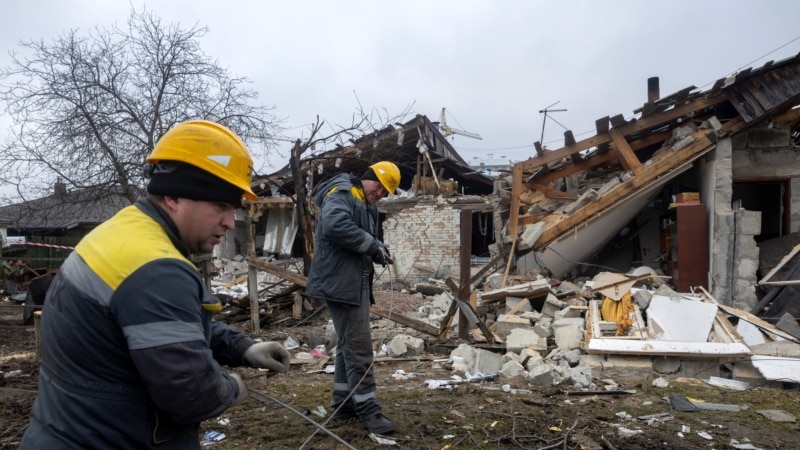
On February 20, Russian military strikes resulted in widespread power outages across several regions in Ukraine, including Mykolaiv, Sumy, Kharkiv, Dnipropetrovsk, and Zaporizhia. According to Artem Nekrasov, the First Deputy Minister of Energy, these attacks have forced the implementation of scheduled power cuts in most regions, alongside emergency outages in certain areas.
In addition to the outages, adverse weather conditions have left 40 settlements without electricity in Kherson, Mykolaiv, Odesa, and Dnipropetrovsk. Ivan Fedorov, the head of the Zaporizhia Regional Military Administration, reported that a nighttime attack by Russian forces in Zaporizhia left 8,000 consumers without power. “Around 6 AM, the enemy targeted critical infrastructure in Zaporizhia, affecting 41,000 subscribers. Energy workers immediately began addressing the aftermath, and efforts are ongoing,” he stated.
The Ukrainian Air Force confirmed that Russian forces launched one Iskander-M ballistic missile and deployed 128 strike drones, approximately 80 of which were Shahed drones. As of 8:30 AM, preliminary reports indicated that Ukrainian air defenses had intercepted or suppressed 107 enemy drones of various types across the northern, southern, and eastern regions of the country. Additionally, there were confirmed strikes from a ballistic missile and 21 strike drones across 14 locations, with debris falling in one area.
Russian military operations routinely target Ukrainian cities and civilian infrastructure using various types of weaponry, including strike drones, missiles, and multiple rocket launchers. Ukrainian authorities and international organizations have classified these strikes as war crimes, asserting that they are deliberate in nature.
Attacks on essential services and healthcare facilities, aimed at depriving civilians of electricity, heat, water, communication, and medical assistance, have been characterized as genocidal actions. Legal experts, genocide researchers, and human rights advocates argue that these actions fall under the definition of genocide during the ongoing large-scale war.
The Convention on the Prevention and Punishment of the Crime of Genocide, adopted by the UN General Assembly in 1948, obligates its 149 signatory countries to prevent and punish acts of genocide both in wartime and peacetime. The Convention defines genocide as actions intended to destroy, in whole or in part, a national, ethnic, racial, or religious group.
Indicators of genocide include the killing of group members or causing them serious bodily harm, deliberately inflicting conditions calculated to destroy a group, preventing births within the group, and forcibly transferring children from one group to another. Public incitement to commit such acts is also recognized as a sign of genocidal intent.
Despite these claims, Russian leadership denies that its military conducts targeted strikes against civilian infrastructure, asserting that such allegations are unfounded.
Recent Russian military strikes have left thousands of Ukrainians without power, prompting emergency measures across multiple regions. The attacks have been condemned as war crimes, with authorities citing a pattern of targeting essential services as part of a broader strategy during the ongoing conflict.