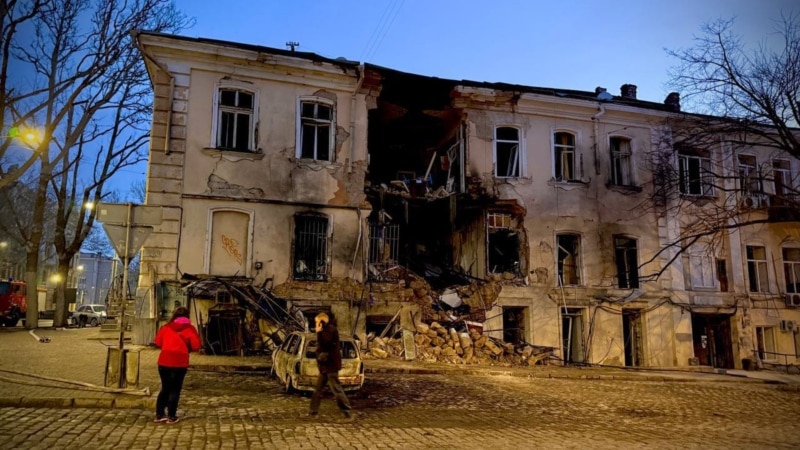
A nighttime drone strike in Odesa has resulted in significant damage to residential buildings across three districts, according to Oleg Kiper, head of the regional military administration. The attack has left three individuals injured, and emergency services successfully rescued three residents trapped in their apartments.
One of the drones, identified as a Shahed, struck a multi-storey building, causing partial destruction to several apartments, as well as damage to the facade and windows. The strike also impacted a municipal facility, damaging equipment and affecting 11 vehicles. All fires resulting from the incident have been extinguished by firefighters.
Serhiy Lysak, the head of the city military administration, specified that the destruction was recorded in the Primorsky, Kyiv, and Khadzhybey districts, affecting 14 residential buildings and a dormitory.
Russian forces have been consistently targeting Ukrainian cities and civilian infrastructure using various types of weaponry, including strike drones, missiles, and multiple rocket launch systems. Ukrainian authorities and international organizations classify these attacks as war crimes, emphasizing their deliberate nature.
Attacks on essential services and healthcare facilities aimed at depriving civilians of electricity, heating, water supply, communication, and medical assistance are seen as indicative of genocidal actions. Legal experts and human rights advocates assert that Russia’s actions during the ongoing conflict encompass various forms of crimes that could be classified as genocide.
The 1948 United Nations Convention on the Prevention and Punishment of the Crime of Genocide obligates its 149 member states to prevent and punish acts of genocide during both wartime and peacetime. The convention defines genocide as actions intended to destroy, in whole or in part, a national, ethnic, racial, or religious group.
Indicators of genocide include the killing of group members, causing serious bodily or mental harm, deliberately inflicting living conditions calculated to destroy a group, preventing births within the group, and forcibly transferring children from one group to another.
The Russian government denies that its military conducts targeted strikes against civilian infrastructure, claiming that such allegations are unfounded.
A recent drone strike in Odesa has resulted in injuries and damage to multiple residential buildings. Ukrainian authorities have condemned the attack as a war crime, highlighting ongoing concerns about targeted assaults on civilian infrastructure.