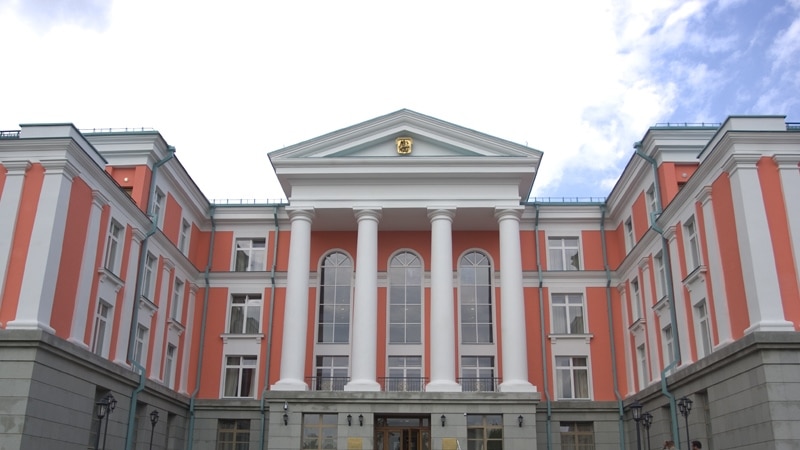
The network of “Russian Houses” across Belarus continues to actively promote narratives supporting Russia’s military actions in Ukraine. Recent events, reported by Belarusian service Radio Free Europe, highlight the centers’ efforts to commemorate significant dates related to the conflict.
On March 16, the “Russian House” in Brest hosted an event marking the anniversary of Russia’s annexation of Crimea. This gathering featured a screening of the documentary “Crimea: Portal of Time” produced by Skyfest, which focuses on Crimea’s historical heritage and artifacts currently housed in Russian museums.
Similarly, the “Russian House” in Grodno showcased the film “Call Sign: Passenger,” which tells the story of a Moscow writer who travels to Donbas in search of his missing brother. Alongside the film, an exhibition titled “People of Peace” was presented, dedicated to the residents of newly annexed Russian territories who have taken up the defense of their culture and language.
Earlier, on March 11, a documentary titled “Quiet Rear” was screened in Gomel, depicting the lives of the wives of Russian soldiers engaged in the conflict against Ukraine.
These centers regularly disseminate Russian news narratives regarding the annexation of Crimea and Donbas through their Telegram channels. The “Russian Houses” were established in Belarus under the auspices of the Russian state agency Rossotrudnichestvo and have expanded their activities following the dissolution of Belarusian civic organizations since 2020.
In the wake of Russia’s full-scale invasion of Ukraine, similar organizations have faced closure in several post-Soviet states, including Azerbaijan and Moldova. The Belarusian government has openly supported Russia’s aggression since February 24, 2022, permitting the use of its military infrastructure and airspace for the Russian army’s operations against Ukraine.
While Belarus does not officially participate in the conflict under the Geneva Convention criteria—due to the absence of Belarusian armed forces on Ukrainian soil—evidence of military industrial support or medical assistance to wounded Russian soldiers could lead to international legal challenges against Belarus as a co-aggressor.
Belarusian citizens are reportedly fighting on both sides of the conflict, although precise numbers remain unclear. Estimates suggest that over 80 Belarusians and ethnic Belarusians with Ukrainian citizenship have died while fighting against Russia, while more than 100 have been reported to have fought for Russia.
The network of "Russian Houses" in Belarus actively promotes pro-Russian narratives through events and film screenings, reflecting the government's support for Russia's actions in Ukraine. Despite Belarus's official stance, evidence suggests involvement that could lead to international scrutiny.
Source: Radio Free Europe