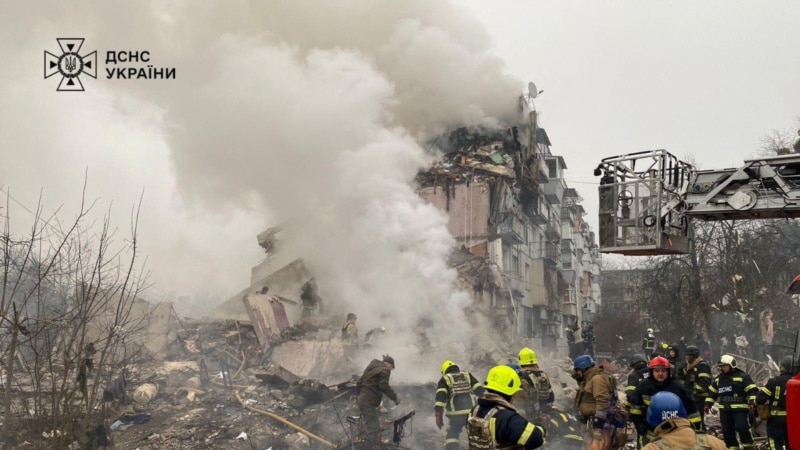
On March 7, Russian forces launched a series of attacks across Ukraine, targeting multiple regions including Poltava, Kyiv, and Kharkiv. The head of the Poltava Regional Military Administration, Vitaliy Dyakivnych, reported that air defense systems were activated in response to the assaults, which involved drones and missiles.
According to the Ukrainian Air Force, the night of March 7 saw the release of 480 drones and 29 missiles by Russian military forces. Ukrainian air defenses successfully intercepted 453 drones and 19 missiles. The attacks resulted in damage to a local enterprise, a private residence, and a vehicle, with one individual sustaining serious injuries and requiring hospitalization.
These incidents are part of a broader pattern of aerial assaults that have increasingly targeted civilian infrastructure throughout Ukraine. The Ukrainian government and various international organizations have classified these strikes as war crimes, emphasizing their deliberate nature.
The ongoing bombardments have raised significant concerns regarding the humanitarian impact on the Ukrainian population. Attacks on critical infrastructure, such as energy and healthcare facilities, are viewed as attempts to deprive civilians of essential services, which some legal experts argue could constitute genocidal actions.
Legal scholars and human rights advocates assert that the Russian military’s actions align with several indicators of genocide as defined by the 1948 United Nations Convention on the Prevention and Punishment of the Crime of Genocide. This includes the intent to destroy, in whole or in part, a national, ethnic, racial, or religious group.
Key indicators of genocide include: the killing or causing serious harm to members of a group; deliberately inflicting conditions calculated to bring about a group’s destruction; preventing births within the group; and forcibly transferring children from one group to another.
Despite these allegations, Russian officials continue to deny that their military is intentionally targeting civilian areas or infrastructure, asserting that their operations are aimed at military objectives. However, the scale and nature of the attacks have prompted widespread condemnation and calls for accountability.
Recent Russian military actions against Ukraine have intensified, resulting in significant damage and injuries. The attacks have raised serious concerns about potential war crimes and genocidal actions, as defined by international law.