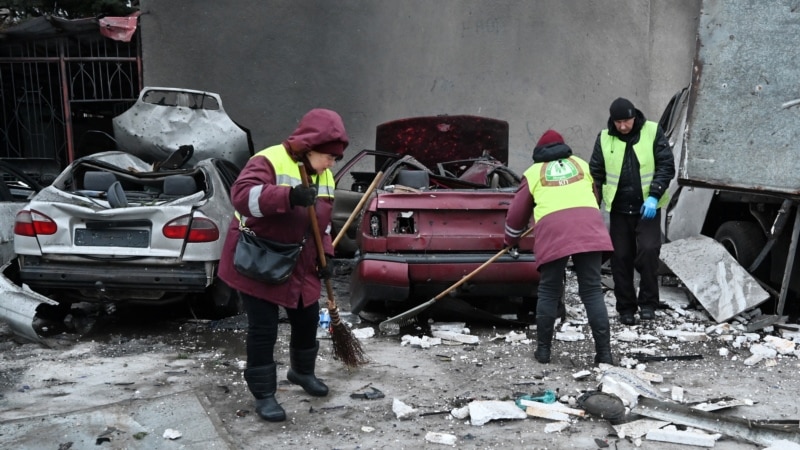
In the early hours of February 26, Russian forces executed a significant missile assault on Ukraine, deploying a combination of anti-ship missiles, ballistic missiles, and drones. The Ukrainian Air Force reported that the attack included two Zircon anti-ship missiles, 11 Iskander-M ballistic missiles, 24 Kh-101 cruise missiles, and around 420 drones, with approximately 280 identified as Shahed models.
As of 10:00 AM, Ukrainian air defenses managed to intercept multiple threats, successfully downing two Zircon missiles, four Iskander-M ballistic missiles, 24 Kh-101 cruise missiles, two Kh-69 guided missiles, and 374 enemy drones of various types, including Shahed, Gerbera, and Italmas.
Military sources confirmed that five ballistic missiles and 46 drones struck 32 locations across Ukraine, with debris falling in 15 areas. Further details regarding some of the missiles are still being clarified, as the assault continues.
Local officials reported injuries and destruction resulting from the overnight strikes. In Kharkiv, 16 individuals were injured, including two children. In Kryvyi Rih, elderly residents suffered injuries, including an 89-year-old man and an 82-year-old woman. Reports from Zaporizhzhia indicated eight injuries, including an eight-year-old boy. Damage was also noted in three districts of Kyiv, while Poltava experienced destruction and power outages. One person was reported injured in Kirovohrad.
Russian military operations have consistently targeted Ukrainian cities and civilian infrastructure using various weaponry, including drones, missiles, and artillery systems. Ukrainian authorities and international organizations have classified these attacks as war crimes, emphasizing their deliberate nature.
The assaults on essential services and healthcare facilities aim to deprive civilians of electricity, heating, water supply, communication, and medical assistance, raising concerns among legal experts and human rights advocates about potential genocidal actions. They argue that such attacks reflect a systematic effort to eliminate the Ukrainian identity, as evidenced by statements from Russian officials questioning the existence of Ukrainians as a distinct ethnic group.
Legal scholars have pointed out that the ongoing military actions could fall under the definitions of genocide as outlined in the 1948 United Nations Convention on the Prevention and Punishment of the Crime of Genocide. This convention obligates its 149 signatory nations to prevent and punish acts of genocide during both wartime and peacetime.
The Convention defines genocide as actions aimed at partially or fully destroying a national, ethnic, racial, or religious group. Indicators of genocide include the killing of group members, causing serious bodily or mental harm, and deliberately inflicting conditions calculated to bring about a group’s destruction.
Despite these claims, Russian leadership has consistently denied that its military targets civilian infrastructure, asserting that its operations are aimed at military objectives.
A large-scale missile attack by Russian forces on Ukraine resulted in numerous casualties and widespread damage. Ukrainian air defenses intercepted many of the incoming threats, but significant injuries were reported across various regions, raising concerns about potential war crimes.