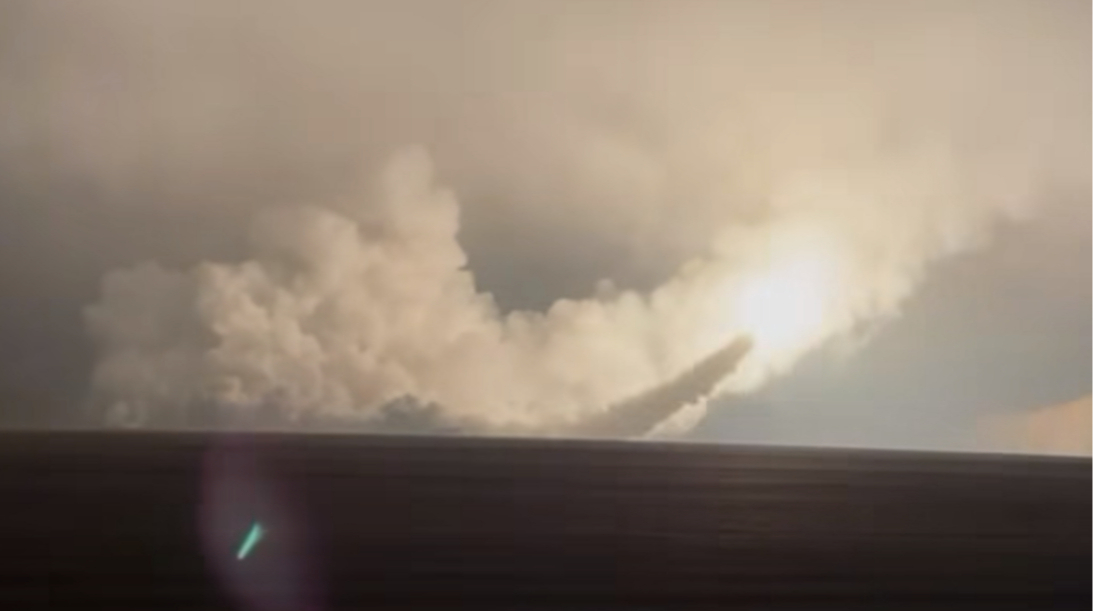
On February 27, 2026, authorities in Russia declared a “rocket threat” in at least 13 regions for the first time since the outbreak of the war in Ukraine. This unprecedented alert affected areas that are not typically considered border regions.
The regions impacted include Tatarstan, Bashkortostan, Chuvashia, Udmurtia, and several others, such as Samara, Ulyanovsk, Penza, Saratov, Orenburg, Sverdlovsk, Rostov, and Kursk, along with Perm Krai. Notably, this was the first time a rocket threat had been announced in at least eight of these locations.
In response to the alerts, public transport was suspended in some areas, including Almetyevsk, and evacuations were ordered for students in Kazan and Izhevsk, as well as for employees at Kurumoch Airport in Samara.
Russian state media, citing the government of Chuvashia, reported that one Ukrainian “Flamingo” missile was allegedly intercepted over the republic, while another reportedly altered its course and flew beyond the region. Additionally, the social media platform Shot claimed that two “Flamingo” missiles were shot down in Chuvashia. Meanwhile, the Telegram channel “Radar Across Russia” reported three interceptions, with one missile downed in Udmurtia, another in Perm Krai, and one more over the Azov Sea near Taganrog.
Later, the Russian Ministry of Emergency Situations announced the lifting of the “rocket threat” status in nine regions of the Volga Federal District.
In context, The Economist noted in October 2025 that Ukraine had begun using its own “Flamingo” missiles for strikes against occupied territories, producing 2-3 missiles per day, with plans to increase output to seven per day by the end of October. Furthermore, on February 25, 2026, President Volodymyr Zelensky stated that all FP-5 “Flamingo” missiles launched during an attack on the Votkinsk plant in Udmurtia successfully reached their targets, underscoring the missiles’ quality and accuracy.
On February 27, Russia issued simultaneous rocket threat alerts across 13 regions, marking a significant escalation in the ongoing conflict with Ukraine. This unprecedented measure led to public transport suspensions and evacuations in several areas, highlighting the heightened tensions in the region.
Source: The Moscow Times