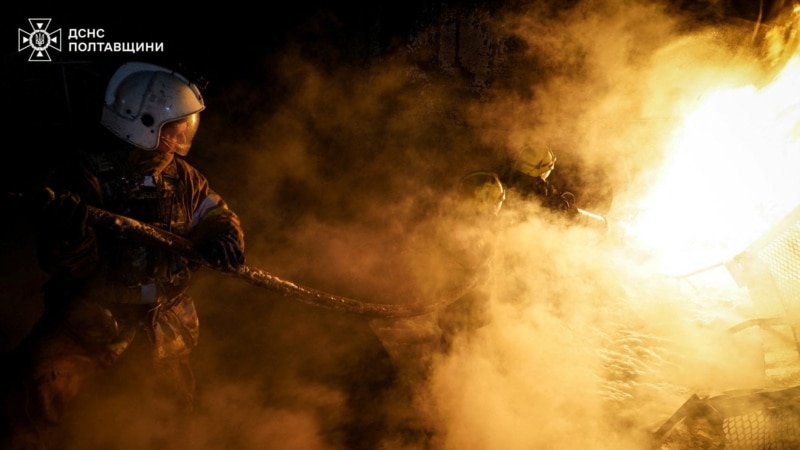
On March 3, four individuals sustained injuries in the Poltava region due to the fall of debris from a Russian drone, as reported by the head of the regional military administration, Vitaliy Dyakivnych.
According to Dyakivnych, the incident occurred in the morning, and the victims are receiving necessary medical assistance for their moderate injuries. Nearby buildings were also damaged as a result of the debris falling.
The use of various weaponry, including strike drones, missiles, and multiple launch rocket systems, has become a common tactic employed by Russian forces targeting Ukrainian cities and civilian infrastructure across the country.
Ukrainian authorities, alongside international organizations, classify these attacks as war crimes committed by the Russian Federation, emphasizing their deliberate nature.
Attacks on essential services and healthcare facilities are viewed as attempts to deprive civilians of electricity, heating, water supply, communication, medical assistance, and other vital living conditions. Legal experts and human rights advocates argue that such actions may constitute genocidal acts.
During the ongoing large-scale conflict, various forms of crimes against Ukrainian citizens are being reported, which could fall under the definition of genocide. These include:
- Public declarations by Russian officials asserting that Ukrainians do not exist as an ethnic group and that those who believe otherwise should be eliminated.
- Calls for the destruction of Ukrainians.
- Targeted strikes on critical infrastructure aimed at undermining the basic needs of the population.
- Persecution of pro-Ukrainian individuals in occupied territories.
- Destruction of the intelligentsia, including educators and cultural figures.
- Implementation of educational systems in occupied areas designed to alter children’s identities.
- Deportation of children to Russia to change their identity.
- Destruction and theft of Ukrainian cultural artifacts and literature.
The Convention on the Prevention and Punishment of the Crime of Genocide was adopted by the United Nations General Assembly in 1948. Currently, 149 countries are parties to this Convention, which mandates the prevention and punishment of genocide during both wartime and peacetime.
The Convention defines genocide as actions intended to wholly or partially destroy a national, ethnic, racial, or religious group. Indicators of genocide include the killing of group members, causing serious bodily or mental harm, deliberately inflicting living conditions aimed at destroying the group, preventing births, and forcibly transferring children from one group to another.
Despite these allegations, Russian leadership denies that its military is intentionally targeting civilian infrastructure, claiming that such accusations are unfounded.
The incident in Poltava highlights ongoing attacks by Russian forces on Ukrainian civilian infrastructure, raising concerns over potential war crimes and genocidal actions. As the conflict continues, international scrutiny of these actions intensifies.