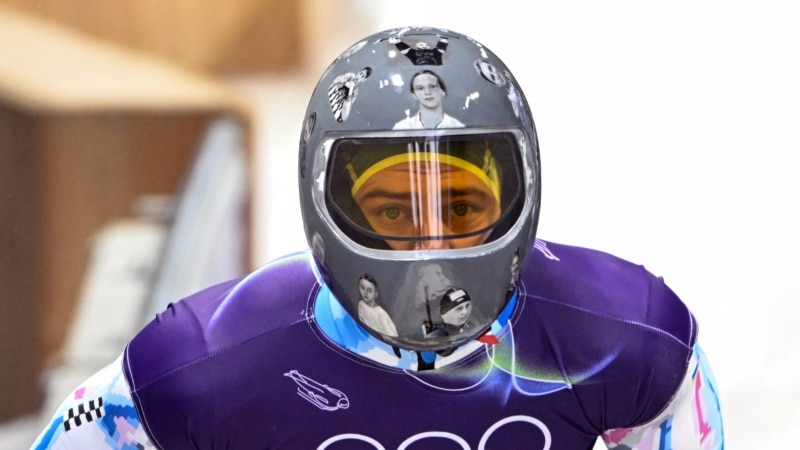
The International Olympic Committee (IOC) has disqualified Ukrainian skeleton athlete Vladyslav Heraskevych from competing in the 2026 Winter Olympics, citing violations of expression rules. This decision, announced on February 12, follows Heraskevych’s intention to wear a helmet featuring portraits of deceased Ukrainian athletes.
The IOC stated that Heraskevych’s helmet did not comply with the regulations set forth by the International Bobsleigh and Skeleton Federation (IBSF). In its announcement, the IOC expressed regret over the necessity to revoke Heraskevych’s accreditation, noting that multiple discussions had taken place with the athlete prior to this decision.
According to the IOC, Heraskevych was provided with opportunities to display his helmet during training sessions and was also offered a chance to showcase it after his events in the mixed zone. Despite these options, the athlete reportedly declined to reach any compromise.
Following a meeting with IOC President Kirsty Coventry upon his arrival at the competition venue, Heraskevych was informed of the committee’s stance once more. However, he maintained his position regarding the helmet.
The Ukrainian National Olympic Committee (NOC) confirmed the disqualification, stating, “Today, Vladyslav did not start, but he was not alone—he had the support of all of Ukraine. When an athlete stands for truth, honor, and memory, that is already a victory.”
Earlier, Heraskevych had requested the IOC to lift the ban on wearing the “memory helmet,” to apologize for the pressure exerted on him, and to provide electric generators to Ukrainian sports facilities affected by ongoing attacks. He has yet to publicly comment on the disqualification.
On February 10, Heraskevych revealed that the IOC had prohibited him from using the helmet adorned with images of fallen Ukrainian athletes. He pointed out that an Italian snowboarder had previously competed with a helmet featuring the Russian flag.
In response, the IOC maintained that the helmet violated unspecified rules but allowed for the wearing of black armbands to honor the deceased.
On February 11, Sky News reported, citing Mark Adams, that the IOC planned to persuade Heraskevych not to wear the helmet during the Games. Instead, he would be permitted to display it during press conferences and in areas outside the competition field.
Vladyslav Heraskevych, a Ukrainian skeleton athlete, has been disqualified from the 2026 Winter Olympics due to a violation of IOC rules regarding expression. His intention to wear a helmet honoring deceased athletes led to this decision, despite multiple discussions and alternative options provided by the IOC.
Source: Radio Svoboda