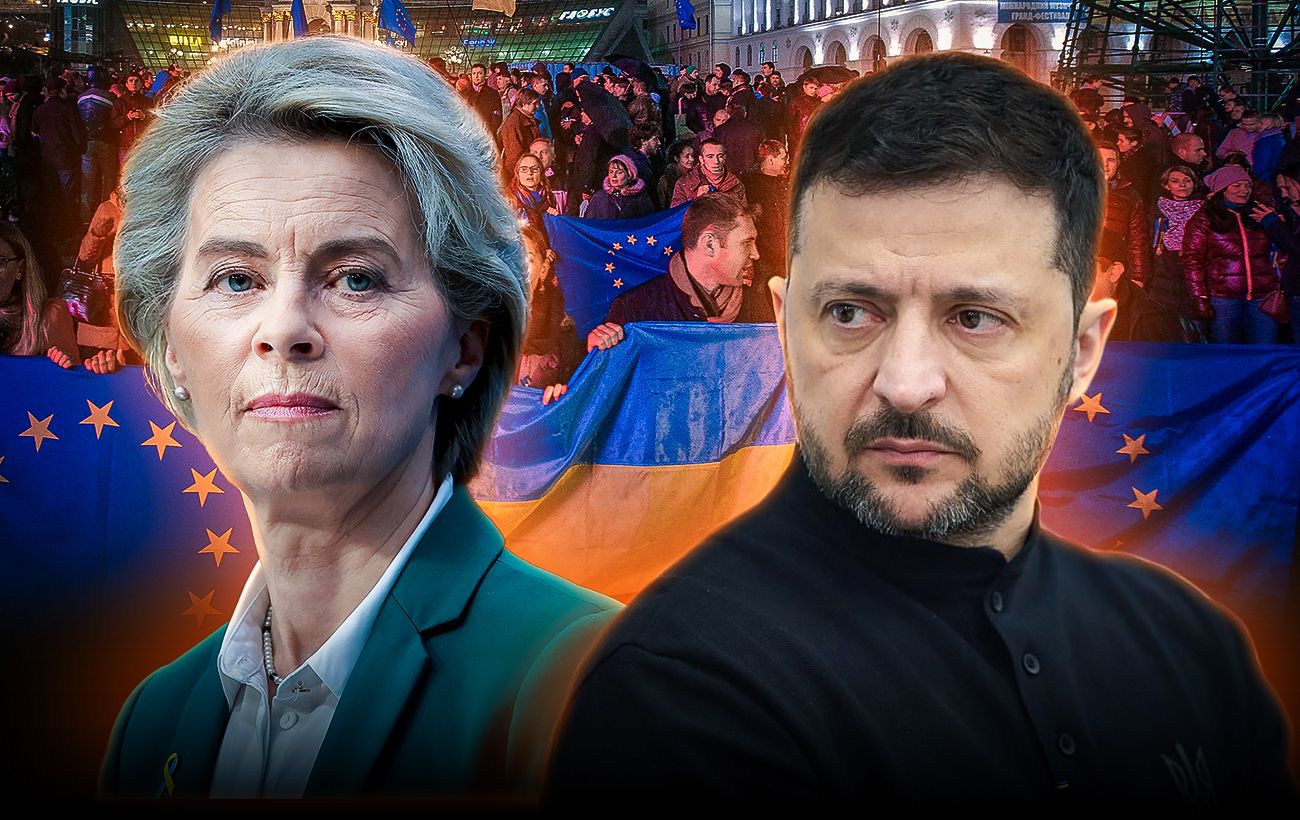
Ukraine aims to sign an agreement for European Union membership by 2027, a goal set by its government amidst significant challenges. The feasibility of this timeline hinges on the pace of reforms and the political will of EU member states.
Key Points:
- Target Year: 2027 is the focal point for Kyiv, but meeting this deadline depends on reform progress and EU political dynamics.
- No Fast Track: Brussels is not prepared to expedite Ukraine’s accession, insisting on adherence to standard membership procedures.
- Economic Concerns: Several EU nations express fears regarding competition from Ukraine’s agricultural sector and other industries.
- Signing the Agreement: Finalizing the membership agreement is only the beginning, as ratification by all 27 EU member states presents a formidable challenge.
In a recent interview, Ukraine’s Deputy Prime Minister for European Integration, Taras Kachka, stated, “We can sign the membership agreement in 2027.” This assertion reflects a level of optimism acknowledged even within the Ukrainian government. Achieving this goal requires alignment of various factors, including legislative support from the Verkhovna Rada and favorable political conditions in EU member states.
It is important to note that signing the membership agreement does not equate to immediate EU membership. Following the agreement, a lengthy and potentially contentious ratification process in each EU member state will be necessary before Ukraine can be recognized as a full EU member.
Ukraine’s pursuit of EU integration accelerated significantly following Russia’s full-scale invasion in February 2022. On February 28, just days after the invasion began, Ukraine officially applied for EU membership, a move that was initially met with skepticism in some Western circles given the dire security situation.
However, the Ukrainian leadership viewed this moment as a unique geopolitical opportunity. This perspective was validated when, four months later, Ukraine was granted candidate status for EU membership, a process that typically takes much longer for other countries. This rapid advancement was facilitated by the reforms undertaken in Ukraine over the past eight years since the Revolution of Dignity.
Discussions surrounding Ukraine’s EU membership resurfaced prominently last autumn, particularly in the context of Donald Trump’s proposed peace plan, which included Ukraine’s EU accession as a priority. Despite recent stagnation in peace negotiations, the prospect of EU membership remains a critical aspect of Ukraine’s post-war security guarantees.
Ukraine’s integration into the EU is viewed as a significant political asset for President Zelensky, particularly in the context of upcoming elections. Achieving EU membership could serve as a tangible victory for the government, contrasting with the more complex narrative surrounding any potential peace agreement.
Current Status of Ukraine’s EU Accession
In December 2023, the EU agreed to open accession negotiations with Ukraine, although progress has since stalled due to opposition from Hungarian Prime Minister Viktor Orbán. His resistance has become a focal point in his political campaign, complicating Ukraine’s path forward.
Efforts are underway to navigate around Orbán’s veto, with Ukrainian officials and EU allies exploring creative solutions. However, past incidents, such as attacks on anti-corruption agencies in Ukraine, have dampened enthusiasm for supporting Ukraine’s EU aspirations among European diplomats.
In December, a workaround known as “frontloading” was approved, allowing informal negotiations between Ukraine and the EU to proceed despite Hungary’s official blockade. Ukraine has received benchmarks from the EU outlining the necessary reforms required for membership.
Two potential scenarios could resolve the Hungarian veto: Orbán losing the upcoming elections, leading to a government more amenable to EU integration, or Orbán remaining in power, which presents a more challenging landscape for Ukraine’s accession.
Ukrainian officials are also considering the implications of a potential Trump administration role in facilitating the removal of Hungary’s veto if it becomes critical for peace negotiations.
As Ukraine pushes for a definitive membership date, President Zelensky emphasized the importance of establishing a clear timeline for EU accession, linking it to the broader diplomatic process aimed at concluding the ongoing conflict. He articulated concerns that without a specific date, Russia may find ways to obstruct Ukraine’s EU aspirations.
The EU maintains that accession is a merit-based process, requiring candidate countries to demonstrate substantial reforms before a membership date can be established. This approach underscores the necessity for Ukraine to fulfill its reform commitments, particularly regarding the rule of law.
Despite the challenges, Ukrainian officials remain committed to the goal of full EU membership, although they acknowledge the complexities involved in navigating the political landscape within Europe. The prospect of “hybrid” or partial integration has emerged as a potential alternative, reflecting the realities of EU accession dynamics.
In conclusion, while Ukraine’s ambition for EU membership by 2027 is firmly set, the path ahead is fraught with political hurdles and requires sustained reform efforts amidst a complex geopolitical backdrop.
Ukraine aims for EU membership by 2027, facing significant challenges including political opposition and the need for extensive reforms. The path to accession remains complex and contingent on various factors, including the geopolitical landscape and internal EU dynamics.