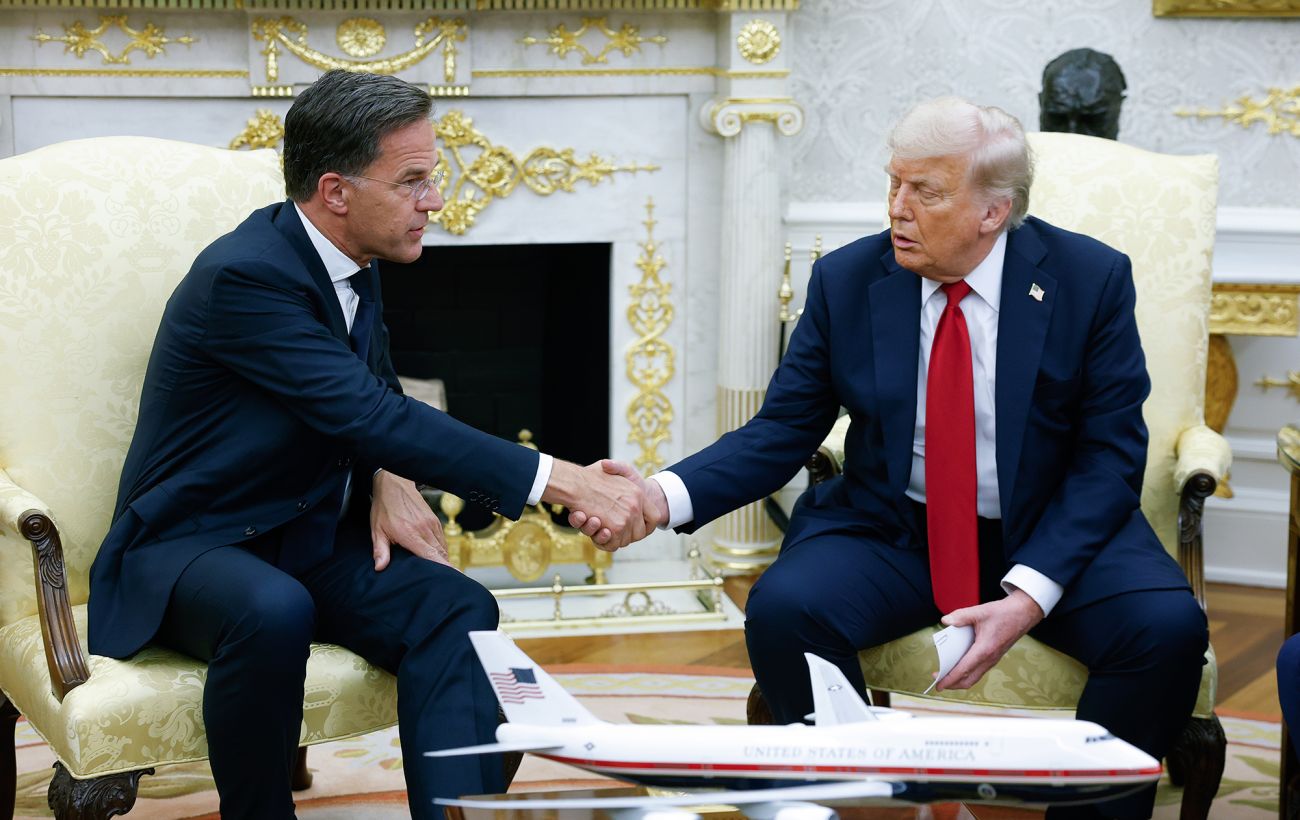
The relationship between the United States and NATO allies has come under scrutiny following recent comments by President Donald Trump. During a meeting with NATO Secretary General Mark Rutte, Trump reportedly expressed disappointment over allies’ reluctance to join military actions against Iran.
A Delicate Meeting
This discussion occurred shortly after the U.S. and Iran agreed to a two-week ceasefire, which included the opening of the strategically important Strait of Hormuz. Rutte noted on CNN that Trump was candid about his feelings regarding recent events, describing the situation as “very delicate.” While he refrained from confirming whether Trump mentioned a desire to withdraw from NATO, he characterized the conversation as “very frank and very open” between two close allies.
Threats of Withdrawal and White House Response
Earlier, White House Press Secretary Caroline Levitt acknowledged that Trump had discussed the possibility of exiting NATO. She stated, “I think this is something the president will be discussing in a few hours with Secretary General Rutte.” Trump has previously criticized NATO, claiming that the alliance was absent when the U.S. needed support and would likely be absent again in the future. In a post on Truth Social, he referenced Greenland, describing it as a “big, poorly managed chunk of ice” in relation to NATO’s perceived failures.
Trump’s frustrations with NATO reportedly stem from the alliance’s resistance to his proposal to purchase Greenland, which he has cited as a significant point of contention.
Legal Constraints
Trump’s criticisms of NATO are not new; he has long asserted that he has the authority to withdraw the U.S. from the alliance unilaterally. However, a law passed by Congress in 2023 prohibits any president from exiting NATO without congressional approval. This legislation was championed by current Secretary of State Marco Rubio when he was a senator from Florida.
Congressional Reaction
In response to Trump’s remarks, Senate Minority Leader Mitch McConnell urged the president to be “clear and consistent” about his stance. He reminded Trump that NATO allies had sent troops to fight alongside American forces in Afghanistan and Iraq following the September 11 attacks. McConnell emphasized, “It is not in America’s interest to spend more time nursing grievances against allies who share our interests than it is to deter adversaries who threaten us.”
Additionally, The Wall Street Journal reported that the Trump administration is considering relocating U.S. troops from NATO countries that have declined to support military action against Iran to positions closer to Russia’s borders in Poland, Romania, Lithuania, and Greece.
Former British National Security Advisor Lord Peter Ricketts warned Prime Minister Keir Starmer that the U.S. may no longer be a reliable ally, suggesting that the notion of a “special relationship” should be reconsidered.
In light of Trump’s threats to withdraw from NATO, Spanish Foreign Minister José Manuel Albares stated that Europe should move towards establishing its own military capabilities and deeper defense integration.
Meanwhile, the Kremlin dismissed Trump’s rhetoric, with Dmitry Medvedev, Deputy Chairman of the Russian Security Council, describing it as a “political show.”
President Trump's recent comments about NATO have raised concerns regarding U.S. alliances. Amid discussions of military actions against Iran, Trump expressed dissatisfaction with NATO allies, prompting responses from both Congress and European leaders.