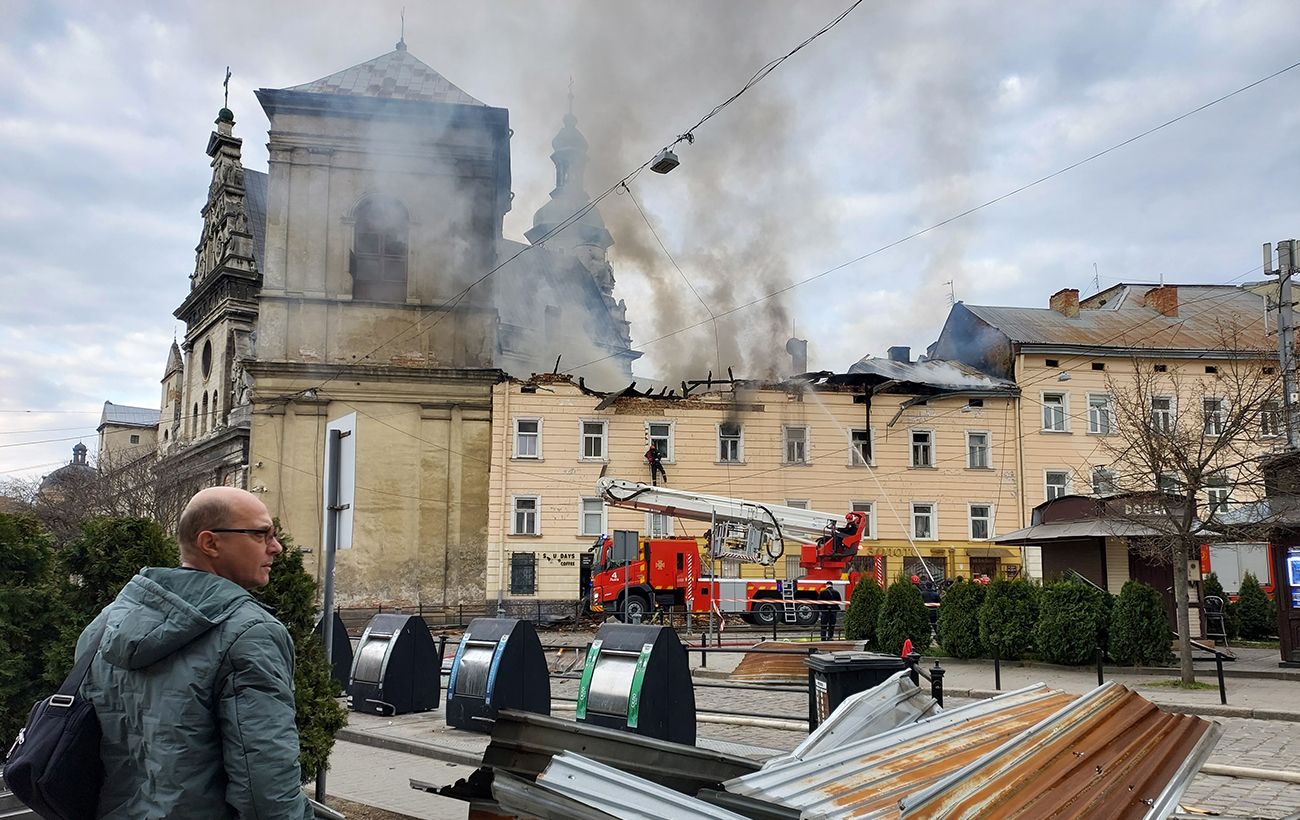
On March 24, Russian forces launched attacks on the central area of Lviv, resulting in damage to UNESCO World Heritage sites. Ukrainian officials are demanding a response from the director of UNESCO regarding these assaults.
Ukrainian Minister of Culture Oleksandr Tkachenko condemned the strikes, emphasizing that the attacks targeted a city renowned for its cultural significance. He noted that both the city center and residential neighborhoods were hit during the bombardment.
“I urge the Director-General of UNESCO to respond promptly and decisively to this crime,” Tkachenko stated. He affirmed Ukraine’s commitment to utilizing all available mechanisms to protect its cultural heritage and hold those responsible accountable.
He further asserted, “Russia is doing exactly what the Iranian regime does in the Middle East, but in the heart of Europe. Russia confirms its status as a terrorist state, and it must be treated accordingly—with strength, not weakness, and increased pressure on all fronts.”
Earlier in the day, drone strikes targeted Lviv’s center, damaging both heritage sites and residential buildings. Debris from a downed drone fell on one of the streets, adding to the chaos.
Lviv’s mayor, Andriy Sadovyi, reported that 13 individuals were injured and indicated that the number of casualties may rise as the situation develops.
In a broader context, on the night of March 24, Russian forces conducted a large-scale assault across Ukraine, deploying 426 aerial attack systems. Preliminary reports indicate that by 9:00 AM, air defense forces had intercepted or suppressed 390 targets, including 25 missiles and 365 drones.
Russian airstrikes on Lviv on March 24 have caused significant damage to UNESCO World Heritage sites and residential areas, prompting calls for international accountability. The assaults are part of a larger offensive across Ukraine, leading to numerous injuries and a heightened state of alert.