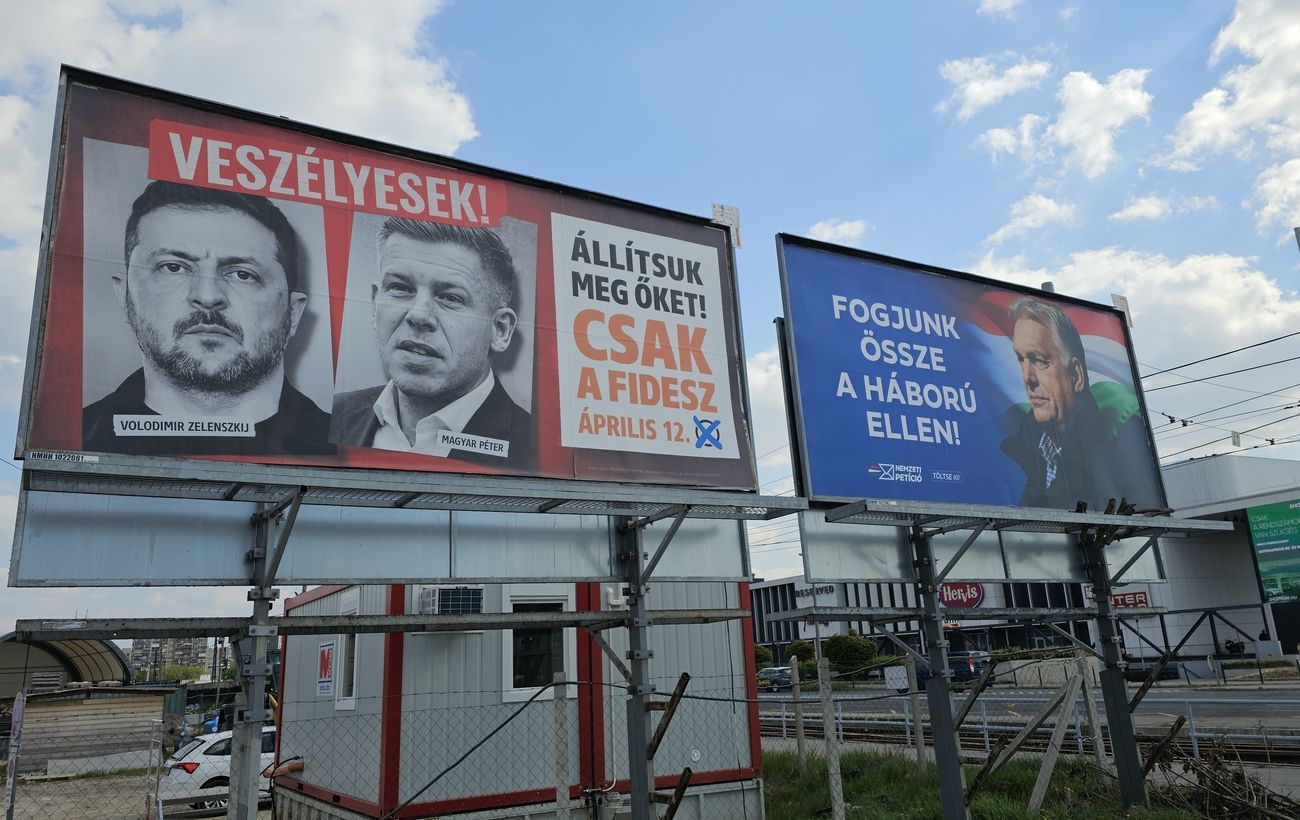
Hungarian Prime Minister Viktor Orban has made Ukraine a focal point of his electoral campaign, with images of President Volodymyr Zelensky appearing prominently throughout Budapest. As the elections approach, the rhetoric surrounding Ukraine has intensified, shaping the political landscape in Hungary.
In his campaign, Orban positions Ukraine as a primary adversary, asserting that Hungary should remain uninvolved in the ongoing conflict. He has publicly refused to provide financial or military support to Ukraine, emphasizing a narrative of national self-preservation.
Orban’s strategy includes linking Zelensky to his political opponent, Peter Madyar, portraying both as threats to Hungary’s sovereignty. Campaign materials depict them as “dangerous criminals,” suggesting that Madyar’s opposition party seeks to turn Hungary into a “Ukrainian colony.” This tactic aims to sway public opinion against the opposition by associating it with perceived external threats.
While Orban rallies support through fear of external dangers, Madyar has focused on domestic issues, such as corruption and rising living costs. His campaign events have attracted large crowds, contrasting with Orban’s gatherings, which, despite being visually impressive from above, have drawn only a fraction of Budapest’s population.
At a recent rally on April 11, Orban reiterated his stance, stating, “We will not give our children to Ukraine, we will not give our money, and we will not give our weapons.” His speeches consistently return to the theme of Ukraine, addressing issues like the blocking of a €90 billion loan and the closure of Hungarian schools in Transcarpathia.
Orban’s campaign employs a familiar strategy of personalizing the enemy, having previously used migrants and other groups to galvanize support for his Fidesz party over the past 16 years. This time, Zelensky has been singled out as the embodiment of a looming threat.
Throughout Budapest, posters featuring Zelensky have proliferated, with messages ranging from mocking his laughter to depicting him alongside Madyar in compromising scenarios. The campaign’s visual elements aim to create a pervasive atmosphere of fear regarding Ukraine’s influence.
In contrast, Madyar has largely avoided discussing Ukraine in his public addresses, concentrating instead on local governance issues. He has criticized Orban’s close ties with Russia, labeling the current administration as “Russian puppets” while promising not to send troops to Ukraine.
Despite the charged political atmosphere, the campaign has remained relatively peaceful, with verbal exchanges being the extent of confrontations at rallies. However, a “silent war” has emerged, with instances of vandalism targeting opposition campaign materials.
The upcoming elections will reveal how effectively Orban’s strategy resonates with voters, as both parties navigate a complex landscape shaped by domestic concerns and external conflicts.
Viktor Orban's campaign for the upcoming Hungarian elections heavily leverages anti-Ukrainian sentiment, portraying Ukraine and President Zelensky as threats. In contrast, his opponent Peter Madyar focuses on domestic issues, creating a stark divide in campaign strategies as the election approaches.