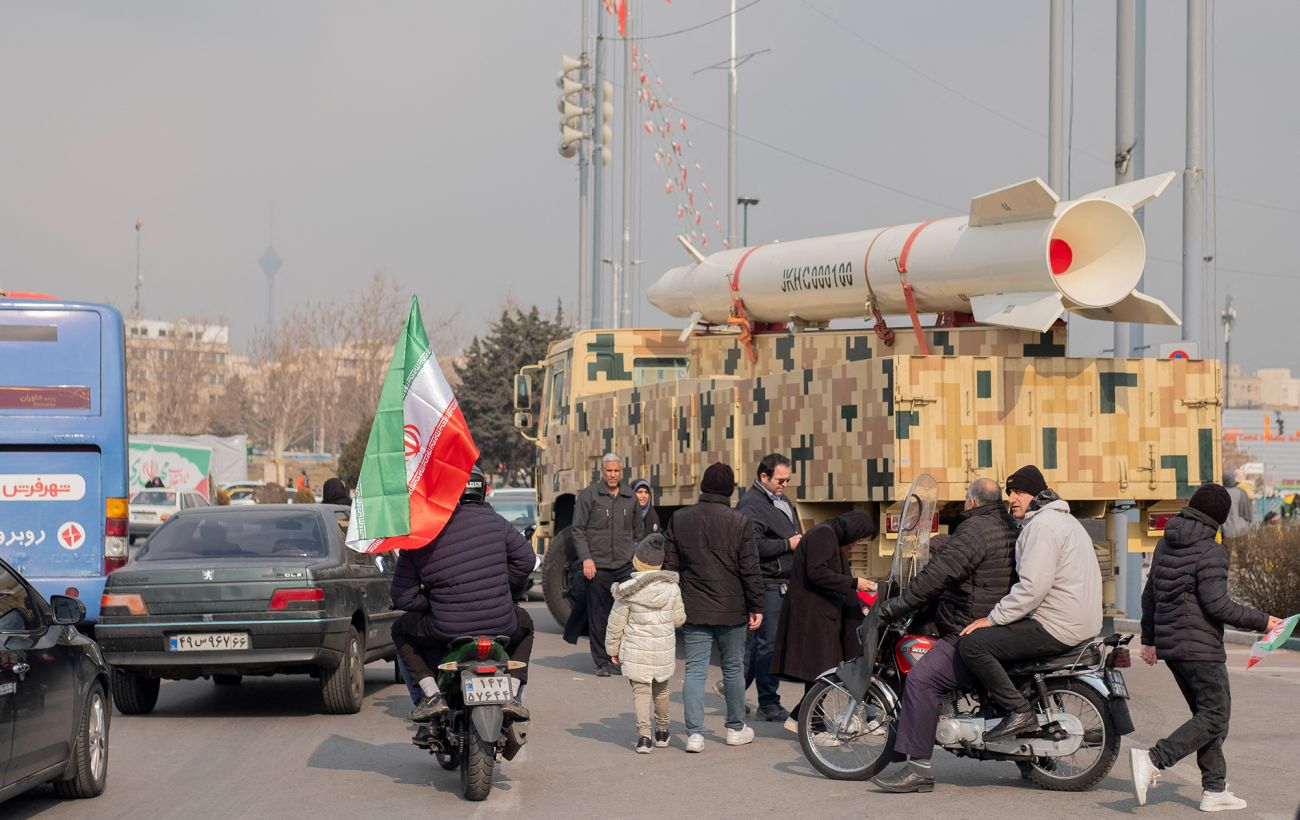
Despite ongoing strikes by Israel and the United States targeting its military assets, Iran retains the ability to launch missile attacks. However, experts are questioning how long this capability can be sustained.
The frequency of Iranian attacks has significantly decreased since the initial days of the conflict. Analysts indicate that Iran has shifted to a “survival strategy,” deliberately rationing the use of missiles and drones due to limited options for replenishing its arsenal under constant fire.
Rather than executing large-scale launches, Iran is now employing a tactic of smaller, more frequent strikes throughout the day. This approach maintains pressure on adversaries while conserving resources and reducing the risk of detection for launch sites.
Iran still possesses a considerable stockpile of missiles stored in deep underground facilities, which are challenging to target from the air. However, the effectiveness of its current strikes remains low.
Additionally, Iran has yet to deploy its most advanced solid-fuel missiles, raising questions about whether it is holding these as a “last resort” or facing technical difficulties in mobilizing them under the watchful eye of Western intelligence.
Experts suggest that Iran’s long-term ability to sustain its firepower is highly uncertain. As the U.S. and Israel systematically destroy storage facilities and assembly sites, the rate of depletion of its arsenal exceeds the production of new units.
Consequently, while Iran can continue its attacks for a limited time, returning to the level of firepower seen at the conflict’s outset appears unlikely. Analysts conclude that the degradation of military infrastructure and the need to allocate forces for domestic defense hinder such a resurgence.
Since the commencement of the U.S.-Israeli operation on February 28, Iran has been persistently targeting coalition positions with drones and missiles. Notably, on March 28, an Iranian attack on Prince Sultan Air Base in Saudi Arabia resulted in injuries to 12 American service members, two of whom sustained severe injuries.
Overall, more than 300 American military personnel have been injured since the onset of hostilities against Iran. However, reports suggest that Iran’s stock of missiles and drones is not extensive.
According to Reuters, citing five sources, the U.S. has confirmed the destruction of approximately one-third of Iran’s missile arsenal. Another third may have been destroyed, damaged, or trapped under debris in underground tunnels and bunkers.
Despite these losses, Iran still maintains a significant amount of weaponry and could potentially restore some of its damaged missiles after the fighting subsides.
Iran's missile capabilities are under scrutiny as strikes by the U.S. and Israel continue to deplete its arsenal. While still able to launch attacks, the long-term sustainability of its military power remains in doubt due to ongoing losses and strategic shifts.