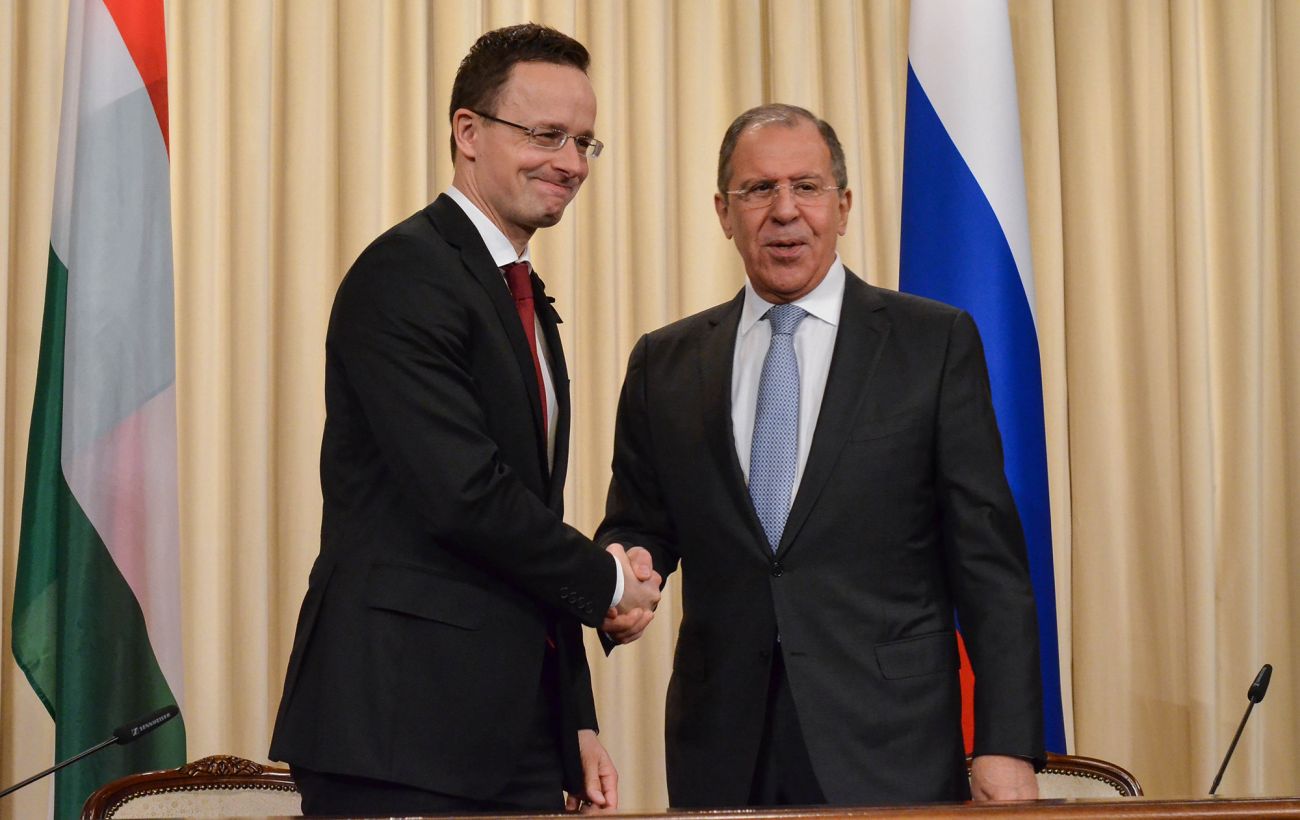
Hungary’s Foreign Minister, Péter Szijjártó, is under scrutiny following the release of recorded conversations with his Russian counterpart, Sergey Lavrov, just days before the upcoming elections in Hungary.
The audio recordings, disclosed by a consortium of investigative journalists including VSquare.org, reveal discussions between Szijjártó and Lavrov on sensitive topics such as Ukraine’s potential accession to the European Union and sanctions against Russia.
In one segment, Szijjártó reportedly agrees to send Lavrov a document concerning the role of minority languages in Ukraine’s EU negotiations. “I will send this to you. It’s not a problem,” he stated in the recording.
However, the specific document referenced remains unclear, and it is uncertain whether it was publicly accessible. Reuters has indicated that it could not independently verify the authenticity of the audio recordings.
Additional conversations between Szijjártó and Lavrov were also made public, covering topics such as Prime Minister Viktor Orbán’s planned visit to Moscow in 2024, the obstruction of a new EU sanctions package against Russia in 2025, and details regarding discussions between U.S. President Donald Trump and Russian President Vladimir Putin in Alaska.
The friendly tone of their exchanges has drawn particular attention. At the end of one conversation, Lavrov remarked, “All the best, my friend,” to which Szijjártó replied, “If you need anything, I am at your service.”
This is not the first instance of leaked conversations involving Szijjártó and Lavrov. On March 31, audio recordings surfaced that included discussions about lifting sanctions on influential Russians. In that instance, Lavrov had requested assistance in removing Gulbahor Ismailova, the sister of oligarch Alisher Usmanov, from the sanctions list, which was subsequently accomplished.
Péter Szijjártó, Hungary's Foreign Minister, faces backlash after leaked recordings with Sergey Lavrov reveal discussions on sensitive EU matters and sanctions. The friendly exchanges and implications of political maneuvering raise questions about Hungary's ties with Russia ahead of national elections.