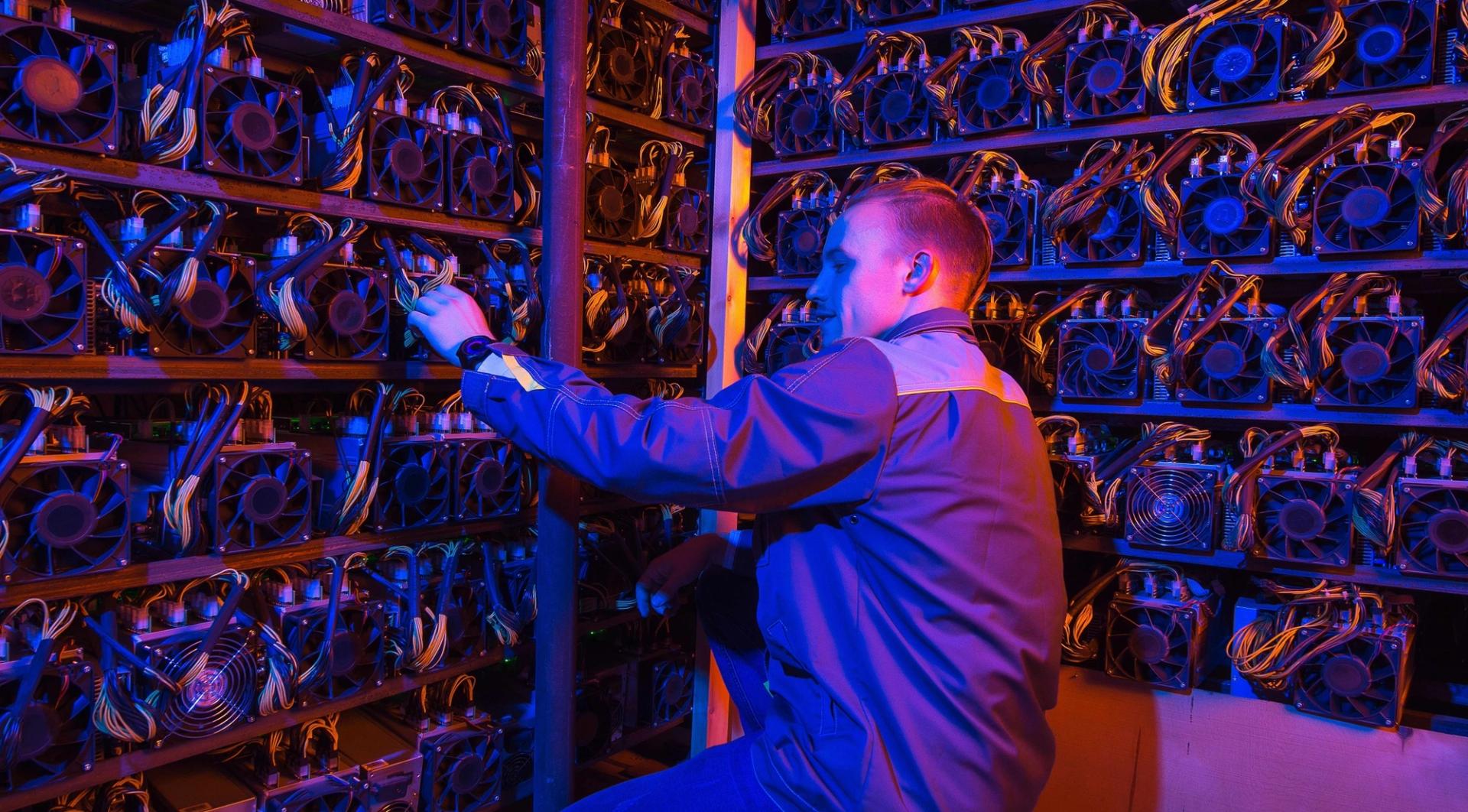
The bitcoin mining sector is experiencing a significant transformation as companies adapt to unsustainable production costs. A recent report from CoinShares indicates that the average cost to mine one bitcoin rose to approximately $79,995 in the last quarter, while bitcoin’s market price has hovered around $70,000.
This financial strain has prompted miners to pivot towards artificial intelligence (AI) infrastructure, with over $70 billion in contracts announced across the industry. Major players like CoreWeave and TeraWulf are leading this shift, with CoreWeave’s deal with Core Scientific valued at $10.2 billion over 12 years and TeraWulf securing $12.8 billion in high-performance computing (HPC) revenue.
As these companies transition, they are increasingly becoming data center operators while still engaging in bitcoin mining. According to CoinShares, AI revenue could account for up to 70% of their earnings by the end of 2026, a significant increase from the current 30% share. For instance, Core Scientific’s AI colocation revenue already represents 39% of its total revenue.
The economic rationale for this shift is clear. The cost of bitcoin mining infrastructure ranges from $700,000 to $1 million per megawatt, while AI infrastructure costs between $8 million and $15 million per megawatt. However, AI contracts promise higher and more stable returns. In early March, the hash price, which determines miner revenue, fell to an all-time low of $28 to $30 per petahash per day.
To finance this transition, miners are utilizing two primary strategies: taking on significant debt and liquidating bitcoin holdings. Companies like IREN and TeraWulf have accumulated substantial debt, with IREN carrying $3.7 billion in convertible notes and TeraWulf holding $5.7 billion in total debt. Additionally, publicly listed miners have collectively sold over 15,000 bitcoins from their reserves to fund AI projects.
These sales raise concerns about the security of the bitcoin network, as the same companies that secure the network are also selling their bitcoin to finance AI infrastructure. This tension could lead to a reduced security budget for the network if many miners choose to prioritize AI over mining.
The hashrate, a measure of the network’s processing power, has already shown signs of decline, dropping from approximately 1,160 exahashes per second in October 2025 to around 920 EH/s. This decline has been accompanied by three consecutive negative difficulty adjustments, the first such occurrence since July 2022.
Market valuations reflect this shift, with miners holding HPC contracts trading at 12.3 times their next-twelve-month sales, compared to pure-play miners, which trade at 5.9 times. This discrepancy reinforces the financial incentive for miners to pivot towards AI.
Geographically, the control of bitcoin mining has shifted, with the United States, China, and Russia now accounting for about 68% of the global hashrate. Emerging markets like Paraguay and Ethiopia are also gaining prominence, driven by significant mining operations in those regions.
Looking ahead, CoinShares forecasts that the network hashrate could reach 1.8 zetahashes by the end of 2026, contingent on bitcoin prices recovering to $100,000. If prices remain below $80,000, further declines in hashrate and hash price are anticipated.
The introduction of next-generation hardware may offer a potential solution, with machines that significantly reduce energy costs expected to be deployed in 2026. However, many miners are currently directing their capital towards AI rather than upgrading their mining infrastructure.
In summary, the bitcoin mining industry is undergoing a fundamental shift from securing the network and accumulating bitcoin to developing AI data centers and liquidating bitcoin to fund this transition. The future of this transformation largely hinges on bitcoin’s market price, as a recovery could stabilize mining margins, while sustained low prices may accelerate the industry’s pivot towards AI.
The bitcoin mining industry is shifting focus to artificial intelligence due to unsustainable production costs. With significant debt and bitcoin sales, miners are transitioning to data center operations, raising concerns about network security.