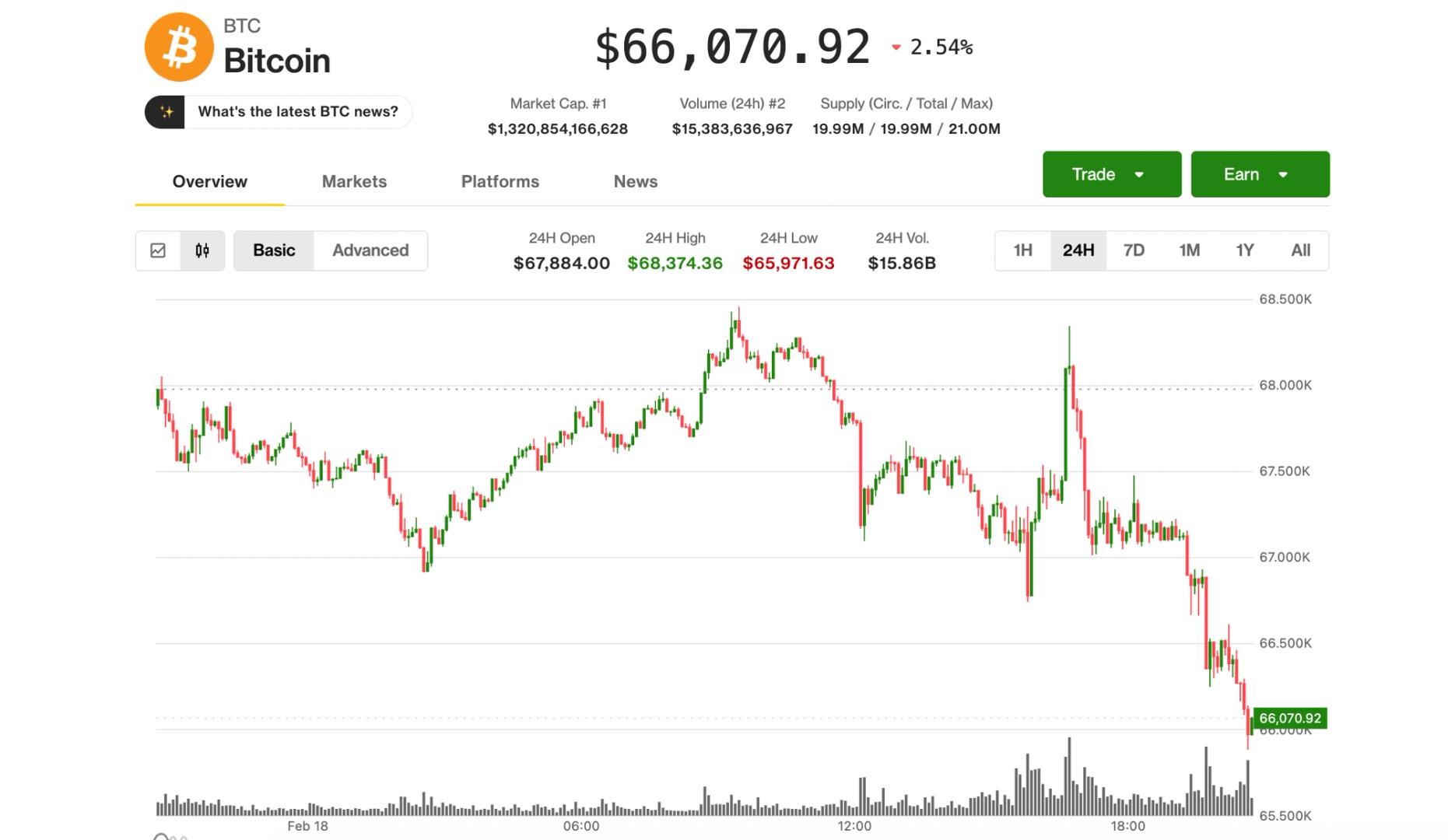
Bitcoin has dropped below the $66,000 mark, marking a potential fifth consecutive week of losses. The cryptocurrency, which had traded as high as $68,500 earlier in the day, faced downward pressure during U.S. afternoon trading. This decline coincides with a broader weakening of U.S. stocks, influenced by recent comments from the Federal Reserve regarding possible interest rate hikes.
In the past 24 hours, Bitcoin has seen a decline of approximately 2.5%, with its latest trading price hovering around $66,200. The drop has also affected crypto-related stocks, which initially showed promise but ultimately turned negative. Coinbase, for instance, reversed its early gains and ended the day down by about 2%. MicroStrategy, a significant corporate holder of Bitcoin, experienced a similar downturn, losing roughly 3% as the value of Bitcoin fell.
The U.S. stock market, which had started the day strong, also lost momentum as trading progressed. This shift was exacerbated by the release of the Federal Reserve’s minutes from its January meeting. While the central bank had decided to pause rate cuts, some members expressed a willingness to consider rate hikes if inflation remains persistent. This hawkish stance contributed to a strengthening of the U.S. dollar, which rose to its highest level in nearly two weeks, further impacting risk assets like cryptocurrencies.
As Bitcoin approaches the critical $66,000 support level, traders are closely monitoring its performance. Last week, this level acted as a foundation for a rebound that pushed Bitcoin above $70,000. Should it break below this support, analysts suggest that the next significant target could be the early February lows around $60,000.
Despite the volatility in the cryptocurrency market, some crypto stocks showed resilience earlier in the day. Companies such as Coinbase and Galaxy Digital managed to rebound amidst easing concerns in the software sector, although this momentum did not last. Overall, the recent trends in Bitcoin and the stock market reflect a complex interplay of economic indicators and investor sentiment.
In summary, Bitcoin’s current trajectory raises questions about its future stability, particularly in light of the Federal Reserve’s potential policy shifts and the prevailing strength of the U.S. dollar.
Bitcoin's decline below $66,000 signals potential ongoing volatility in the cryptocurrency market, influenced by U.S. stock performance and Federal Reserve rate hike discussions. The interplay of these factors is critical for traders as they assess future price movements.