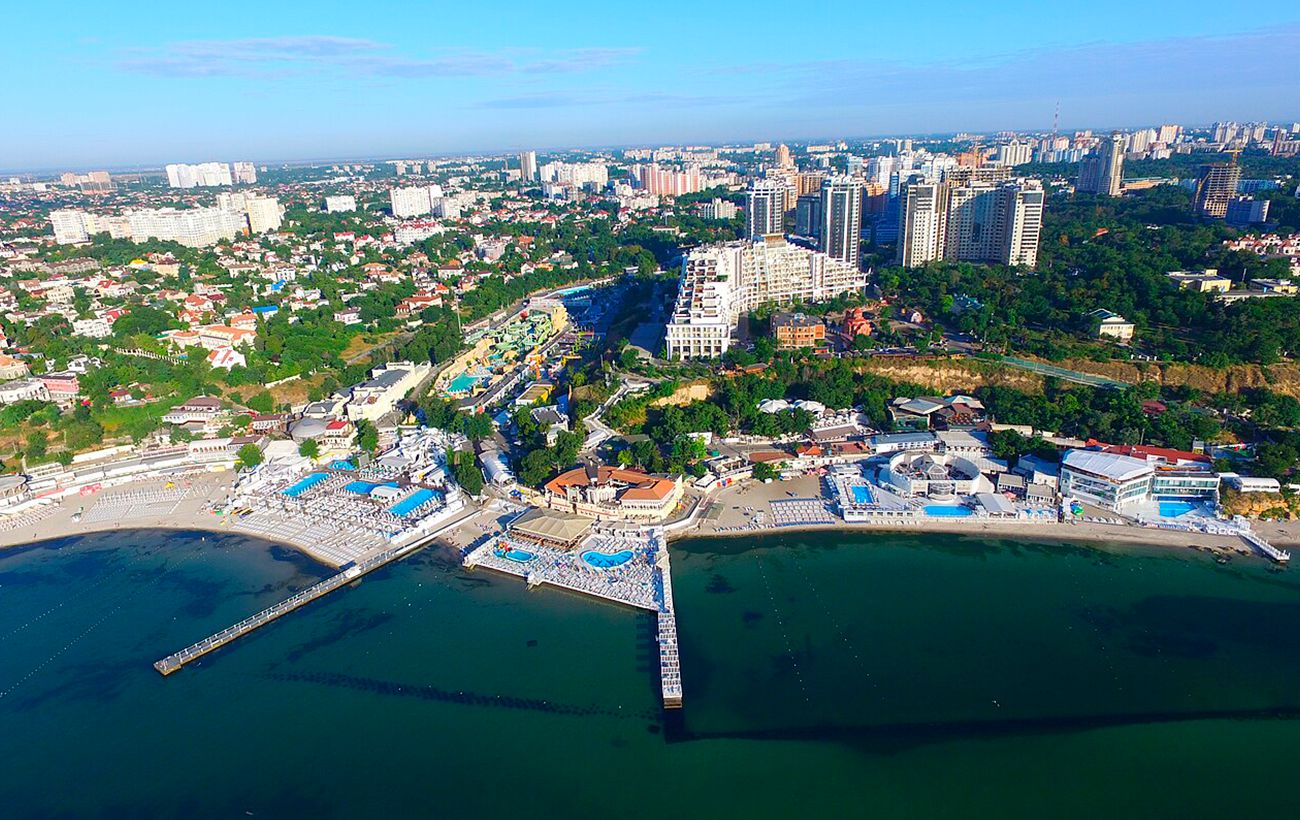
The real estate market in Odessa is exhibiting surprising strength, with prices in the primary sector continuing to rise despite ongoing military conflicts. This trend prompts investors and buyers to assess potential changes in property values following the end of hostilities.
The demand for new housing remains substantial, driven by millions of internally displaced persons. Even with some individuals returning to restored cities, the structural need for housing renewal is expected to grow.
However, a crucial factor will be the construction sector’s ability to meet this demand. Prior to the full-scale invasion, Ukraine had spent nearly a decade achieving construction volumes of 8-11 million square meters annually.
Currently, the Ukrainian construction industry is operating at only 60% of its pre-war capacity, with a labor shortage exceeding 30%. After the conflict, the lack of skilled labor and heightened competition for workers between residential and large-scale infrastructure projects are likely to become even more pronounced.
This situation, combined with rising material costs and the need for modernization, will hinder an immediate surge in supply, leading to a prolonged imbalance in the market.
The economic stability of the region and interest in its real estate will be bolstered by the strategic role of port infrastructure. Before the war, over 70% of Ukrainian exports passed through maritime channels. The loss of certain facilities has only underscored the importance of the Odessa port cluster, which includes Odessa, Chornomorsk, and Pivdennyi.
The restoration of maritime trade will be a priority for state policy, which will, in turn, stimulate the development of logistics, the banking sector, and service companies. This increase in business activity will directly impact employment and purchasing power, exerting additional pressure on housing prices.
Odessa remains a unique investment opportunity due to its combination of resort potential and limited land availability along the coastline. Properties in such locations traditionally possess high liquidity and emotional value, resulting in a significant price premium.
Global examples, particularly the experiences of Croatia and Montenegro following the Balkan conflicts, demonstrate that coastal regions can experience substantial price increases alongside the recovery of tourism and capital influx. Similar trends have been observed in Israel, where periods of military escalation have been followed by a surge in demand and accelerated housing price growth in key cities.
While analysts caution that these examples do not provide a direct roadmap for Ukraine, they affirm a general trend: once stability is achieved, strategic locations with limited supply can appreciate at a faster rate than the broader market.
Forecasts suggest that, assuming sustained peace and security guarantees, prices in Odessa could rise by 20-40% within the first six months following the end of the war. Over two years, cumulative increases could reach 80%, with premium properties near the sea potentially rising by 70-100%. Even conservative estimates indicate that supply shortages and rising costs will push the market up by at least 30-60%.
Consequently, the post-war real estate landscape in Odessa is expected to face not a lack of buyers, but rather an inability to quickly address the accumulated supply deficit, positioning the city as a key center for future economic growth.
Odessa's real estate market is demonstrating resilience amid ongoing conflict, with rising prices driven by significant housing demand. Analysts predict substantial price increases post-war, highlighting the city's potential as a center for economic growth.