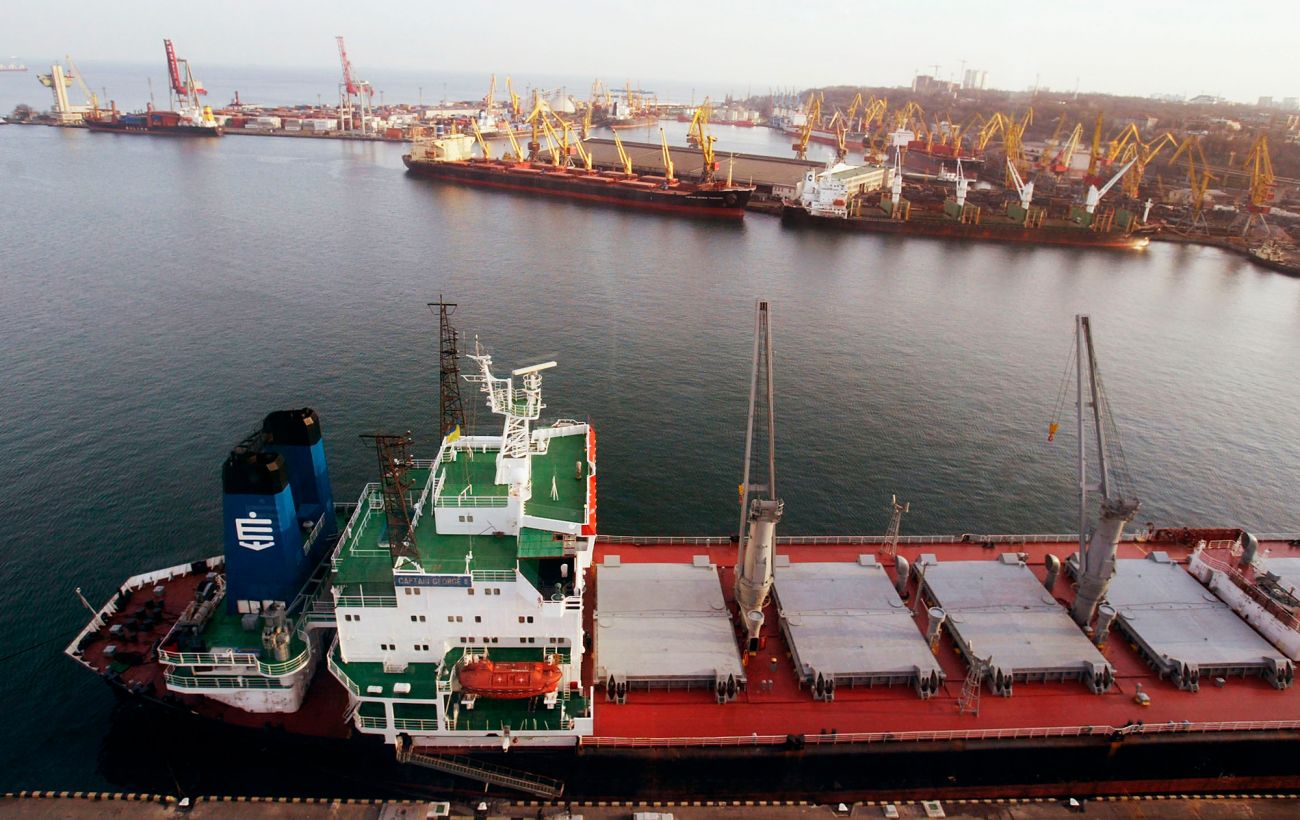
Despite ongoing military conflict, Ukraine has managed to keep its maritime ports operational, attracting attention from Gulf nations seeking to learn from its experience.
The Black Sea blockade, missile strikes, and cyberattacks have not halted port activities in Ukraine. This resilience has sparked interest in the Gulf region, where countries are eager to understand how to maintain stable maritime trade amidst threats to shipping.
Dmytro Barynov, head of the Ukrainian Ports Association, emphasized the uniqueness of Ukraine’s experience during a presentation to the International Association of Ports and Harbors in Odesa. “The experience we gained in Ukraine is unparalleled,” he stated.
Initially, Ukrainian forces pushed the Russian fleet away from the coastline, regaining control over parts of the Black Sea. Subsequently, a maritime corridor was established closer to shore, allowing vessels carrying grain to navigate safely.
Port operations now follow a strict schedule, with vessels allowed to enter and exit only at designated times, and military personnel conducting inspections at sea. Long waits in port are prohibited due to safety concerns.
To enhance security, floating barriers have been deployed in the sea to capture mines, and mobile concrete shelters are available for staff in case of alerts. Coordination with air defense units is ongoing to ensure safety.
In light of the Iranian forces blocking oil tankers in the Strait of Hormuz, port operators in the Gulf are closely analyzing Ukraine’s strategies. Maintaining stable maritime trade amid conflict and threats has become a focal point for planning and analysis in these nations.
Ukraine's maritime ports continue to operate despite the ongoing conflict, drawing interest from Gulf countries looking to adopt similar strategies for maritime trade stability. The unique experiences gained in Ukraine have become a subject of analysis for nations facing shipping threats.