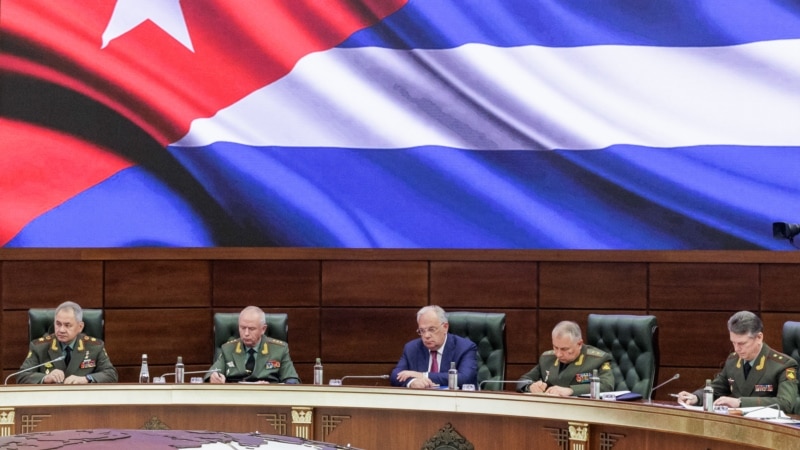
The Ukrainian Ministry of Defence’s Main Intelligence Directorate (HUR) has verified the names of over a thousand Cuban nationals who have signed contracts with the Russian military. Andriy Chernyak, a representative of HUR, indicated that the actual number of Cubans involved is likely much higher.
Chernyak stated, “We do not consider Cuban mercenaries as a separate military force that could significantly influence the battlefield. The total figure could be around 10,000 to 15,000. This is a small number of individuals who may have been coerced or misled into signing contracts.”
According to HUR, Russia views Cuba as a region of its geopolitical interests, and the recruitment of Cubans into its military serves more of a propaganda purpose than a military one. Chernyak noted, “They use this on the political arena for domestic consumption. They are trying to portray Russia not as an aggressor, but rather to suggest that other countries, let’s say, from the civilized world also support Russia’s ideas and plans.”
In February, the publication “Important Stories” reported, citing information from recruitment groups and chats, that Russian recruiters received a “blacklist” from authorities prohibiting the export of mercenaries from certain countries. This information was corroborated by a major regional center for mercenary recruitment.
Journalists highlighted that, as of early January 2026, recruiters began circulating a list of countries whose citizens are now barred from signing contracts with the Russian Armed Forces. According to the recruiters, the list includes 36 countries, primarily from Africa and the Arab world, as well as other nations considered “friendly” to Russia, such as China, India, Brazil, South Africa, Turkey, Cuba, Afghanistan, Iran, and Venezuela.
The Ukrainian intelligence agency has confirmed the recruitment of over a thousand Cubans by the Russian military, suggesting that the actual number may be significantly higher. The recruitment appears to serve more as a propaganda tool for Russia rather than a military strategy.