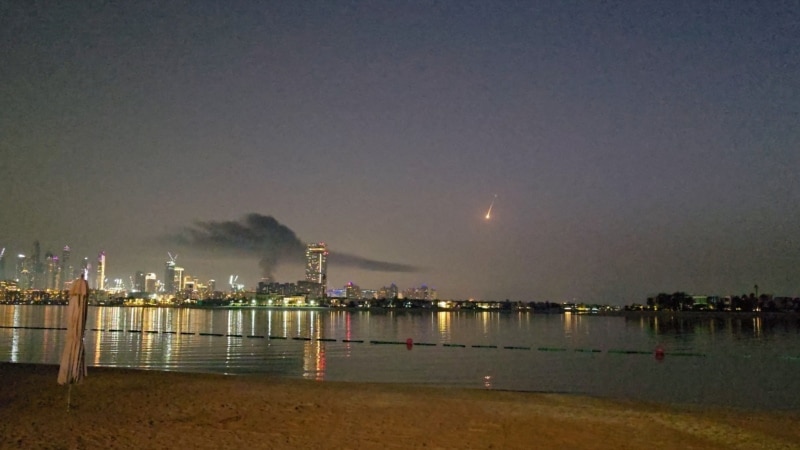
The President of the United Arab Emirates (UAE), Mohammed bin Zayed Al Nahyan, has officially announced that the nation is in a state of war, asserting the country’s resilience in the face of recent Iranian missile strikes. His remarks come following a series of military actions involving the United States and Israel.
During a visit to victims of the attacks, Al Nahyan emphasized that the UAE is not vulnerable, stating, “In the UAE, we have thick skin and bitter flesh – we are not an easy target.” He reassured the public of the government’s commitment to protect its citizens and residents, highlighting the UAE’s responsibility towards those within its borders.
The UAE, which consists of seven emirates including Dubai, has pledged to defend all individuals present in the country. This declaration follows a coordinated strike by U.S. and Israeli forces on February 28, which resulted in the death of Iran’s Supreme Leader, Ayatollah Ali Khamenei, along with numerous other high-ranking officials within the Iranian regime.
In retaliation, Iranian military forces launched missile and drone attacks not only against Israel and U.S. military installations in the region but also targeted several neighboring countries perceived as U.S. allies. These strikes have resulted in the deaths of six U.S. service members and civilian casualties across the affected nations.
Human rights organization HRANA reported that from February 28 to March 3, there were 1,097 documented civilian deaths and 5,402 injuries in Iran, including among children. The group also noted that military bases, medical facilities, and residential areas across the country were damaged during the conflict.
The UAE's President has declared a state of war following Iranian missile attacks, emphasizing national resilience and commitment to protect all residents. The recent military actions have resulted in significant casualties on both sides, raising concerns over regional stability.