The Kremlin is intensifying its narrative regarding the upcoming elections in Ukraine, aiming to delegitimize the current Ukrainian government. This strategy was highlighted in a report by the U.S.-based Institute for the Study of War (ISW), which noted recent statements from Russian officials.
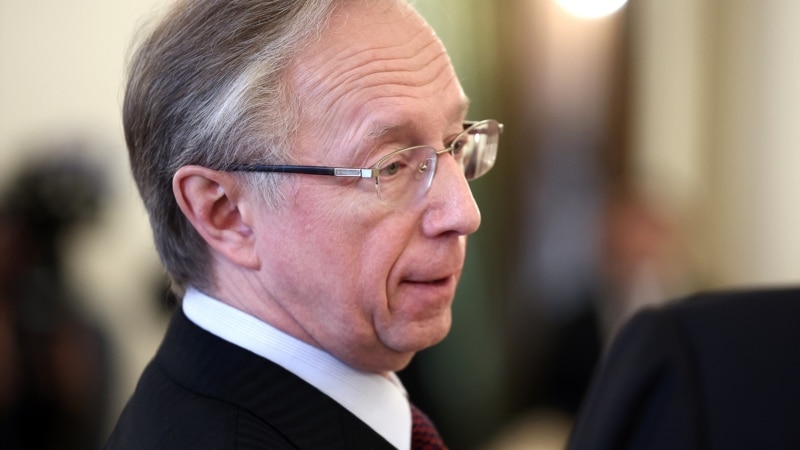
On February 15, Deputy Foreign Minister Mikhail Galuzin reiterated claims of President Volodymyr Zelensky’s supposed “illegitimacy” during an interview with the state news agency TASS. He mentioned that Russian President Vladimir Putin’s proposal from March 2025 for a temporary UN administration to oversee Ukraine remains a viable option.
Galuzin argued that UN oversight would facilitate “democratic” elections and allow for the establishment of a government with which Russia could negotiate a peace treaty and sign “legitimate” agreements for future cooperation.
ISW analysts pointed out that the Kremlin’s calls for UN governance in Ukraine represent a rejection of Ukraine’s sovereignty. They recalled that both UN Secretary-General António Guterres and the White House dismissed such proposals when first introduced by Putin.
The Kremlin’s suggestion for UN election oversight appears to be an attempt to grant Russia, as a permanent member of the UN Security Council, veto power over any resolution that does not establish a UN governance system favorable to Russian interests in Kyiv.
Furthermore, analysts noted that the Kremlin has signaled its intention to reject any electoral outcomes that do not result in a pro-Russian government in Ukraine. The ISW also highlighted that the Kremlin’s insistence on allowing “Ukrainian citizens residing in Russia” to vote likely aims to facilitate extensive Russian interference in the elections.
President Zelensky has stated that Ukraine would be ready to hold elections, but only after a two-month ceasefire on the front lines. During a discussion following his speech at the Munich Security Conference on February 14, he emphasized the need for a secure environment for elections.
“I am very honest. Give us two months of ceasefire, and we will go for elections. That’s it… We need security, infrastructure, and possibly more than two months to prepare. Then give our soldiers the chance to vote while protecting our lives and our country. It’s complicated,” Zelensky remarked.
He also suggested that a ceasefire could be declared for Russians if they conducted elections in their own country.
On February 11, Zelensky denied any plans to announce elections or a referendum on territorial integrity on February 24, as reported by the Financial Times. In an interview with Politico on February 14, he claimed that 90% of Ukrainians oppose holding elections during wartime, although he did not provide specific data to support this assertion. However, a survey by the Kyiv International Institute of Sociology (KIIS) published in early January 2026 indicated that only 10% of respondents supported elections before a ceasefire.
As Zelensky approaches the seventh year of his presidency in April 2026, he faces constitutional restrictions against holding elections during martial law. Ukrainian officials have also expressed concerns regarding the feasibility of elections due to the lack of a ceasefire, unresolved voting procedures for military personnel, internally displaced persons, and millions of Ukrainian refugees abroad.
Additionally, discussions are ongoing in Ukraine about the possibility of a referendum concerning a potential peace agreement that may involve territorial compromises.
The Kremlin is pushing a narrative to undermine the legitimacy of Ukraine's government as elections approach. Russian officials have reiterated claims of illegitimacy while proposing UN oversight, a move seen as an attempt to influence electoral outcomes in favor of Russian interests.
Source: Institute for the Study of War