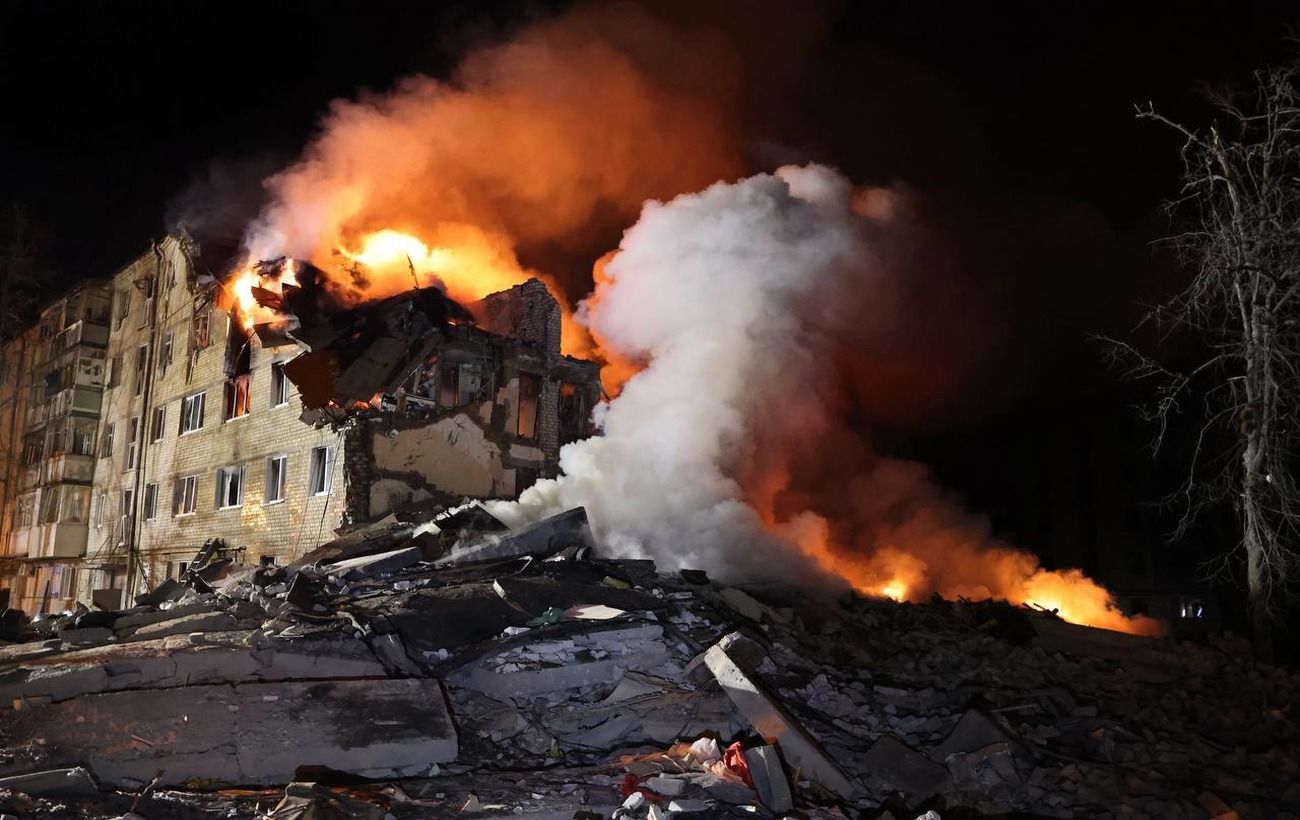
In the early hours of March 7, a residential building in Kharkiv was struck by a missile, reportedly the advanced “Izdelie-30,” resulting in significant destruction and loss of life.
The missile hit a five-story apartment complex in the Kyiv district, causing the entrance to collapse from the first to the fifth floor. Initial reports indicate that at least ten individuals have died, including two children, while over eleven others sustained injuries, among them three minors.
Rescue operations are ongoing as emergency responders search through the rubble for any remaining survivors. Authorities have confirmed that the missile used in the attack was the “Izdelie-30,” a recent development in Russia’s arsenal.
The Kharkiv regional prosecutor’s office has initiated a preliminary investigation into the incident, treating it as a war crime under Ukrainian law due to the fatalities involved.
The “Izdelie-30” missile, which has been identified by military intelligence, is capable of striking targets across Ukraine, with a wingspan of approximately three meters and a warhead weighing 800 kilograms. It has a range of at least 1,500 kilometers, with its first recorded uses against Ukraine occurring late last year.
This missile is believed to be a product of OKB “Zvezda,” part of the Tactical Missile Corporation, and shares design features with other missiles developed by the same entity. Notably, the missile’s pneumatic system and other components have similarities to existing missile technology.
Its navigation system, a first for Russian cruise missiles, incorporates technology from multiple Russian companies and includes components sourced from the United States, Switzerland, China, and the Netherlands. The missile’s electronic control unit is built on a Russian platform, featuring a 32-bit microcontroller.
A missile strike by Russian forces on a residential building in Kharkiv has resulted in multiple fatalities and injuries, prompting an ongoing rescue operation. The incident has led to a war crime investigation as authorities assess the implications of the advanced missile technology used.