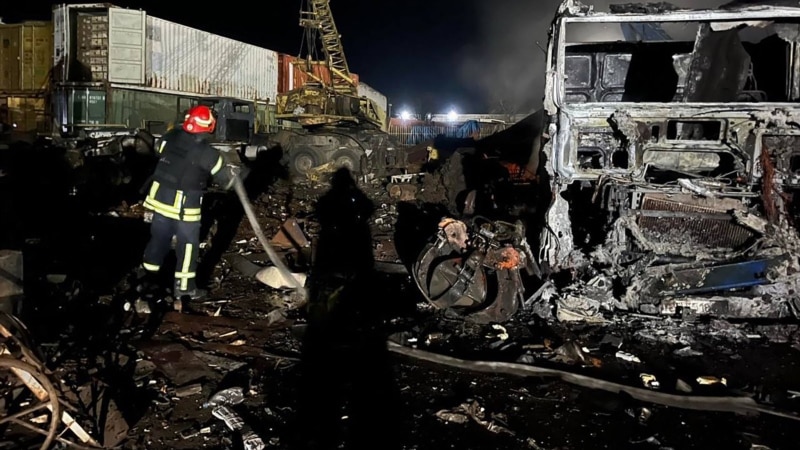
In the early hours of February 23, a Russian drone attack in Odesa resulted in the deaths of two individuals, including a 20-year-old woman and a man in his mid-40s. Three others sustained injuries, with two reported in critical condition, according to Oleg Kiper, head of the Odesa Regional Military Administration.
Kiper detailed the assault on Telegram, stating that the Russian military targeted various sites, including industrial, energy, and civilian infrastructure. The attack caused significant damage to production facilities, warehouses, and administrative buildings, as well as to a car dealership and vehicles. One drone struck an apartment in a high-rise building without detonating, prompting psychological support from emergency services for affected residents. Firefighters quickly extinguished the resulting fires, and emergency and municipal services are currently addressing the aftermath.
The Ukrainian Air Force reported that the attack involved one Iskander-M ballistic missile and 126 strike drones, with approximately 80 classified as Shahed drones. Air defense forces successfully intercepted 105 of these drones, but the military confirmed that a ballistic missile and 20 strike drones managed to hit 11 locations, with debris falling in one area.
Russian forces have consistently targeted Ukrainian cities and civilian infrastructure using various weapons, including drones, missiles, and artillery systems. Ukrainian authorities and international organizations have classified these attacks as war crimes, emphasizing their deliberate nature.
Officials argue that the strikes on critical infrastructure and healthcare facilities aim to deprive civilians of essential services such as electricity, heating, water supply, and medical assistance, which they view as indicative of genocidal actions. Legal experts and human rights advocates assert that the Russian government has committed numerous acts that could be classified as genocide against the Ukrainian populace, including:
- Public declarations of intent to eliminate Ukrainians as an ethnic group.
- Targeted attacks on essential infrastructure to disrupt daily life.
- Persecution of individuals with pro-Ukrainian views in occupied territories.
- Efforts to erase Ukrainian culture through the targeting of educators and artists.
- Forced deportation of children to Russia to alter their identity.
- Destruction of Ukrainian literature and cultural artifacts.
The 1948 United Nations Convention on the Prevention and Punishment of the Crime of Genocide obligates its 149 member states to prevent and punish acts of genocide during both war and peacetime. The Convention defines genocide as actions intended to destroy, in whole or in part, a national, ethnic, racial, or religious group.
Despite mounting evidence and international condemnation, Russian leadership continues to deny that its military conducts targeted strikes against civilian infrastructure, claiming that such accusations are unfounded.
A recent drone strike in Odesa resulted in two fatalities and several injuries, with significant damage to local infrastructure. Ukrainian officials classify these attacks as war crimes, citing a pattern of targeting essential services and civilian areas.