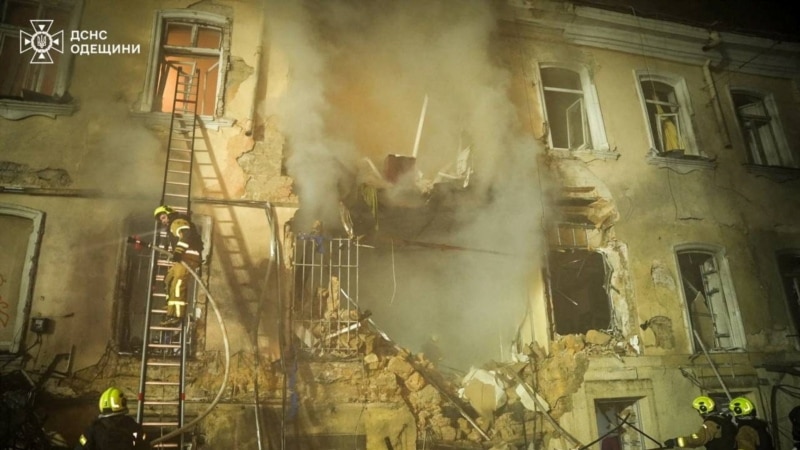
In a recent attack attributed to Russian forces, a residential building in Odesa sustained serious damage, resulting in injuries to five individuals. The head of the Odesa military administration, Serhiy Lysak, confirmed that the strike affected multiple floors of the high-rise, with reports indicating that people may be trapped under the debris.
Local authorities also noted damage to several private homes in the vicinity. Earlier, Lysak had reported incidents in the Kyiv and Primorsky districts, highlighting the widespread nature of the attacks.
During the night, Ukraine’s Air Force had issued warnings regarding the movement of Russian drones towards the Odesa region. These drone strikes are part of a broader pattern of assaults by Russian military forces, which have employed various weaponry, including strike drones, missiles, and multiple rocket launch systems, targeting Ukrainian cities and civilian infrastructure across the country.
The Ukrainian government and international organizations have classified these attacks as war crimes, emphasizing their deliberate nature. Such strikes on essential services and healthcare facilities are viewed as attempts to deprive civilians of electricity, heating, water supply, communication, medical assistance, and other vital living conditions.
Legal experts and human rights advocates argue that these actions may constitute genocidal acts, citing a pattern of behavior that includes public declarations by Russian officials questioning the existence of Ukrainians as a distinct ethnic group. These officials have made statements suggesting that Ukrainians should be eliminated, reinforcing claims of intent to destroy the group.
The Convention on the Prevention and Punishment of the Crime of Genocide, adopted by the United Nations General Assembly in 1948, obligates signatory nations to prevent and punish acts of genocide during both wartime and peacetime. Currently, 149 countries are party to this convention.
According to the convention, genocide is defined as actions aimed at the complete or partial destruction of a national, ethnic, racial, or religious group. Key indicators of genocide include the killing of group members, causing serious bodily or mental harm, deliberately inflicting living conditions intended to destroy the group, and preventing births within the group.
The Russian leadership has consistently denied that its military targets civilian infrastructure in Ukraine, despite mounting evidence of attacks on hospitals, schools, and essential services.
A recent Russian attack in Odesa has resulted in significant damage to a residential building and injuries to five individuals. The incident is part of a broader pattern of assaults on Ukrainian infrastructure, which has raised concerns about potential war crimes and genocidal actions against the Ukrainian population.