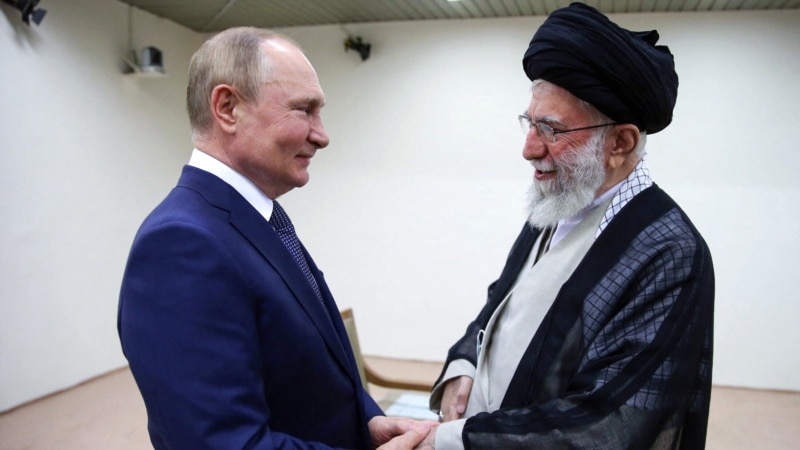
Following the death of Iran’s Supreme Leader Ayatollah Ali Khamenei and several senior officials due to U.S.-Israeli airstrikes, Russia has expressed standard condemnations without offering further support, according to a report from the Institute for the Study of War (ISW).
The report highlights the limitations of Russia’s ability to assist Iran, emphasizing the asymmetry in their relationship. Analysts suggest that Russia will likely remain focused on its military actions in Ukraine while seeking concessions from the U.S., without compromising its objectives.
On February 28, Russian President Vladimir Putin condemned the killing of Khamenei as a “cynical violation of all norms of human morality and international law.” In a message to his Iranian counterpart, Masoud Pezeshkian, Putin extended his “deep condolences” regarding the death of Khamenei and several family members, expressing solidarity with the Iranian people.
In addition, the Russian Foreign Ministry criticized the U.S. and Israel for what it termed a “hunt” for Iranian leaders, asserting that such actions violate international law and civilized state relations.
Russian officials, including UN Ambassador Vasily Nebenzya and Human Rights Commissioner Tatyana Moskalkova, echoed these sentiments, calling for a restoration of dialogue.
The joint operation by the U.S. and Israel, which commenced on February 28, resulted in the deaths of Khamenei and numerous other high-ranking Iranian officials. In retaliation, Iran launched missile and drone strikes not only against Israel and U.S. military targets in the region but also against neighboring countries perceived as U.S. allies. These attacks targeted both military and civilian sites, including residential buildings, hotels, and airports, as well as European military forces present in the Middle East.
In response to inquiries about the duration of the U.S.-Israeli operation against the Iranian regime, President Donald Trump stated that it would take “four weeks or less.” On March 1, Trump revealed to The Atlantic that the new Iranian leadership had requested a resumption of negotiations.
However, Israeli outlet Ynet reported, citing a U.S. official, that Tehran rejected a ceasefire proposal from the U.S. The U.S. had, through an intermediary—likely Italy—offered a ceasefire the day after the operation began, but Iran categorically declined the offer.
The report details Russia's limited response to the U.S.-Israeli strikes that killed Iran's Supreme Leader, highlighting the geopolitical dynamics at play. As tensions escalate, both sides are navigating a complex landscape of military actions and diplomatic overtures.
Source: Institute for the Study of War