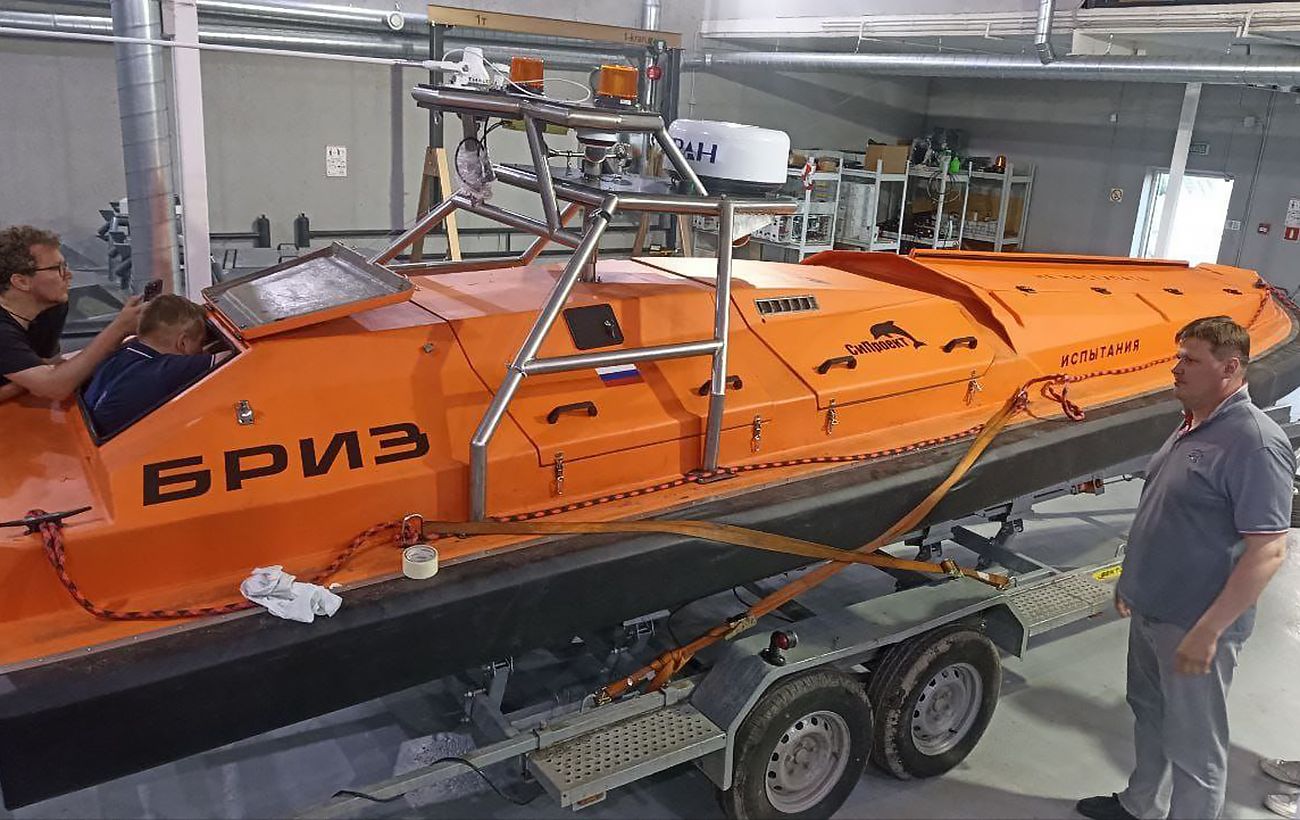
Russia is intensifying its efforts to develop naval drones, aiming to launch significant strikes against targets in Ukraine. According to the Main Intelligence Directorate of Ukraine, there has yet to be any systematic or effective deployment of these drones that achieves substantial combat results.
Despite this, Russia continues to innovate and manufacture new types of maritime unmanned vehicles. One notable model, the “Triton,” is reported to reach speeds of up to 100 km/h and is likely being prepared for attacks on civilian shipping and port infrastructure in Ukraine.
The intelligence report indicates that plans are in place to produce as many as 40 units of the “Skat” drones each month, suggesting a strategy shift towards mass deployment by Russian forces.
Additionally, the development of the autonomous underwater vehicle “Prosvet-1” is aimed at countering Ukrainian underwater drone systems, reflecting Russia’s attempts to establish a layered underwater defense.
Ukraine has emerged as a pioneer in the effective use of naval drones, significantly altering the balance of power in the Black Sea. Notable examples include the Sea Baby drones used by the Security Service of Ukraine, which successfully targeted two sanctioned oil tankers, KAIRO and VIRAT, linked to Russia’s shadow fleet.
According to the spokesperson for the Ukrainian Navy, Dmytro Pletenchuk, Russia appears to be attempting to replicate Ukrainian innovations. However, the effectiveness of these Russian counterparts has not been substantiated.
In contrast to Russia’s approach, Ukrainian forces remain committed to targeting only legitimate military objectives and assert their readiness to face any new threats from Russia.
Russia is ramping up its development of naval drones, with plans for mass production and new models aimed at targeting Ukraine. In response, Ukraine continues to leverage its own advancements in naval drone technology, maintaining a focus on legitimate military targets.