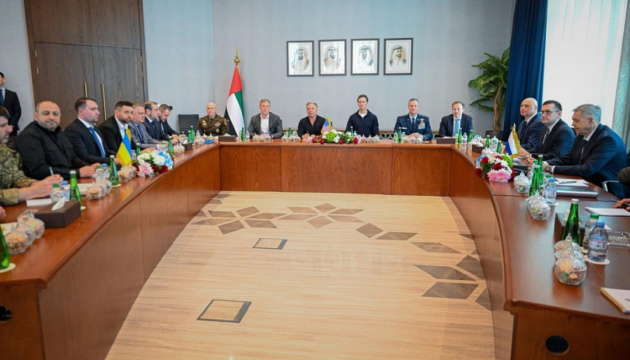
Delegates gathered in Abu Dhabi on February 4-5, 2026, to discuss the framework for a potential ceasefire, but expectations for significant breakthroughs were tempered by the realities on the ground. The most notable outcome from the discussions was a substantial prisoner exchange, marking the first of its kind this year, while the broader diplomatic landscape remains fraught with challenges.
Humanitarian Gains vs. Political Solutions
The two-day talks resulted in the exchange of 157 prisoners, including seven civilians held since the onset of the full-scale invasion. U.S. Special Envoy Steve Witkoff described the negotiations as “productive and detailed,” noting that while some progress was made on key issues, he cautioned against excessive optimism. “Although much work remains, these steps show that sustained diplomatic engagement yields tangible results and advances efforts to end the war in Ukraine,” he stated.
However, experts warn against conflating humanitarian successes with genuine political advancements. International relations expert Maxim Yali remarked that the achieved outcome represents the limits of what can be accomplished at this stage. He emphasized that the prisoner exchange is the maximum result possible given the stark differences between the parties regarding the withdrawal of Ukrainian forces from the Donbas region. Yali pointed out that Ukraine’s position is influenced not only by distrust towards Russia but also by the lack of security guarantees from the United States.
Military-political analyst Viktor Taran characterized the Abu Dhabi meeting more as a communication channel than a comprehensive peace conference. He noted that the only tangible results from the talks were the agreements on prisoner exchanges, which, while significant, do not address larger political issues. Taran stressed that Ukraine is unwilling to concede territory or reduce its military presence, while Russia maintains a fundamentally different stance. He believes that without a strategic outcome on the battlefield or an economic collapse of one side, serious dialogue is unlikely to emerge.
Political analyst Igor Reiterovich explained that the technical discussions focused on mechanisms that may be needed in the future, such as monitoring and potential ceasefires. He insisted that the priority should be a ceasefire, followed by the establishment of a demarcation line. Only after these issues are resolved can other aspects be addressed.
Russia’s Strategy and Diplomatic Maneuvers
As Ukraine emphasizes the need for security guarantees, Russia continues to blend cynical optimism with overt ultimatums. Russian representative Dmitriev claimed there was “positive movement forward” while simultaneously labeling the EU and the UK as obstacles to dialogue with Washington. Behind this rhetoric lies a demand for international recognition of the occupied Donbas as part of Russia.
Commentator Vitaliy Portnikov views this Kremlin strategy as a deliberate attempt to prolong negotiations. He argues that the ongoing prisoner exchanges indicate a lack of genuine political intent from Putin. Portnikov warns that Russia’s push for international recognition of the annexation of Donbas poses a dangerous precedent, potentially enabling similar tactics against other neighboring countries.
Echoing this sentiment, Mikhail Samus, director of the New Geopolitics Research Network, stated that Russia’s demands essentially amount to a call for Ukraine’s capitulation. He noted that the Kremlin’s actions on the front lines speak louder than any words exchanged in Abu Dhabi, asserting that the ongoing war is unlikely to conclude swiftly.
Ukrainian President Volodymyr Zelensky has maintained a firm stance, clearly stating that there will be no recognition of the occupation. He dismissed the demands regarding the entirety of Donbas as nonsensical, asserting that Russia would require significant military losses to capture the eastern territories.
Economic Incentives and Nuclear Concerns
The role of the United States in this round of talks appears multifaceted. While Trump seeks a quick resolution, Secretary of State Marco Rubio acknowledges that significant progress is unlikely until a breakthrough is achieved. Political expert Illya Kotov believes the U.S. is attempting to leverage economic tools to temper Russia’s ambitions, suggesting that Washington may offer a gradual easing of sanctions in exchange for more reasonable demands from Moscow.
However, these economic discussions are set against a backdrop of global security concerns, particularly with the expiration of the Russian-American nuclear arms agreement. Portnikov noted that Russia, the U.S., and China are entering a new phase of nuclear competition, necessitating substantial financial resources for Russia to modernize its arsenal.
As the prospect of moving negotiations to the U.S. arises, Reiterovich explained that such a shift would only occur if a serious outcome can be demonstrated. He emphasized that if talks are held in the U.S., it would likely focus on critical territorial issues.
Despite the ongoing discussions, Russia appears to be using any opportunity, such as the assassination attempt on General Alexeyev, to delay or derail the process. Reiterovich believes that the Kremlin’s strategy of requesting additional time reflects an expectation that the end of the cold season will reveal the limitations of its military objectives.
The second round of talks in Abu Dhabi has left a lingering sense of déjà vu, characterized by humanitarian achievements overshadowed by political stalemate. While Russia continues to probe Washington’s “red lines” with absurd demands for recognition of annexation, Ukraine insists on real security guarantees rather than mere formalities. The primary outcome of the meeting was not just the prisoner exchange but the establishment of a negotiation process that resembles a “technical marathon.” Although both sides are willing to discuss troop withdrawals, they remain far from agreeing on the specifics of a demarcation line. The ongoing support from partners remains crucial, and the U.S. is beginning to employ economic leverage. However, a swift resolution to the conflict appears unlikely, signaling a protracted diplomatic process ahead, heavily reliant on Ukraine’s defense capabilities on the front lines.
Miroslav Liskovych. Kyiv
Recent peace talks in Abu Dhabi yielded a significant prisoner exchange but highlighted the ongoing divide between Ukraine and Russia. Experts caution that while humanitarian progress is evident, substantial political breakthroughs remain elusive, with both sides entrenched in their positions.
