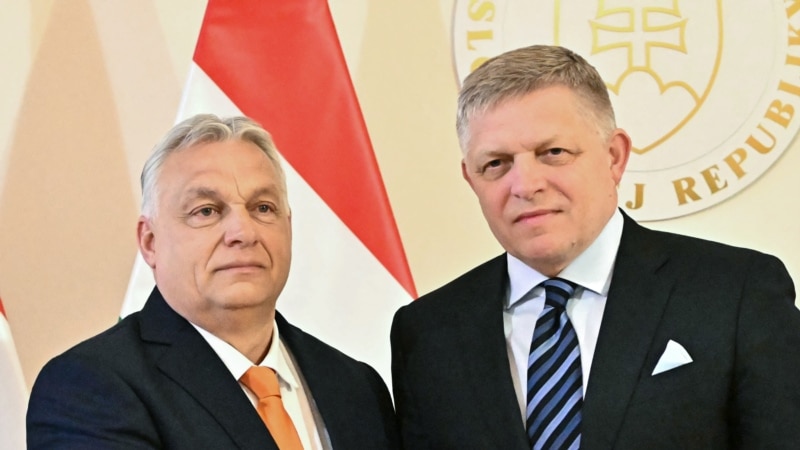
On February 27, Hungarian Prime Minister Viktor Orbán announced consultations with his Slovak counterpart, Robert Fico, regarding the continued suspension of oil supplies via the Druzhba pipeline. Orbán stated that the lack of action from Ukrainian President Volodymyr Zelensky poses a threat to Hungary’s energy security.
Orbán emphasized that the pipeline is operational but accused Zelensky of making a political decision to halt the flow of oil to Hungary. He remarked that Zelensky has been asserting in Brussels that the pipeline cannot be restored, despite its functionality.
On February 26, Orbán released an open letter and video message directed at Zelensky, accusing Kyiv of obstructing the Druzhba pipeline and calling for greater respect towards Hungary.
Both Slovakia and Hungary are currently blocking the approval of the 20th sanctions package against Russia and the allocation of a multi-billion euro loan to Ukraine, which was agreed upon at a European Union summit in December. The two nations have pledged to maintain their veto until the transportation of Russian crude oil through the Druzhba pipeline is reinstated.
Ukrainian officials contend that the pipeline was damaged due to Russian shelling at the end of January, a claim that has been dismissed by Hungarian and Slovak authorities.
On February 23, the European Commission confirmed that Russia had indeed damaged the Druzhba pipeline, while also noting Ukraine’s obligations to repair it. The timeline for repairs, they stated, is contingent upon actions from the Ukrainian side.
Since the onset of the full-scale invasion, the EU has prohibited the purchase of Russian oil. However, Hungary, Slovakia, and Austria have been granted exemptions due to their landlocked status, which limits their ability to receive oil tankers from other countries and makes them reliant on the Druzhba pipeline.
The Druzhba pipeline, which traverses Ukrainian territory, is crucial for transporting Russian oil to Europe, particularly to Hungary and Slovakia.
According to a study by the Finnish Centre for Research on Energy and Clean Air (CREA) and the Bulgarian Centre for the Study of Democracy (CSD), imports of Russian crude oil to Hungary and Slovakia from 2022 to 2024 are projected to generate €5.4 billion in revenue for the Kremlin. This amount is equivalent to the cost of approximately 1,800 Iskander-M ballistic missiles.
Hungary and Slovakia are exerting pressure on Ukraine to resume oil supplies through the Druzhba pipeline, linking energy security to ongoing geopolitical tensions. The situation reflects broader implications for EU sanctions against Russia and energy dependencies in Central Europe.