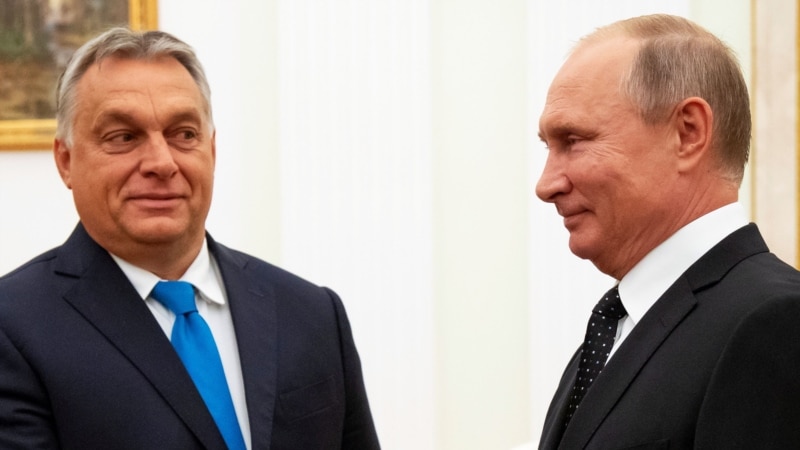
During a summit on March 19, European Union leaders were unable to reach a consensus on a multi-billion euro loan for Ukraine, primarily due to opposition from Hungarian Prime Minister Viktor Orbán. Despite facing criticism, Orbán maintained his stance, as reported by a correspondent from Radio Svoboda.
The discussions regarding Ukraine concluded with 25 member states supporting the conclusions, which have been published on the European Council’s website. Alongside Hungary, Slovakia has also refrained from endorsing the declaration concerning Ukraine since December of the previous year.
The summit’s conclusions reaffirm the EU’s commitment to support Ukraine comprehensively, with leaders anticipating the first tranche of a €90 billion loan to be disbursed in early April. The upcoming elections in Hungary, scheduled for April 12, are believed by many EU leaders to be linked to Orbán’s withdrawal from a promise made in December to approve the loan.
Following the December 2025 decision to grant Ukraine a support loan of €90 billion for the years 2026-2027, the European Council welcomed its approval by co-legislators and expects the initial tranche to be available in early April. In this context, the Council also urged for intensified collaboration with third countries to address Ukraine’s financing gap of €30 billion.
The EU reiterated its determination to exert pressure on Russia to encourage negotiations aimed at ending the conflict. The 20th package of sanctions remains blocked by Hungary and Slovakia.
The European Council expressed hopes for the swift adoption of this sanctions package, emphasizing the need to further reduce Russia’s revenue from energy resources and restrict its banking system. The Council acknowledged the necessity of a comprehensive approach to combat the operations of the so-called ‘shadow fleet.’
Additionally, the involvement of North Korean forces in Russia’s war against Ukraine, as well as support for Moscow from Iran and Belarus, was condemned. Russia was once again urged to agree to a ceasefire.
“The European Council calls on Russia to agree to a complete, unconditional, and immediate ceasefire and to commence meaningful negotiations for a just and lasting peace. Respect for Ukraine’s independence, sovereignty, and territorial integrity is crucial for such peace,”
the leaders of the 25 EU states noted.
In the lead-up to the summit, Western diplomats expressed increasing skepticism regarding Hungary’s willingness to unblock the €90 billion loan for Ukraine. Despite intensive negotiations and pressure from EU leadership, there have been no indications of a change in Budapest’s position.
Both Slovakia and Hungary continue to obstruct the approval of the 20th sanctions package against Russia and the allocation of the multi-billion euro loan to Ukraine, which EU leaders agreed upon during the December summit. The two nations have pledged to maintain their veto until the transportation of Russian raw materials via the Druzhba pipeline is restored.
The EU summit on March 19 concluded without finalizing a crucial loan for Ukraine due to Hungary's continued opposition. While 25 member states expressed support for Ukraine, Hungary and Slovakia's vetoes hinder progress on both the loan and sanctions against Russia.