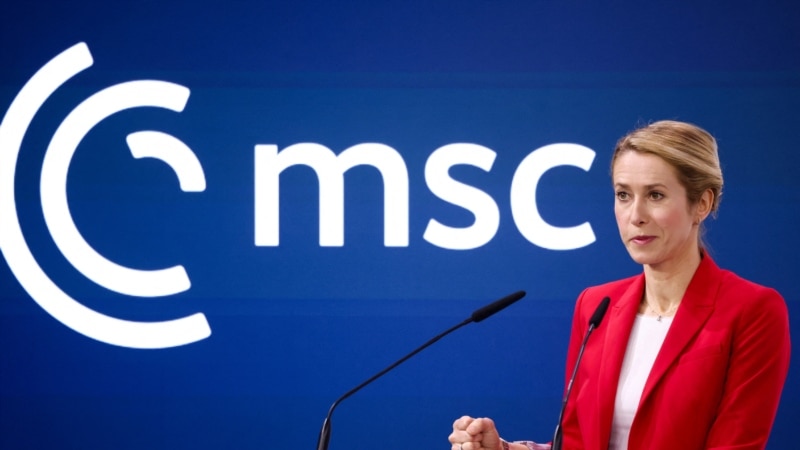
During the Munich Security Conference on February 15, EU foreign affairs chief Kaja Kallas highlighted the potential risks of Russia gaining more through negotiations than it has achieved on the battlefield. Her remarks underscore the EU’s apprehension regarding the ongoing conflict and the future of peace talks.
Kallas articulated a firm stance on the EU’s expectations for any potential peace agreement, emphasizing that Russia’s maximalist demands must not be met with minimal responses. She outlined several key points that the EU believes should guide negotiations:
- If Ukrainian armed forces are to be limited in size, Russian forces should face similar restrictions.
- Russia should be held accountable for the damages inflicted upon Ukraine.
- No amnesty should be granted for war crimes.
- There must be a return of deported Ukrainian children.
As the conflict continues, Russia has not indicated any readiness for a ceasefire. On the same day, Russian Deputy Foreign Minister Mikhail Galuzin stated that Moscow would only ensure a cessation of hostilities on the day of potential elections in Ukraine.
Additionally, Galuzin mentioned that Russia is open to discussing temporary external governance of Ukraine under the auspices of the United Nations with the United States and other nations.
Ukrainian President Volodymyr Zelenskyy, speaking at the Munich conference on February 14, expressed that Ukraine would be prepared to hold elections, but only after a two-month ceasefire at the frontlines. He also suggested that Ukraine might consider declaring a ceasefire for Russian forces if elections were conducted in Russia.
The EU's Kaja Kallas expressed concerns at the Munich Security Conference about Russia potentially gaining more through negotiations than on the battlefield. The EU outlined key conditions for any peace talks, while Russia remains unyielding regarding a ceasefire.