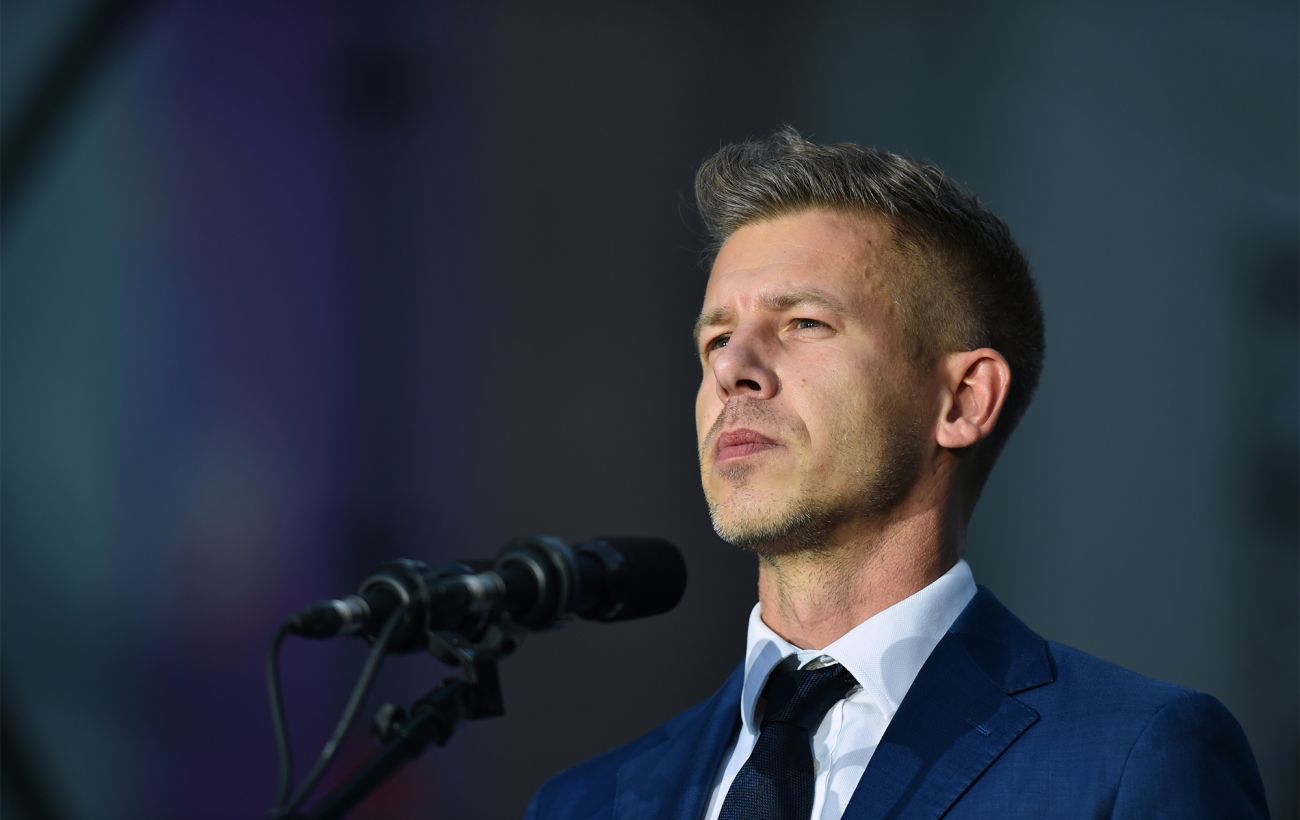
Péter Mádjár has emerged victorious in Hungary’s recent parliamentary elections, marking the end of Viktor Orbán’s 16-year tenure. Mádjár’s party, Tisza, secured 138 out of 199 parliamentary seats, positioning him as a significant figure in Hungarian politics.
Once a lesser-known political figure, Mádjár has rapidly ascended to prominence, capitalizing on widespread discontent over economic challenges and corruption scandals that have plagued Orbán’s administration. His campaign has focused on re-establishing Hungary’s ties with the European Union, unblocking frozen EU funds, and introducing the euro as the national currency.
In his victory speech, Mádjár declared, “Hungarians today said ‘yes’ to Europe and ‘yes’ to a free Hungary,” urging supporters of Orbán to resign from government positions. His political career has been marked by a shift from being a member of Orbán’s government to leading the opposition, especially after a fallout over controversial presidential pardons.
The Tisza party’s significant parliamentary majority grants Mádjár the authority to implement reforms aimed at combating corruption, addressing the cost of living crisis, and restructuring the healthcare system. His rise to power reflects a broader demand for change among voters disillusioned by economic stagnation and the growing wealth of government-affiliated oligarchs.
Mádjár is often described as a conservative liberal, advocating for market-oriented economic policies while emphasizing civic responsibility and the rule of law. He aims to transcend traditional political divides in Hungary by promoting a pro-European agenda, including the adoption of the euro once economic conditions are met.
However, Mádjár’s stance on Ukraine is more nuanced. While he acknowledges Russia’s aggression, he opposes military aid to Ukraine and is hesitant about its expedited accession to the EU and NATO. He has also suggested a gradual reduction in Russian energy imports by 2035.
Despite earlier remarks that appeared to downplay Russia’s actions, Mádjár later clarified his position, condemning the invasion and recognizing Ukraine’s right to defend itself. His visit to Kyiv in July 2024 coincided with a Russian attack on a children’s hospital, which he condemned.
In a notable political move, Orbán had previously vetoed a €90 billion loan to Ukraine, a decision that drew criticism and highlighted Hungary’s complicated relationship with its neighbor. Mádjár’s administration may take a different approach, potentially unlocking EU assistance for Ukraine as part of a broader strategy to mend ties with Brussels.
Ukrainian President Volodymyr Zelensky has welcomed Mádjár’s election, expressing readiness for constructive collaboration between the two nations. As Mádjár takes office, his policies will be closely watched, particularly regarding Hungary’s role in European affairs and its stance on the ongoing conflict in Ukraine.
Péter Mádjár's election victory signals a shift in Hungarian politics after Viktor Orbán's lengthy rule. While Mádjár promises to strengthen ties with the EU, his complex position on Ukraine raises questions about future relations.