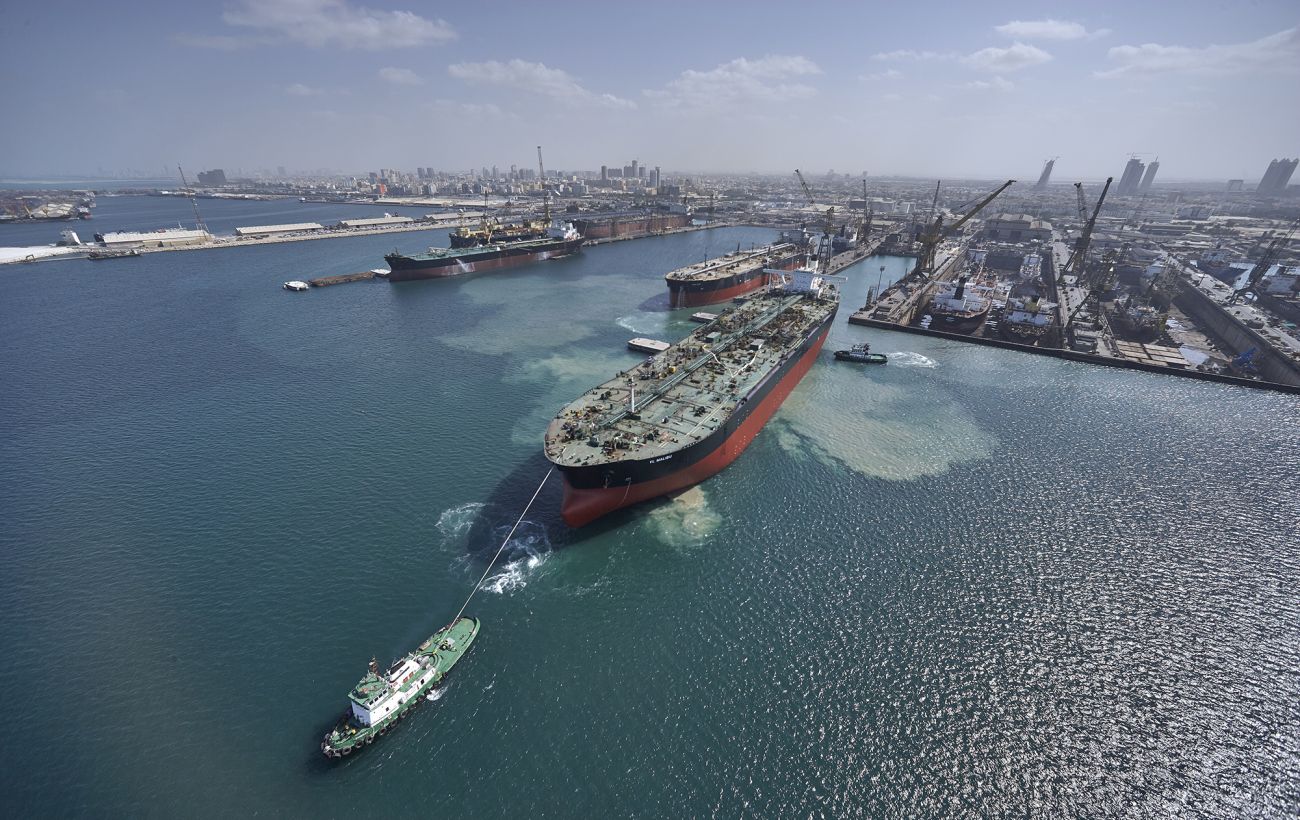
Iran has officially announced the reopening of the Strait of Hormuz for civilian vessels as part of a ceasefire agreement. However, the reality of free maritime navigation remains complicated due to various restrictions imposed by Tehran.
Despite claims of unblocking the strait, Iranian authorities have effectively transformed it into a controlled corridor. In a statement by Deputy Foreign Minister Saeed Khatibzadeh, it was emphasized that any vessel, including those from the United States, must contact Iranian authorities to obtain permission for passage.
Without this authorization, safety cannot be assured, purportedly due to mines laid during previous conflicts. Some Iranian maps even label the strait as “mined.”
Vessels are being offered two alternative corridors, one of which, located north of Larak Island, has been dubbed the “customs lane.” Iran is demanding fees for passage, introducing a so-called “safe escort fee” that can reach up to $2 million for a single Very Large Crude Carrier (VLCC).
“Conditional passage is not passage. It is control by another name,” commented Sultan Al Jaber, head of the oil company ADNOC.
As of April 9, only 3 to 8 ships are passing through the strait daily, representing less than 10% of pre-war levels, which averaged around 60 vessels per day. The majority of these ships are Iranian tankers or bulk carriers.
In light of these developments, oil prices have begun to rise again after a brief 13% drop on Wednesday, nearing $99-100 per barrel. Iranian restrictions are rendering logistics unpredictable, while over 800 civilian vessels remain blocked in the Persian Gulf, awaiting assurances of safe passage.
Iran's recent announcement regarding the Strait of Hormuz highlights the complexities of maritime navigation in the region. Despite claims of reopening, strict controls and fees imposed by Iran raise concerns about the safety and predictability of shipping routes.