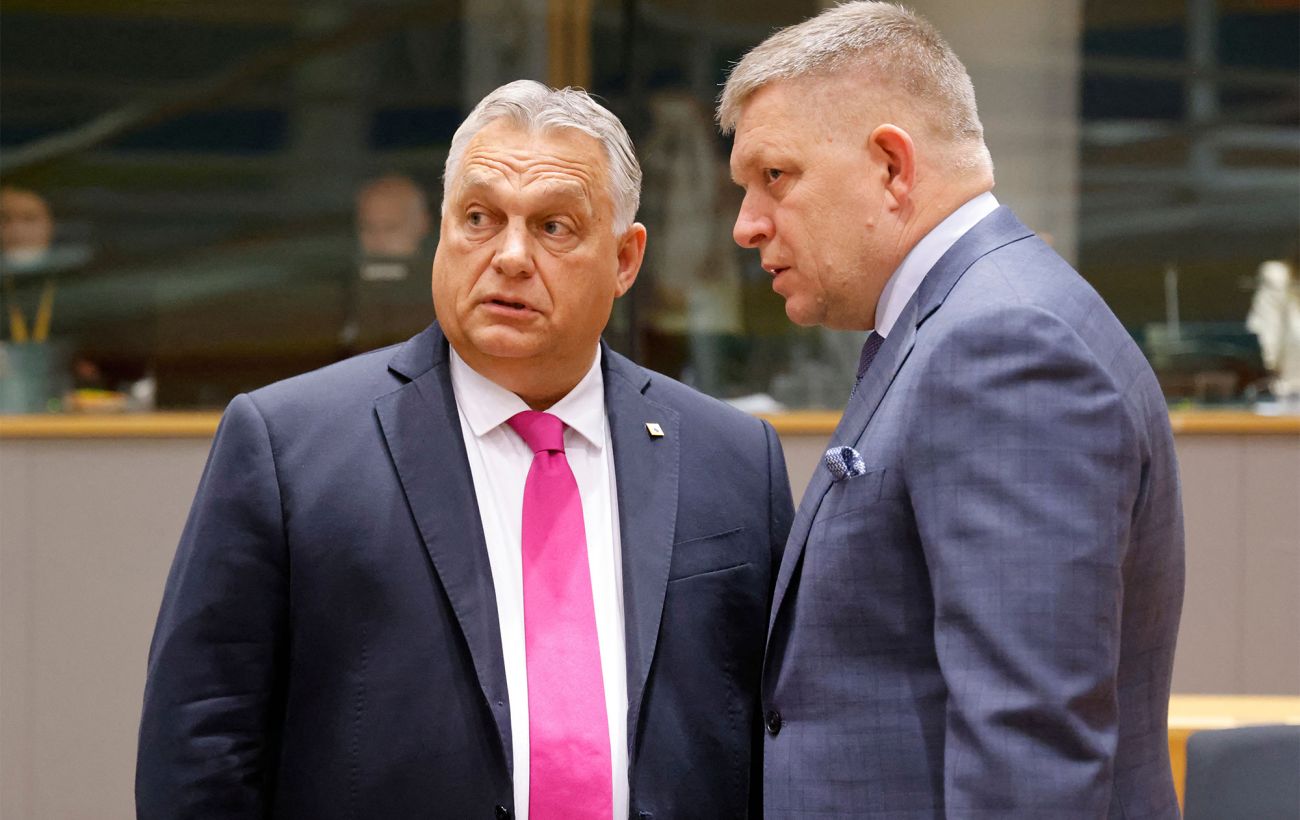
Slovak Prime Minister Robert Fico has indicated a commitment to continue his anti-European Union rhetoric, particularly if his ally, Hungarian Prime Minister Viktor Orbán, faces electoral defeat. However, analysts suggest that Fico may find it difficult to maintain this stance due to Slovakia’s reliance on EU support.
Reports indicate that Slovakia’s government is less stable than that of Orbán, complicating Fico’s ability to pursue an aggressive anti-EU agenda. Fico has previously backed Orbán’s veto against the allocation of €20 billion in EU aid to Hungary, a move that has raised concerns among other member states regarding corruption.
Should Orbán lose the upcoming elections, Fico may need to moderate his rhetoric to ensure continued access to over €90 billion in European loans, a portion of which is earmarked for supporting Ukraine amid its ongoing conflict with Russia.
Both leaders have previously breached informal EU norms by visiting Moscow following Russia’s full-scale invasion of Ukraine, attempting to maintain supplies of Russian oil and gas. Slovakia is set to receive nearly €19 billion in aid by 2027, underscoring the need for Fico to consider economic realities.
Analysts note that even if isolated within the EU, Fico is likely to navigate a complex political landscape, balancing criticism of the EU with the necessity of Slovakia’s membership, especially with general elections on the horizon in 2027, where his coalition may struggle to secure a majority.
Thus, Orbán’s potential defeat in Hungary could significantly constrain Fico’s political ambitions and compel him to abandon an overtly anti-European stance. Bloomberg reports that Fico has previously demonstrated resilience and may seek to find a balance between intensifying EU criticism and emphasizing Slovakia’s importance within the bloc.
The Hungarian parliamentary elections, scheduled for April 12, are poised to impact not only Hungary’s internal politics but also its neighboring countries, including Ukraine, and the broader EU landscape. The ruling Fidesz party, led by Orbán, known for his anti-Ukrainian and pro-Russian views, faces off against the opposition party Tisza, led by Péter Mádjár.
Orbán, who has been in power for 16 years, is risking his entire political career in this election. Investigative journalists have reported that Russian political technologists and military intelligence are supporting Orbán and Fidesz. Furthermore, Russian President Vladimir Putin has reportedly appointed Sergei Kiriyenko, the first deputy head of the Russian presidential administration, to oversee operations related to the election.
Interestingly, recent pre-election polls indicate a significant lead for the opposition. Meanwhile, Politico reports that Orbán is already preparing a contingency plan in case of defeat. In Brussels, discussions are underway regarding multiple scenarios to respond to a potential Orbán victory, with at least five options being considered to prevent decision-making blockages within the EU.
The upcoming Hungarian elections could significantly influence Slovak Prime Minister Robert Fico's political strategy, particularly regarding his anti-EU rhetoric. As Slovakia relies heavily on EU support, Fico may need to adjust his stance depending on the electoral outcome in Hungary.