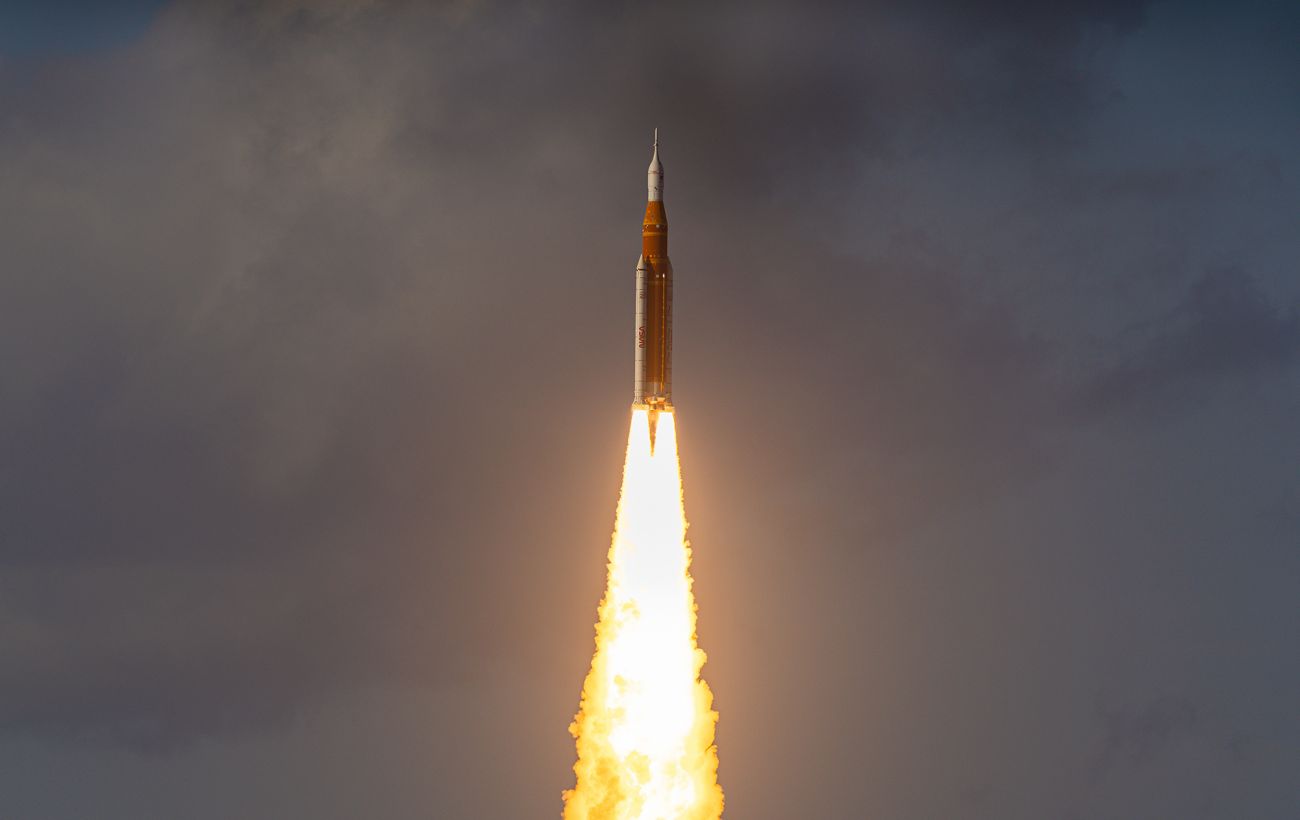
The crew of NASA’s Artemis II mission has experienced a remarkable view of the Moon, marking the first time in over half a century that astronauts have observed it from such proximity. The mission, which launched from Florida, aims to gather detailed scientific observations of the lunar surface.
Christina Koch, a mission specialist and the first woman to travel to the Moon, expressed her awe, stating, “The Moon we see is not the same Moon you see from Earth.” Mission Commander Reid Wiseman, along with crew members Victor Glover and Jeremy Hansen, shared their excitement as they became the first humans in more than 50 years to witness the Moon up close.
The astronauts transmitted their observations back to Earth, highlighting features such as the Tycho and Copernicus craters, as well as the vast basalt plains known as the “maria.” To enhance their view, the crew turned off the lights in the Orion spacecraft’s cabin.
Among their observations, the Eastern Basin—a massive crater located on the Moon’s far side—captured particular interest. Wiseman noted, “We can see the Eastern Basin with the naked eye. The Moon is so bright.”
Koch also pointed out the terminator line, which marks the boundary between light and shadow on the lunar surface, indicating the transition between day and night on the Moon. Initially obscured by the surface’s brightness, the terrain along this line became visible, impressing the astronauts with its intricate details.
NASA scientists collaborating with the Artemis II crew have praised the quality of their observations and the emotional enthusiasm displayed by the astronauts. They remarked, “You can hear the excitement in their voices. They were just incredibly energized looking at the Moon.”
Launched on April 2, the Artemis II mission represents the first crewed flight to the Moon in over 50 years, involving an eight-day lunar orbit before returning to Earth. The crew consists of four professionals tasked with collecting geological and topographical data during the flight.
In addition to their primary objectives, the astronauts had the unique opportunity to witness a total solar eclipse, an event not visible from any point on Earth. A key aspect of this mission is the potential to break the record for the farthest distance a human has traveled from Earth, currently held by the Apollo 13 crew, which reached 400,171 kilometers in April 1970. NASA experts anticipate that Orion may exceed this distance, although final figures will depend on the mission’s trajectory and timing of maneuvers.
Unlike the Apollo missions of the 1960s and 1970s, NASA is providing a live broadcast of the Artemis II flight, allowing viewers to observe much of the crew’s activities in real-time. Cameras positioned above the astronauts capture their interactions with monitors, mobile devices, and control panels. On April 4, NASA shared stunning images of Earth taken during the mission.
NASA's Artemis II crew has made historic observations of the Moon, sharing their excitement and detailed findings from their close encounter. The mission, launched on April 2, aims to gather significant geological data while potentially breaking distance records set by previous lunar missions.