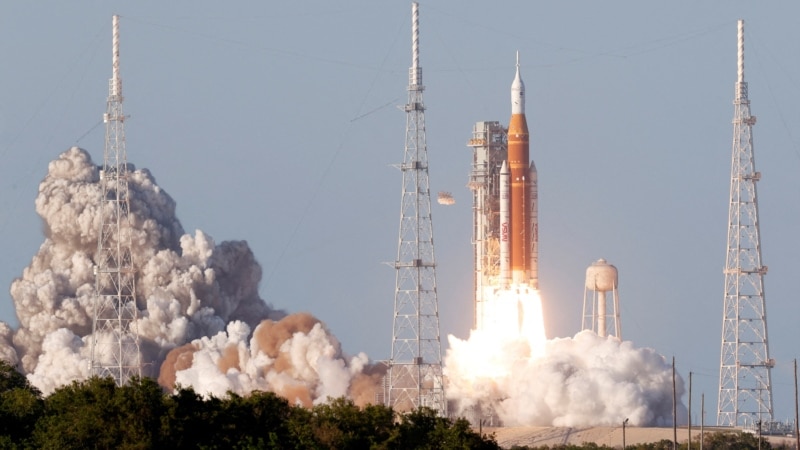
The United States has taken a significant step in its lunar exploration efforts with the successful launch of the Orion spacecraft from Cape Canaveral. This mission, known as Artemis II, marks the first time in over fifty years that astronauts are set to journey toward the Moon.
Unlike previous missions, Artemis II will not involve a lunar landing. Instead, the spacecraft will perform a flyby, coming within approximately 8,000 kilometers of the Moon’s surface. The mission is expected to last ten days, with the crew returning to Earth after a six-day journey.
Artemis II is a crucial component of NASA’s renewed lunar program, aiming to establish a sustainable presence on the Moon. During this mission, astronauts will test life support systems designed for deep space travel, which are vital for future missions.
The success of Artemis II is essential for the continuation of the program, which plans to conduct a crewed lunar landing as early as next year. The crew for this mission includes Commander Reid Wiseman, Pilot Victor Glover, Mission Specialist Christina Koch, and Canadian astronaut Jeremy Hansen.
The Orion spacecraft will follow a free-return trajectory, flying around the Moon without entering its orbit. At its furthest point, the spacecraft will be about 400,000 kilometers from Earth, showcasing the capabilities of NASA’s technology.
In late 2022, Orion successfully completed an uncrewed mission that also involved a flyby of the Moon, laying the groundwork for this historic crewed flight.
NASA's Artemis II mission has successfully launched, sending astronauts on a ten-day journey to the Moon. This mission is pivotal for future lunar exploration and aims to test critical life support systems.