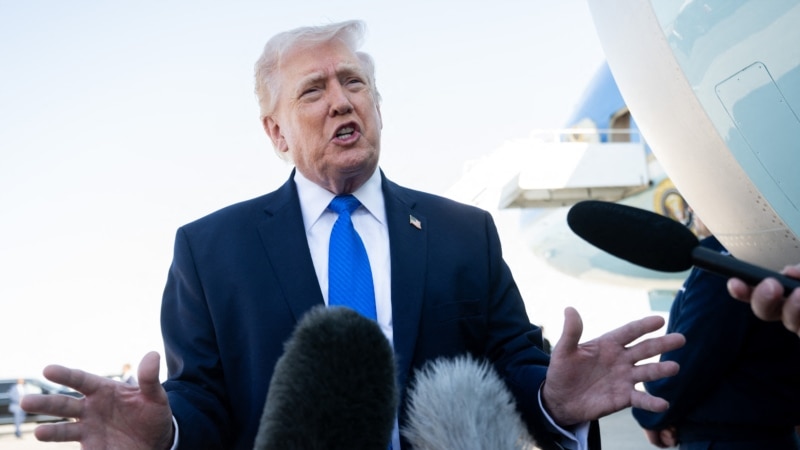
During a press briefing, U.S. President Donald Trump stated that Iran has reportedly agreed to refrain from developing nuclear weapons as part of a potential agreement between the two nations.
Trump emphasized that this condition is crucial for negotiations and could significantly shape any future agreements between Washington and Tehran. He revealed that around 15 points have already been agreed upon, including aspects of oversight concerning Iran’s nuclear program and the possible export of enriched uranium.
The President expressed optimism that implementing such measures could lay the groundwork for Iran’s recovery and positively impact regional security dynamics.
He indicated that the prospective deal would not only benefit the U.S. and Iran but also its Middle Eastern allies, which include Israel, Saudi Arabia, the UAE, Qatar, Kuwait, and Bahrain.
Previously, Trump described the talks with Iran as “productive” regarding the resolution of conflict in the Middle East and announced a “temporary pause in potential military strikes.” He noted that discussions over the past two days between Washington and Tehran have been “very good and fruitful,” focusing on a comprehensive resolution to ongoing tensions.
However, Iranian officials have denied the existence of any negotiations. Media outlets linked to the Islamic Revolutionary Guard Corps reported that there have been “no contacts with the U.S.”
Iran’s parliamentary national security spokesperson, Ebrahim Rezaei, asserted that “the struggle continues” and that the U.S. is facing defeat.
The Iranian Foreign Ministry also reiterated that no talks with Washington are ongoing, accusing Trump of attempting to buy time amid de-escalation processes in the region.
Since February 28, Israel and the U.S. have conducted strikes against Iran. Trump stated that the objective of these actions is to dismantle Iran’s military capabilities and prevent Tehran from acquiring nuclear weapons. In retaliation, Iran has targeted Israel and countries in the region allied with the U.S.
Following the onset of the conflict in the Middle East, Iran has blocked the Strait of Hormuz, a critical passageway for approximately one-fifth of global oil exports, translating to about 20 million barrels per day, along with liquefied gas. This disruption has led to a sharp increase in oil prices and prompted the International Energy Agency to release a historic volume of reserves, approximately 400 million barrels, into the market. Additionally, the U.S. has temporarily lifted sanctions on Russian oil currently at sea, as well as on Iranian oil.
President Trump announced that Iran may agree to halt nuclear weapons development as part of ongoing negotiations, though Iranian officials deny any talks. The situation remains tense as military actions continue in the region.