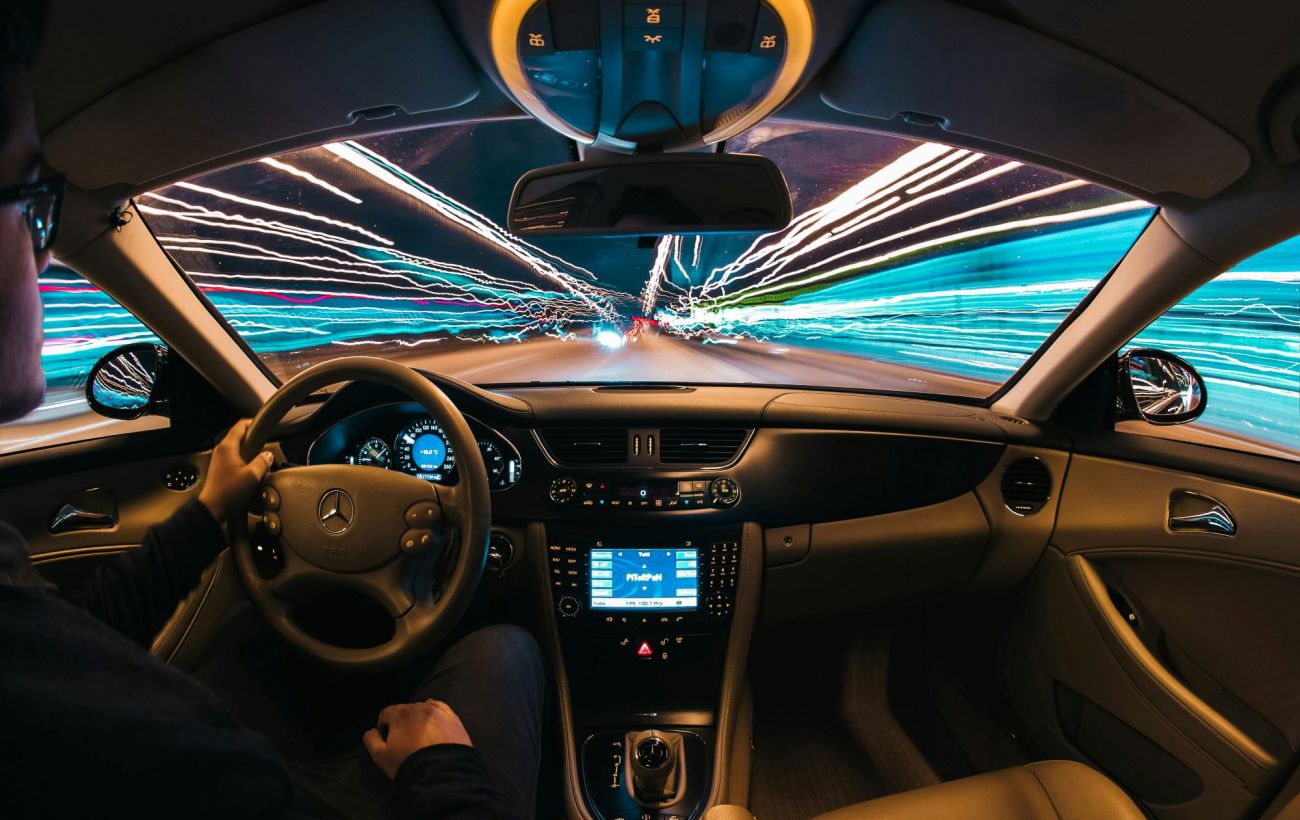
Despite the ongoing development of self-driving cars, their widespread adoption remains elusive. This article explores the current state of autonomous vehicle technology in Ukraine, highlighting the challenges that hinder its acceptance.
Key Points:
- Many drivers are unaware they are using vehicles with autopilot features – What are the signs of autonomy?
- Legal accountability in accidents involving autopilot – A critical issue for the future of autonomous vehicles.
- Modern autopilot systems operate in Ukraine, but they are not true autopilots and may miss potholes.
- When will autopilot become accessible to every Ukrainian driver? Insights into the future.
The term “autonomous driving” often misrepresents the capabilities of current vehicles. Most systems, including Tesla’s Full Self-Driving, Mercedes’ MB.Drive Assist Pro, and Volkswagen’s Mobileye Drive, require the driver to remain engaged and ready to take control at any moment.
These systems, while impressive, are classified as Level 2 autonomy, meaning the driver must keep their hands on the wheel and monitor the road. The Society of Automotive Engineers (SAE) defines five levels of autonomy, with Level 5 representing vehicles that do not require a steering wheel or pedals.
By early 2026, prototypes of Level 4 autonomous vehicles are expected, which would allow drivers to disengage from constant monitoring. However, regulatory and infrastructural hurdles prevent these vehicles from reaching the market.
In developed nations, the advancement of autonomous driving has stalled due to legal uncertainties surrounding liability in accidents involving autopilot systems. Questions arise about who is responsible when a vehicle in autonomous mode is involved in a collision.
Consumers investing in high-level autonomous vehicles may not wish to face legal repercussions for accidents caused by their vehicle’s technology. Different jurisdictions are attempting to address these issues, but progress is slow.
Consequently, manufacturers continue to label their autopilot systems as Level 2, despite advancements that exceed earlier iterations. The requirement for drivers to maintain control remains a fundamental aspect of using these systems.
In Ukraine, the legal framework does not assign liability to autopilot systems. According to attorney Yevhen Bulimenko, the vehicle’s owner is responsible for any damages caused, regardless of whether they were actively driving at the time of an incident.
This legal perspective applies not only to accidents but also to minor traffic violations. If an autonomous vehicle is caught violating traffic rules by automated enforcement systems, the owner will receive the fine, irrespective of who was behind the wheel.
For autopilot systems to function effectively, a supportive legislative and infrastructural environment is essential. While basic maneuvers like parking and navigating through traffic can be performed autonomously using onboard sensors and cameras, more complex situations require external assistance.
For instance, operating on highways necessitates clear roadside barriers and well-marked lanes, while city driving relies on up-to-date road markings and traffic signals positioned at appropriate heights.
Fully autonomous vehicles, classified as Level 5, are already in operation in select cities, but these are typically confined to designated areas. The infrastructure needed for Level 4 autonomy, which still requires a human driver, includes:
- Traffic lights equipped with Wi-Fi modules that communicate real-time signals to nearby vehicles.
- Sensors on urban streets to monitor traffic conditions and roadwork.
- A telemetry system for data exchange among vehicles to report accidents and traffic congestion.
- Detailed 3D maps of urban areas stored in the vehicle’s memory.
Implementing such infrastructure in Ukraine is unlikely in the near future, as many roads suffer from faded markings and potholes that are not consistently detected by sensors.
In the United States and Europe, the rollout of autonomous vehicles is also expected to be gradual. Research from McKinsey & Company suggests that by 2035, autonomous cars may only comprise about 10% of the global passenger transport market.
Commercial transport is currently the fastest-growing sector for autopilot technology. For example, Mercedes-Benz is equipping its flagship S-Class with Level 4 systems as a foundation for future robotaxi services.
As the complexity of autonomous systems increases, so does their cost. The latest Level 2+ systems include numerous sensors and advanced onboard computing capabilities, significantly raising the price of vehicles equipped with higher levels of autonomy.
Recently, BMW decided to forgo the Level 3 system in its 7 Series sedan, opting instead for a Level 2++ autopilot. This decision reflects both cost considerations and the ease of certification in various markets, placing liability for accidents squarely on the driver.
In conclusion, while having a modern autopilot system can be beneficial, particularly in parking and highway scenarios, urban environments with poorly maintained roads may not yield the same advantages. Full autonomy in Ukraine remains a distant prospect.
This article examines the current landscape of autonomous vehicles in Ukraine, highlighting technological capabilities, legal challenges, and infrastructural needs that impede widespread adoption.