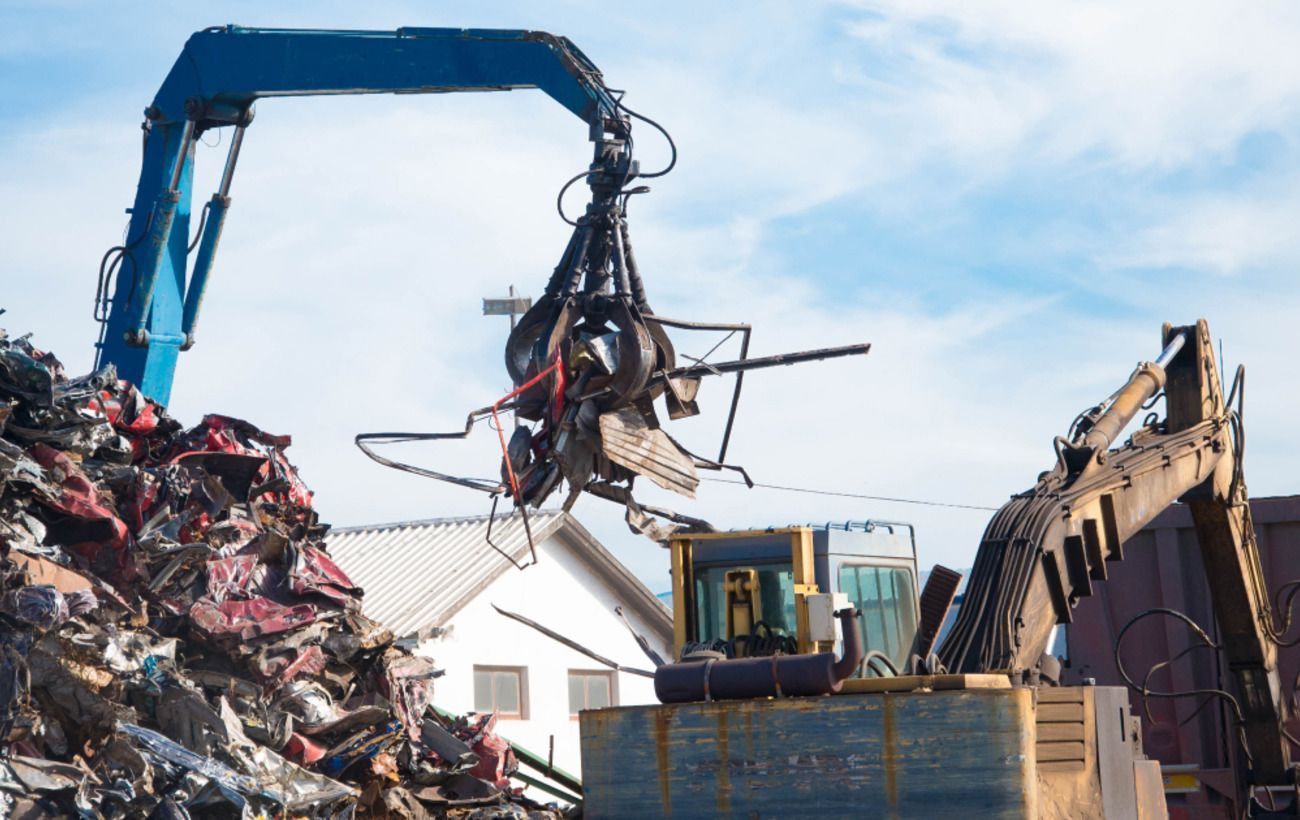
Ukraine’s recent decision to impose restrictions on scrap metal exports aims to enhance government credibility while curbing re-export schemes that have drawn scrutiny for their lack of transparency.
Experts indicate that processing one ton of scrap metal domestically generates between 13,000 and 15,000 UAH in tax revenue, in stark contrast to the mere 50 to 100 UAH earned from exporting raw materials.
Beyond direct taxation, the metallurgy sector plays a crucial role in employment and contributes significantly to the economy’s multiplicative effect.
Historically, a substantial portion of Ukraine’s scrap metal was exported to Poland, subsequently re-exported to countries like Turkey and India. This practice allowed exporters to evade a €180 per ton duty applicable to direct exports, leading to significant budgetary losses. According to MP Dmytro Kysylevskyi, the state missed out on 3.5 billion UAH in revenue last year due to such mechanisms.
Analysts from GMK Center note that Poland’s scrap metal market is currently oversupplied, with Ukrainian exports accounting for less than 5% of its total volume. Therefore, the cessation of exports from Ukraine is not expected to have a critical impact on Polish producers.
However, attempts by scrap metal collectors to legally challenge the government’s decision suggest a desire to revert to previous export practices. Economist Oleksiy Kush stated that a return to duty-free exports would likely lead to a resurgence of opacity and further losses for the budget.
Political analyst Taras Semeniuk emphasized that an increase in duty-free exports and the acquisition of EUR.1 certificates could attract scrutiny from the EU, posing additional risks to trade relations. He argued that the government’s decision effectively ended abuses that jeopardized the trust of European partners.
In addition to fiscal implications, the export restrictions are linked to the need to supply Ukrainian metallurgists with raw materials amidst the implementation of the Carbon Border Adjustment Mechanism (CBAM) and the growing importance of scrap metal as a strategic resource for producing steel with a lower carbon footprint.
Experts suggest that the decision to limit scrap metal exports carries both economic and reputational significance, showcasing the government’s commitment to halting schemes that harm the budget.
Processing scrap metal domestically yields far greater economic benefits than exporting it. According to Serhiy Povazhnyuk, Deputy Director of Ukrpromzovnishexpertiza, exporting scrap metal generates 280 times less tax revenue than domestic processing.
Povazhnyuk noted that exporters of black metal scrap pay an average of 50 UAH in taxes for each ton exported, while metallurgical plants that process the material within Ukraine contribute over 7,500 UAH per ton. When including payments from related sectors, this figure can reach up to 14,000 UAH per ton.
Moreover, processing scrap metal in Ukraine creates a multiplicative effect for the economy, generates tens of thousands of jobs, and increases freight transport demands.
Ukraine's restrictions on scrap metal exports are designed to bolster government transparency and fiscal health by promoting domestic processing over foreign sales. This policy shift is expected to enhance tax revenues and support local employment while addressing past budgetary losses linked to re-export schemes.